The hot streak that forced a reset
The clearest way to read this episode is as a public-land elk hunt built on adjustment. The bulls are there, the rut is on, and the calling is loud, but none of that guarantees a simple close. The crews keep getting into pockets where elk are active, then losing them just as quickly. That’s the real tension running through the hunt: not whether elk exist in the area, but whether the hunters can stay with them long enough to turn sound into a shot.
Early on, the team is still riding the momentum from the previous close calls. Team Bow and Team Muzz had already been within striking distance of a bull, and the recap makes it clear that the first encounter ended only because daylight ran out. That matters because it shapes everything that follows. They are not starting from scratch; they are trying to solve a moving problem after already proving the elk are there.
Why the hunters kept changing elevation
One of the most useful takeaways from the video is how much of elk hunting happens between the obvious moments. The crew keeps shifting from a high point to lower drainages, from open listening spots to darker timber, and from camp moves to short sneaks meant to catch sound in the right pocket. They are not wandering. They are using elevation as a tool.
That becomes especially clear when they start suspecting that the elk are simply dropping into places where the sound does not carry. From above, a basin can feel alive one evening and nearly empty the next morning. Down low, the creek noise, the steep walls, and the folds in the country can swallow bugles. The hunters start to understand that what sounds like elk vanishing may really be elk slipping just out of earshot.
The same logic drives the camp decisions. Instead of carrying a heavy setup all day, they drop camp high, then work downhill toward the elk sign and bugles they have found. That keeps them mobile and better positioned for evening movement, which seems to be when the elk are most likely to give themselves away.
When bugles became a location tool, not a guarantee
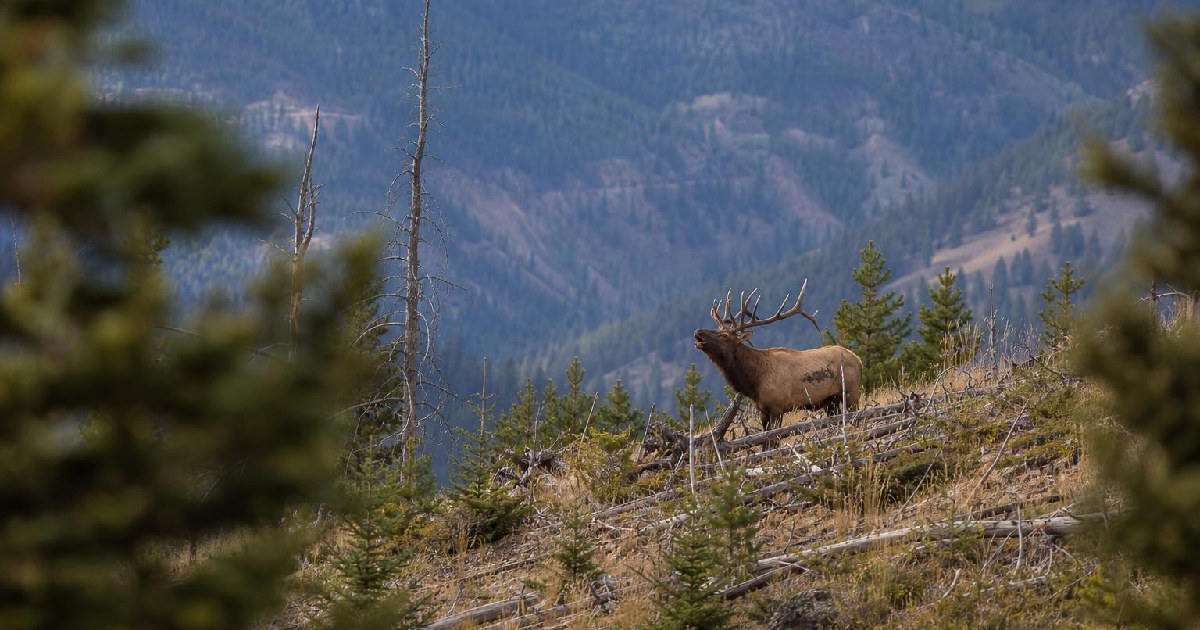
Bugling is the soundtrack of the video, but it is also a trap if you treat it like a map pin. Again and again, the crew hears bulls and assumes they can close the distance, only to find that the terrain or the cows move the herd before they can settle in. A bugle tells them where to start, not where to finish.
That is why the calling setups are so deliberate. The hunters ease into spots with sign, listen, and then try to make the bull answer on their terms. Sometimes it works just enough to confirm a direction. Sometimes it triggers cows to show themselves without exposing the bull. Sometimes the response is so close that it feels like they are right on top of the elk, even if the ridge, ditch, or timber edge between them says otherwise.
A recurring line in the hunt is that the bulls seem closer than expected, but still not close enough. That feeling repeats because the crew is consistently landing in the gap between hearing and seeing. They hear the bull in the drainage, hear cows moving, and even catch glimpses through the trees, but the final few steps never quite line up before the elk shift again.
The difference between hearing elk and getting to them
The middle of the episode is where the hunt gets most revealing. The bow crew hears little at first, then starts finding fresher sign lower in the country. At the same time, the muzzle crew is hearing bugles one evening but then losing them by morning. The pattern begins to look less like random bad luck and more like elk behavior filtered through terrain.
The hunters keep noting fresh tracks, rubs, and sign near water and in darker timber. That tells them where the elk want to be, but it does not mean the elk will still be there when they arrive. In this kind of country, a drainage can act like a funnel in the evening and a dead end by midday. The crew keeps making educated moves, but the elk keep rewarding patience over speed.
Even the closest setups don’t turn simple. At one point, cows move through at close range, and the group is clearly in the zone. But the bull still refuses to present the kind of clean opportunity that ends the hunt. The narrative benefit of that sequence is that it shows how often “close” and “ready” are two very different things in elk hunting. You can be in the right neighborhood and still not have a shot.
What the pressure in the basin seems to be doing
The episode also carries a quiet thread of hunting pressure. The crew finds a fresh boot track, hears fewer bugles during the day, and starts wondering whether other hunters have pushed elk into better cover or simply made them harder to locate. Nothing in the hunt is framed as certainty, but pressure remains part of the explanation for why a hot area can go quiet.
That uncertainty changes how they read every sound. A bugle may mean a bull is close, or it may mean one has shifted deeper into cover. A silent basin may be empty, or it may just be holding elk that are no longer talking. The hunters keep working through that ambiguity instead of overreacting to it.
That’s part of what makes the hunt feel realistic. They do not treat elk like they should behave according to plan. They treat the country as something that keeps reinterpreting the plan for them.
Why the last evening still felt alive
Even after several hard pivots, the final sections of the hunt still feel active rather than finished. The team keeps hearing bulls around prime time, keeps spotting cows, and keeps getting into moments that could have become something more if the bull had held position a little longer. Rain muddies the sound picture, then the elk reappear when the light starts fading again. That cycle of disappearing and returning defines the hunt.
The most important takeaway is that the episode never suggests the elk were gone. It suggests they were just using the basin differently than the hunters could always track. The last bugles confirm that the area still has life, but the dark timber and the clock make a clean finish difficult. By backing out and planning for the morning, the crew accepts what the hunt has been teaching them all along: in elk country, being close is useful only if you can stay close.
That is why the video works as a companion feature. It is not just about bugling bulls or near misses. It is about the constant recalibration required to hunt public land when the elk are loud one minute and hidden the next.
Watch the original video: https://www.youtube.com/watch?v=xTS_0NZCRCE
RECOMMENDATIONS
All About The Life designs from Texas Thread Theory, inspired by the places you go and the stories you bring back.

Life Happens Out There
An outdoor-focused AATL design celebrating mountains, forests, hiking, camping, road trips, and the simple idea that life happens when you get out there and explore.