Why this deer drive feels bigger than a single shot
The direct answer to what happens in this video is simple: day two of The Hunting Public’s muzzleloader deer-drive series turns into a long public-land grind through steep hill country, with multiple routes, multiple bumps, and one giant buck finally recovered after a tense final push. But the reason the video sticks is not just the buck. It is the way the whole day keeps tightening around the same idea: on public land, in rough country, with a muzzleloader and a pile of moving parts, success comes from timing, communication, and a little bit of stubbornness.
That structure matters because this is not framed like a neat, one-shot hunt. The crew is working in pieces. Some hunters are going in deep. Some are holding back. Some are driving. Some are waiting to catch deer that slip out ahead of the main push. That layered approach gives the hunt a real sense of pressure. Every person’s position matters, and every ridge or drain changes what happens next.
The hill country does most of the work
The terrain is the constant force in this hunt. The crew keeps talking about steep ground, crunchy footing, thick cover, saddles, knobs, benches, drains, and bowls. Even without seeing every line on a map, the way they describe the route makes it clear that this is demanding country to hunt on foot. The walks are long. The footing is noisy. And the deer are using the terrain exactly the way deer are supposed to: slipping along ridges, dropping into bottoms, and cutting back in ways that can be hard to predict.
That is what gives the drives their shape. This is not a case of simply walking a line and hoping deer appear. The hunters are trying to collapse space from different angles, using the land to trap movement and force deer toward standers or waiting points. When the crew says a spot is a “kill spot,” they are really talking about a piece of terrain where the land itself funnels an animal into a decision.
The hill country also makes the hunt feel physical in a way that never leaves the frame. People are joking about fatigue, frozen water hoses, and long hikes, but those comments are doing more than filling dead air. They are reminding you that every bump, every setup, and every quiet wait has already been earned by hours of climbing and side-hilling.
How the crew used timing and spacing
What stands out most in this video is how much of the hunt depends on spacing people just right. The hunters are not bunching up. They are intentionally placing themselves where deer are likely to travel once they get pushed. In one part of the hunt, the crew talks through whether they’re ahead of deer, behind them, or right where they want to be as the drive collapses inward. That constant adjustment is the backbone of the whole day.
The timing is just as important. The crew keeps referencing start times, waits, and moments when certain hunters should be standing or moving. You can tell they are trying to avoid spooking deer too early while still getting pressure on the right pieces of ground. In a deer drive, those minutes matter. Get there too soon and you blow everything up. Get there too late and the deer are already gone.
That’s why the conversations matter almost as much as the action. You hear hunters checking routes, confirming locations, and talking through what a deer might do if it hits a creek, bench, or draw. It gives the hunt a tactical feel without ever losing its outdoorsy, lived-in tone. They are not speaking in abstractions. They are reacting to specific pieces of terrain and to the kinds of deer movement those pieces tend to produce.
The missed chances that made the final buck matter
This video has a lot of near-misses, and that is part of what gives the ending weight. Deer get bumped. Bucks are spotted. Shots are discussed. Some animals are seen just long enough to raise the temperature of the whole crew, then they disappear back into the cover or over the ridge. Those moments matter because they build expectation without paying it off immediately.
At one point, the crew spots a big buck moving through the setup, and the reaction is immediate. Later, another close encounter turns into a different kind of frustration when one hunter has the opportunity but doesn’t have the setup ready to fire. The reason that moment lands is that it feels completely consistent with the rest of the hunt: this is a day where the deer are there, the hunters are in the right general area, and the difference between success and disappointment can come down to a tiny overlooked detail.
That detail-driven nature is one of the most honest parts of the feature. No one is pretending these hunts are clean or easy. The crew talks through what they thought they saw, what they heard, where a deer likely went, and whether a shot would have been responsible. Those discussions give the hunt a human shape. They also make the eventual buck recovery feel earned rather than guaranteed.
Why the last recovery moment landed so hard
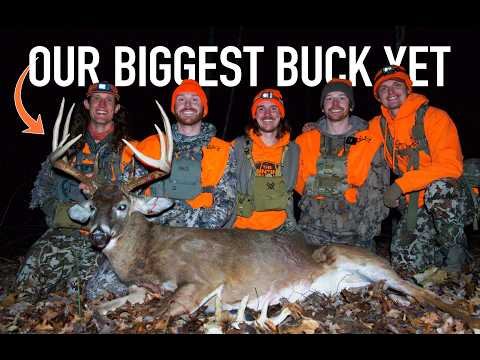
When the final buck is recovered, the mood changes immediately. The buck is not just another animal in the video; it becomes the payoff for everything that came before it — the steep climbs, the long waits, the bumped deer, the almost-shots, and the repeated adjustments in the plan. The crew’s reaction shows just how much tension had been building. Once the deer is found and confirmed, the hunt becomes a story about relief and validation as much as success.
A few details make that ending especially strong. The animal’s size clearly surprises the group. There is visible excitement, but also a sense of disbelief that the day ended with a buck that had already slipped through the system of drives and setups. The crew also ties the deer back to earlier sign and to a shed found in the area, which gives the recovery a deeper sense of continuity. It is not just a deer appearing at the end of the hunt. It is a deer that seems to belong to the exact piece of country they spent the day trying to control.
That is really what the whole video is about: not a simple buck hunt, but a full public-land system working the way it is supposed to work when everybody commits to the plan. Deer move. People adapt. The terrain decides a lot. And once in a while, a giant buck ends the story by walking through the one place the crew was ready for him.
Watch the original video: https://www.youtube.com/watch?v=j-3uzG0EzVo
RECOMMENDATIONS
All About The Life designs from Texas Thread Theory, inspired by the places you go and the stories you bring back.
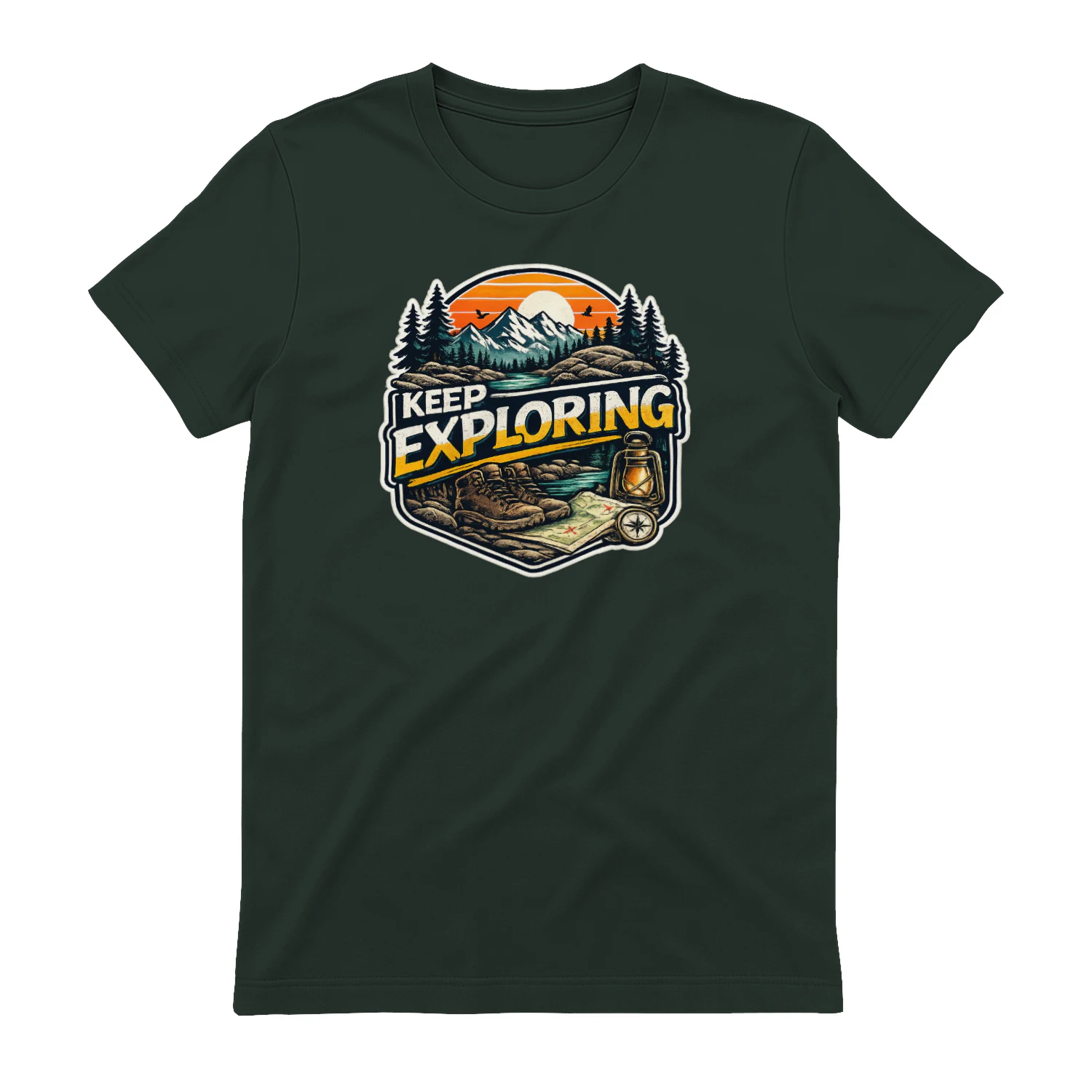
Keep Exploring Badge
A vintage outdoor badge centered on one simple message: “Keep Exploring.” With mountains, evergreens, a river, hiking boots, lantern, map, and compass details, it’s made for hikers, campers, travelers, and anyone who is always curious about what’s around the next bend.