The real challenge of opening day in open country
This episode is a straightforward answer to a familiar opening-day question: how do you hunt mature deer when the country is wide open, the deer are visible, and the temptation to rush in is high? Greg’s approach is to slow the whole thing down. He is not treating the first day of the season as a green light to charge the bedding area. He is treating it as a chance to identify the right buck, watch how he uses the country, and wait for conditions that make a smart stalk possible.
That is the core of the hunt. The action matters, but the decision-making matters more. The buck that quickly becomes the target is a tall 10-point with a sticker point, and from that moment on the video is really about whether Greg can keep gathering information without burning the spot out.
Glassing first, moving second
The early-season setup in this kind of prairie habitat is built around binoculars and a spotting scope, not around chasing tracks or sign. Greg explains that much of the work happens from high points, where he can watch deer come back to bed, study where they travel, and figure out how they are using the creek bottom and adjacent open country.
That method gives the day its rhythm. Greg scouts from one glassing knob, then another, then shifts again when the deer movement suggests a new angle. The point is not simply to see deer. The point is to identify which deer are worth focusing on and where they are likely to settle. He even notes that he had only scouted the area once in late July, which makes the opening stretch of this hunt feel like a fresh read on familiar ground rather than a full-blown spot-and-stalk commitment.
The most useful thing about the approach is how deliberately it avoids impatience. Greg says this kind of hunting rewards restraint because the deer are highly visible, which can make hunters eager to dive in too soon. His experience has been that sitting back, learning, and making a more calculated move leads to better results. That idea shapes almost every decision in the video.
The tall 10-point becomes the obvious target
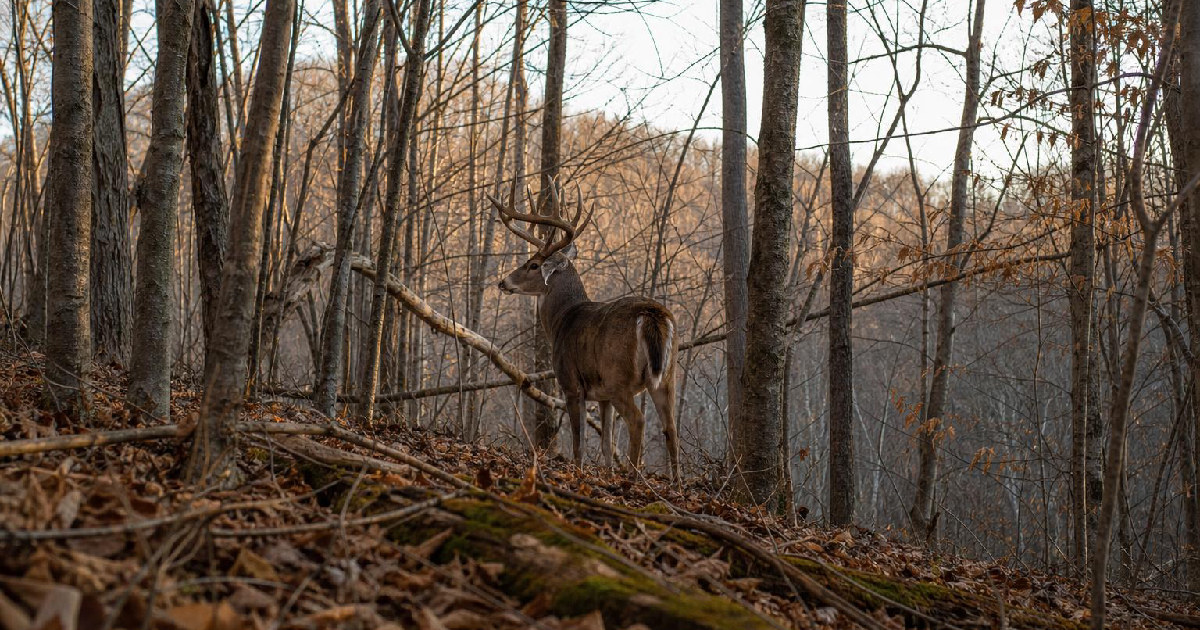
Once Greg spots the tall 10-point, the whole hunt narrows. He describes the buck as a no-brainer and keeps returning to him from multiple glassing points. That consistency is important. It is not just that the deer is impressive. It is that Greg sees him repeatedly in the same general system, moving back toward bedding cover through a drainage he already knows.
Over the course of the hunt, the buck shows up enough times to become the clear focal point of the feature. Greg sees him on the first night of scouting, then again the next morning, then later from another vantage point, and finally on opening morning when the bucks are coming back to bed. By then, the episode has established something deeper than a simple target animal: it has shown a buck that is using a fairly predictable pattern, even if the final move is still out of reach.
That repeated contact matters because it tells the reader why this hunt feels promising. Greg is not working from a lucky glimpse. He is building toward an understanding of the deer’s routine.
Heat, wind, coyotes and the pressure of a busy bedding area
The conditions are every bit as important as the deer. Greg repeatedly points out the heat, the strong wind, and the difficult range environment. The dry prairie, limited green forage, and permanent water in the creek bottom all shape where deer want to be. Those details explain why the creek bottom becomes the center of activity and why the bedding area ends up crowded with deer.
Coyotes also play a surprisingly large role. They are not just background noise. They actively interrupt the morning and evening movement, pushing deer into alert posture and making the bucks easier to keep track of but harder to approach. Greg sees coyotes in multiple directions, including one in the prairie dog town and others moving along the edge of the cattails. That pressure helps explain why deer keep looking back and why some of the bucks eventually break into thicker cover.
The snake encounter is another reminder that this is not a sanitized hunt. The hunters are moving through rough habitat, and the video makes clear that getting close is never just a matter of walking straight in. Even before the stalk gets serious, the country itself is working against an easy setup.
Why the first aggressive move never quite happened
There is a point in the video where the hunt could have tipped into a more aggressive approach. Greg spots deer filtering through draws and thinks about cutting them off. Later, he sees the deer bedding in a spot that seems reachable from another angle. But each time, the setup has a problem: too many deer, the wrong wind, or too much risk of educating the whole bedding area.
That restraint is the most useful takeaway in the episode. Greg is clearly capable of pushing harder. He even notes that he could have tried to get closer. But the smarter play is to preserve the area for a better day. He recognizes that an opening-day blowup could make the place far harder to hunt later, especially with the buck showing repeat use of the same drainage and bedding cover.
The evening setup is a good example. Greg gets into a position where deer are starting to rise and work through the bottom toward the fields, and the target buck does reappear. But the angle, the wind, and the number of deer moving through the area make it difficult to commit. The buck is close enough to matter and far enough away to remain a future possibility.
What the day says about hunting this kind of country
By the end of the video, the hunt has not ended with a shot, but it has produced something more useful for a feature like this: a clear picture of how open-country whitetail hunting actually works when it is done carefully. The hunter has to read weather, understand bedding and feeding movement, respect how much cover the deer do have, and accept that the best play is sometimes to wait.
That is also why the episode feels satisfying even without a punchline ending. Greg has identified the buck, confirmed that he uses the area consistently, and avoided making a mistake that could cost him the rest of the hunt. In a place where deer can be watched from a distance but not always approached cleanly, that patience is not passive. It is the whole strategy.
Watch the original video: https://www.youtube.com/watch?v=oDkuFwE-LX4
RECOMMENDATIONS
All About The Life designs from Texas Thread Theory, inspired by the places you go and the stories you bring back.
Life Happens Out There
An outdoor-focused AATL design celebrating mountains, forests, hiking, camping, road trips, and the simple idea that life happens when you get out there and explore.