Why this Lake Superior run felt like a real threshold
The direct answer is that this video is about a first-time Isle Royale overnight that only worked because the weather lined up long enough to make the crossing possible. Mav and Dan are not treating this like a casual afternoon on the water. They are watching conditions, loading a full boat of gear, and using a rare flat stretch of Lake Superior to get out to one of the most remote-feeling parts of the trip. That gives the whole episode its tension right away: the plan is simple, but the margin for error is not.
What makes the trip interesting is that it is not framed as a perfect expedition. It is framed as a big attempt. There is sleep deprivation, a long haul from the mainland, and the constant awareness that Lake Superior can change quickly. That combination makes even the calm start feel earned.
Getting to Isle Royale while the water stayed calm
The crossing itself becomes the first major test of the day. The crew leaves Grand Portage, Minnesota, with the goal of reaching Isle Royale, and the narration keeps coming back to the fact that this is the kind of run you do when the lake gives you a window. They are aware that the weather can shift, but they also know that calm water on Superior does not come around often. So they go.
Dan’s boat matters here. The full windshield, the bigger setup, and the kicker motor all fit the kind of run they are making. This is not just a boat ride; it is a practical decision about how to get across safely, fish effectively, and feel a little more secure about the trip home. The episode makes that clear without turning it into a gear review. The boat is part of the story because it helps the story happen.
Once they arrive, the scale of the place starts to matter. The island is not presented as a backdrop in the usual sense. It is a destination with its own campsites, harbor access, trails, and signs of wildlife everywhere. The footage and commentary around moose tracks, wolf sign, and the island’s isolation keep reminding you that this is not just another lakeside stop.
Setting up a first-night camp close to the dock
Instead of settling into some polished version of campsite life, they go with the most practical option they can find. They look around, fail to locate the shelter they thought might be there, and then settle near the dock where the setup is simple and close to the boat. That choice fits the whole trip: useful over ideal, workable over scenic perfection.
The camp itself has enough structure to make the night manageable. There is a picnic table, a food storage locker, and space to get organized without hauling gear very far. That matters when the day already began short on sleep and long on travel. Even the decision to throw a tent up for one person while the other plans to cowboy camp says something about the mood of the trip. This is not a polished base camp. It is a place to land, fish, eat, and keep moving.
The wildlife signs add another layer. The camera lingers on poop, tracks, and the general sense that the island is busy even when the people are not. That quiet reminder of where they are does a lot of work. It makes the camp feel less like a campsite and more like a temporary claim on the edge of a much larger landscape.
Reading fish, changing tactics, and chasing marks
The fishing portion of the day is less about instant results and more about adapting to what the lake gives them. Early on, they use electronics to search for fish and then work baits over marks once they find them. That process becomes the backbone of the episode’s action. Rather than sitting in one place and hoping, they keep checking water, watching the screen, and adjusting based on fish movement.
That is why the fishing scenes stay interesting even when the bite cools off. The episode shows how much of this style of lake trout fishing is about observation. The fish are sometimes near the bottom, sometimes suspended, and sometimes moving in ways that suggest a quick cast can matter more than a long setup. When one fish is seen off to the side of the transducer cone and a cast lands right where it should, the payoff is not just a catch. It is proof that the method worked.
The day also shows a practical side of fishing that gets overlooked in highlight reels. They move around. They mark fish. They strike out. They reset. They get tired. They eat lunch. They joke about being cooked after several hours on the water. That rhythm feels honest. The trip is not being sold as nonstop action; it is being shown as a real day on big water.
When the day turned into catch and cook
By the time they shift toward trolling, the episode has settled into a different kind of pace. The jigging bite has slowed, the crew is tired, and the trolling rods come out as a way to keep working fish without having to force the action. That pivot gives the story momentum again. It also leads to a couple more fish and, eventually, dinner.
The catch-and-cook portion lands well because it does not pretend to be fancy. They clean fish, season it, cook it over the fire, and combine it with steaks for a shoreline surf and turf. The lake trout gets Old Bay, the steaks cook on the grates, and the whole meal feels like the right reward for a long day. It is not styled as a big culinary moment. It is just the satisfying result of carrying your food from water to fire.
That part of the video also reinforces one of the more appealing things about this trip: the way the day’s work becomes the day’s dinner. It is simple, but it gives the island a kind of self-contained logic. You fish, you cook, you sleep, and the place feels more earned because of it.
What the overnight bivy actually revealed
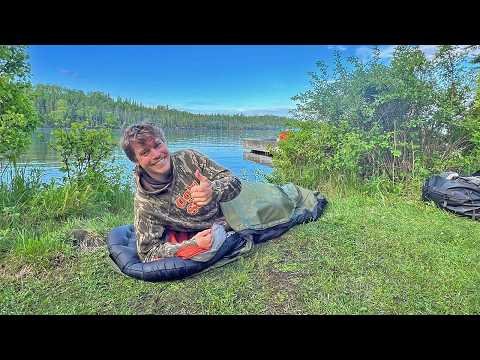
The bivy is probably the least glamorous part of the story, but it is one of the most revealing. Mav treats it like a practical experiment, then wakes up to find it wetter than expected. The point is not that the setup was a disaster; it is that real overnight trips have a way of showing you the weak link. In this case, that weak link appears to be water management more than comfort.
Even so, the night itself still counts. He gets the experience of cowboy camping beside Lake Superior, with the shore nearby and the island quiet around him. The morning mist, the shoreline view, and the fact that no wolves show up at camp all give the overnighter its own memory. It is not polished, but it is memorable.
That is a big part of why the feature works as an article companion. The video is not just about catching lake trout. It is about the feeling of finally doing a trip that had lived in the back of his mind for years. The fish are part of it. So is the camp. So is the long run across the lake. But the real center of the story is the fact that the trip got made at all.
The value of finally doing the trip
The island part of the story matters because it represents a threshold Mav had been building toward for a long time. He says as much in the video: this is a trip he has wanted to do ever since moving to northern Minnesota, and doing it for the first time makes it feel bigger than the individual catches. That is the best way to read the episode.
It is a fishing trip, yes. It is also a test of timing, a first look at Isle Royale, and a reminder that a good weather window can turn a dream into something real. The video leaves you with the sense that there is more to learn out there, which is usually the sign of a trip worth repeating.
Watch the original video: https://www.youtube.com/watch?v=42uEPOLt0LU
RECOMMENDATIONS
All About The Life designs from Texas Thread Theory, inspired by the places you go and the stories you bring back.

Life Happens Out There
An outdoor-focused AATL design celebrating mountains, forests, hiking, camping, road trips, and the simple idea that life happens when you get out there and explore.