Why this ambulance camper immediately makes sense
The strongest thing about Mav’s new rig is that it does not feel like a random purchase made for the camera. It feels like a vehicle that had been living in the back of his mind for a while and finally showed up at the right moment. In the video, he makes the case for it pretty quickly: this is a camping vehicle he has wanted for a long time, and it arrives just as he is planning another long road trip, with Alaska on the horizon.
That timing matters. A vehicle like this is only interesting if it solves real travel problems, and this one seems built around exactly that idea. It is not a blank van waiting for months of work. It is a pre-outfitted ambulance conversion that already has the kind of practical, self-contained setup you want when you are spending serious time on the road.
What came with the rig and what had to be sorted out
Mav describes the purchase as coming from Minneapolis, after a previous owner had it for about a year. Before that, the ambulance had apparently been lived in full-time for three to four years. That history explains a lot of what he and Yazy spend time doing early in the trip: unpacking, sorting, deciding what stays, and figuring out what they actually need.
He is plain about the fact that there was too much stuff in it at first. Some of it belonged to the original build, some of it had been collected by the prior owner, and some of it was no longer useful for the kind of trip they wanted to take. By Mav’s estimate, only about a quarter to half of what you see around the vehicle is actually his. The rest is inherited gear, old supplies, and the leftovers of a life lived in the rig before it became theirs.
That gives the first phase of ownership a very specific feel. This is not the clean reveal of a brand-new custom build. It is more like moving into a used house that still has someone else’s furniture in half the rooms. The job is not to invent the whole setup from scratch. It is to make the space work for the way they travel.
Storage, power, and the little systems that matter most
The outside of the ambulance is where the usefulness really starts to show. Mav keeps coming back to the storage because it is one of the reasons a vehicle like this makes sense for long-distance travel. There are lockable exterior compartments, huge rear French doors, and a tow hitch. Those details sound small until you see how much they change the rhythm of a road trip. Gear has a place. Tools have a place. The trip has fewer loose edges.
He walks through compartment after compartment, and the pattern is clear: fishing rods, waders, diesel heater fuel, tools, shower gear, camp chairs, a tire plug kit, bear spray, a jack, power tools, respirator masks, electrical items, golf clubs, a bucket that can double as an emergency toilet, and more. There is a practical logic to all of it. This is not storage for the sake of being impressive. It is storage that lets a long trip carry the basics of living, fixing, cooking, and adjusting on the fly.
Power is the other big piece. The ambulance already has solar on the roof, and Mav talks through a battery setup that supports lights, outlets, the fridge, and cooking gear. He notes that the system is running strong even on a cloudy day, and that the breakfast equipment alone can be a fairly serious draw. A toaster, air fryer, kettle, and other appliances make the vehicle feel less like a stripped-down camper and more like a moving kitchen with a few clever compromises.
There is also internet onboard through Starlink, which helps explain how the rig supports long stretches of travel without relying on the usual roadside assumptions. In the video, that combination of storage, battery power, and connectivity is what makes the ambulance feel less like a novelty and more like a real basecamp.
What the first days on the road revealed
The first trip is not a polished unveiling. It is a real test. Mav and Yazy start with breakfast in the vehicle, then settle into their routine: driving, stopping, checking the setup, and making small adjustments as they go. The first night is in a Walmart parking lot, which is about as honest a road-trip checkpoint as you can get.
Later, they pull into Swift Current, Saskatchewan after a long driving day, and then continue toward Banff and Lake Louise in Alberta. That route gives the video its shape: plains first, then mountains. The rig has to work across all of it.
Some of the first impressions are about comfort. The cockpit is cozy. Cruise control helps. The mileage and fuel use are part of the reality of driving a big vehicle. But the bigger takeaway is that the ambulance already behaves like a place where they can eat, sleep, and stay organized without needing to stop every time they need one small thing. That is what makes a travel vehicle feel livable.
The meal stops also say a lot. They buy groceries in Lake Louise, comment on the price, and make a one-pot dinner with chicken thighs, chorizo, and seafood. That dinner becomes a kind of proof of concept: yes, the rig can support real cooking, and yes, it can still feel like a trip rather than a stripped utility run.
Why this build fits a long Alaska-bound trip
Mav is careful not to pretend the ambulance is finished or perfect. He points out missing pieces, odd storage solutions, and small quirks that still need figuring out. The air fryer does not always come out of the cabinet easily. Some cubbies are still a mystery. The fridge is working, but he is still getting used to it. The diesel heater exists, even if it has not had much of a job yet. Those details make the vehicle feel lived-in rather than staged.
That is also why the build works. It leaves room for travel to teach them what matters. They already have the big fundamentals: sleep space, power, storage, cooking capability, and a way to stay connected. Now the road can reveal the rest.
The interior tells the same story from another angle. There is a twin XL bed, a feather duvet, cabinet space for cleaning and gear, a secondary cooler, a kitchen section, lights, a fire extinguisher, water bricks instead of a built-in freshwater tank, and a layout that mixes ambulance hardware with camper improvisation. It is compact, but not crude. Clever, but not overdesigned.
By the end of the video, the ambulance feels less like a punchline and more like a smart answer to a specific kind of travel. It is built for long days, shifting weather, roadside meals, and the kind of road trip where you want your home to move with you. Alaska is still ahead, and that is the bigger story: this is just the first stretch of a trip that should tell them even more about what the rig can really do.
Watch the original video: https://www.youtube.com/watch?v=rq1i5fFlLpk
RECOMMENDATIONS
All About The Life designs from Texas Thread Theory, inspired by the places you go and the stories you bring back.
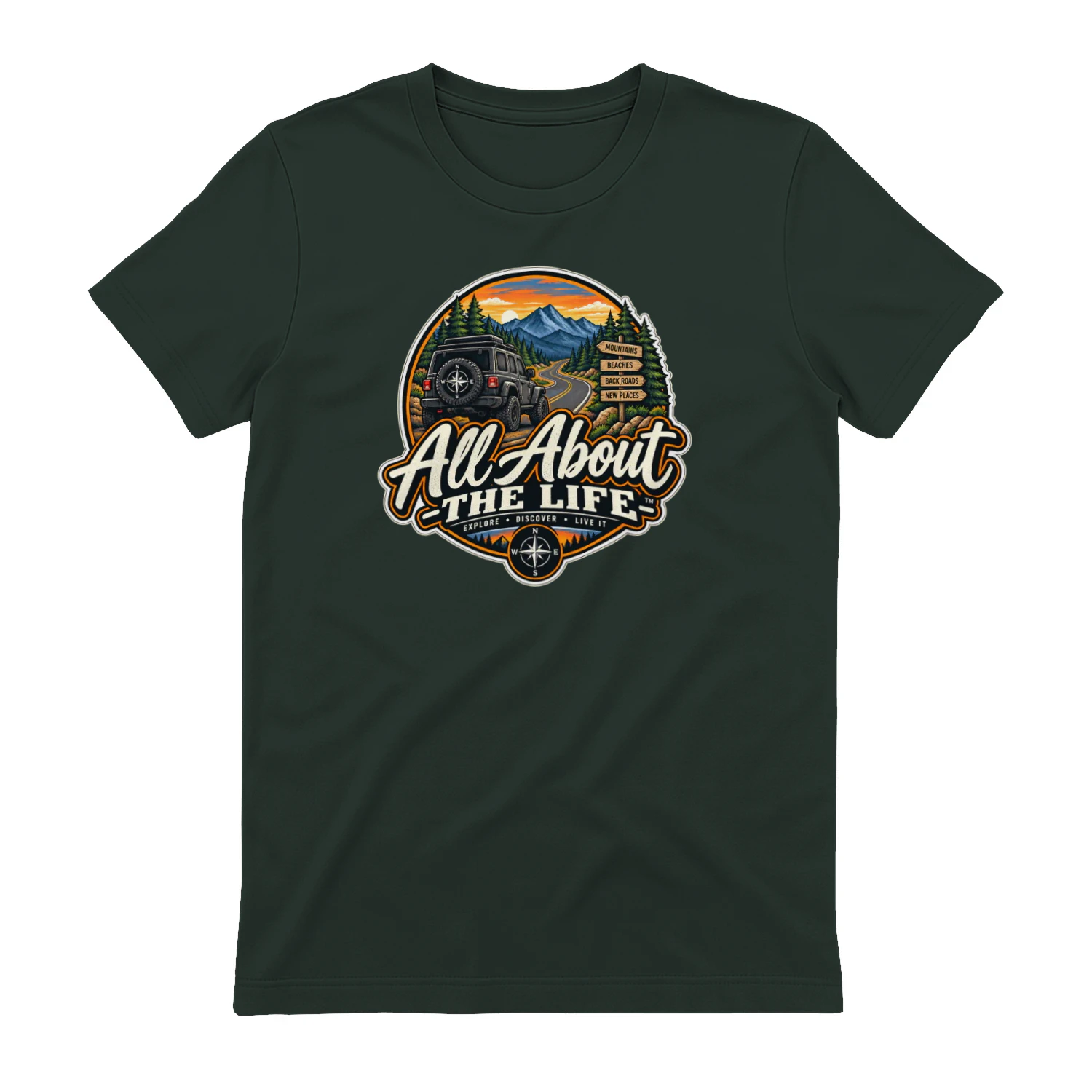
All About The Life Road Trip SUV Badge
A retro All About The Life road-trip badge featuring a rugged SUV, mountain roads, directional signs, and classic compass details. It’s the perfect design for back-road explorers, overlanders, weekend travelers, and anyone who likes their adventures with a full tank and no strict itinerary.