The bridge that kept giving up more than scrap
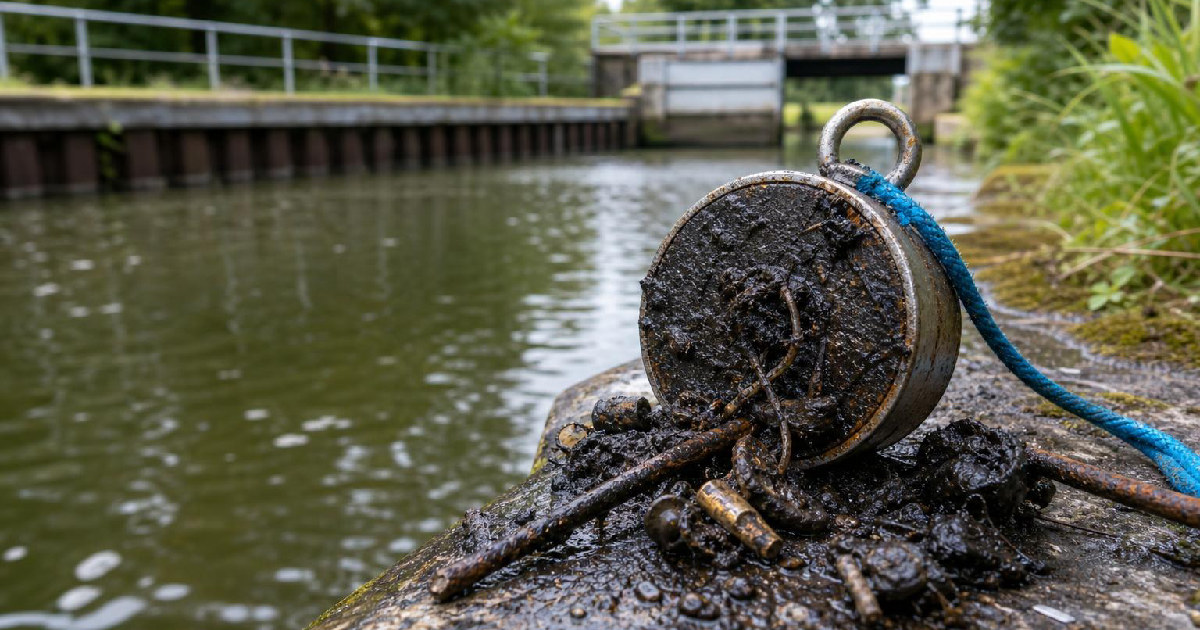
The direct answer is simple: this magnet fishing day was not just about hauling junk out of the water. It became a layered run of small wins, odd surprises, and a few finds that clearly changed the tone of the whole outing. Outdoors Weekly starts with a giant 3,500-pound pull magnet and expects a normal cleanup session, but the water keeps handing back more than scrap. A steering wheel, rebar, nails, bolts, and weeds are part of the usual rhythm. Then the session starts producing things that feel far less ordinary: an anchor, a phone, AirPods, a magazine, and eventually a gun that is later clarified in the wrap-up.
That mix is what gives the video its shape. The finds are not presented as a neat sequence of prizes. They pile up the way real magnet fishing does: some throws are dead, some are cluttered with weeds, and some suddenly change everything.
When the finds start changing the whole mood
At first, the video feels like a standard bridge hunt. The magnet comes back with light scrap, then more weeds, then heavier metal that takes some effort to sort out. One side of the bridge is packed with obstructions, while the other side looks cleaner and more promising. That contrast matters because it explains why the day keeps shifting. The creator is not working one perfect hotspot from start to finish. He is moving between areas, reading the water, and adjusting when one section gets frustrating.
That is also where the first standout pieces begin to matter. An anchor is the kind of find that instantly separates a routine scrap haul from something more memorable. It is framed as a usable piece rather than something headed straight for the scrapyard, which makes it one of the few objects in the video that feels like a genuine keep-and-resell discovery rather than just cleanup material.
The bigger point is that the video keeps moving from ordinary to unusual without breaking its own logic. We are not asked to believe every throw is exciting. We see plenty of weeds, bolts, flakes, and dead pulls. That makes the stronger finds feel earned.
AirPods, an iPhone, and a reminder that not every pull is metal
One of the more interesting stretches in the video is the run of personal items. The magnet brings up AirPods, and the reaction is immediate because the case light is still on. That detail turns the find from simple trash recovery into something more promising. Instead of treating them as dead electronics, the video follows the question that naturally comes next: could they still work?
Later, the answer becomes part of the second-day payoff. The AirPods are left in rice overnight, and the video returns to test them. The case still powers on, the phone recognizes them, and after some fiddling they end up working. That is a satisfying thread because it gives the audience a clear before-and-after arc without needing any outside context. They were found in water, dried out, and then proved functional.
The iPhone adds to that same feeling. It is older, and the battery or condition is never framed as miraculous, but it is still one of those finds that instantly pulls the viewer’s attention away from scrap and toward the strange personal history buried in the canal. Together, the AirPods and phone make the water feel less like a dump site and more like a place where everyday objects have simply been waiting.
The gun-shaped finds that changed the stakes
This is where the video takes a hard turn. A Glock magazine appears before the larger gun discovery, and that immediately changes the mood on screen. Once a magazine is in the bucket, the search becomes less about random salvage and more about what else might be sitting nearby. The creator says the area suddenly has “gun fever,” and that tracks with the way the rest of the search unfolds.
What comes up next is a smaller handgun-like find wrapped in bags, later treated as a gun discovery rather than just another scrap item. The packaging detail matters because it explains why the object looks so clean compared with the usual bridge pull. The bagging seems to have protected it from the water, which is why it comes up looking so surprisingly intact.
Then the day escalates again with a second firearm-shaped pull that is initially called a Draco. The video later corrects that in the wrap-up: it was actually an AK. That matters for accuracy, and the video itself makes the correction clear. The creator even asks viewers to comment “AK” because of that identification. For readers, the useful takeaway is straightforward: the footage documents a major firearm recovery and then corrects the label after the fact.
The point is not just the object itself. It is the way the search changes once the magazine shows up. The rest of the outing becomes an active attempt to locate whatever else might be down there.
Why the second day mattered as much as the first
The second part of the video is easy to miss if you only think of it as an add-on, but it actually matters a lot. The AirPods are tested after sitting in rice overnight, and that confirmation gives the earlier find a payoff. A lot of magnet fishing videos stop at the recovery. This one goes one step further and checks whether the item can still function. That makes the AirPods one of the best story threads in the whole piece.
The second day also reinforces the larger pattern of the video: the same stretch of water can keep producing surprising objects even after it seems exhausted. The creator notes that these spots refill quickly, and the video backs that up through repeated returns to the same area and repeated pulls from nearly the same line of throw.
That recurring return is what keeps the video from feeling like a one-off jackpot chase. It becomes a study in how much can sit just below the surface when a bridge or canal gets used, abandoned, or ignored long enough.
What this video says about magnet fishing on packed waterways
If you want the clearest takeaway from the session, it is that magnet fishing here is less about a single treasure and more about how much history is layered into one spot. The weeds are thick, the water is cluttered, and the finds range from everyday junk to genuinely unexpected items. A steering wheel, a knife, rebar, a sign, fishing tackle, a speaker, a shopping cart, a jewelry box, and witchcraft-like cauldrons all show up alongside the major finds. That variety is the point. The canal keeps returning different versions of the same message: people have been dropping, losing, or dumping things here for a long time.
There is also a practical side to the feature of the video that is easy to overlook. The giant magnet and the repeated fan casts let the creator cover a lot of ground quickly, which matters in a place where the water is full of clutter and visibility is inconsistent. He is constantly adapting to what the magnet tells him, moving when weeds get in the way, and revisiting the strongest-looking areas when the better finds start clustering.
So the story is not just “we found a gun.” It is the way a routine cleanup becomes a chain reaction: scrap leads to an anchor, the anchor sits beside recoverable electronics, the electronics lead to a second-day test, and the magazine opens the door to the firearm discoveries that dominate the rest of the video.
Watch the original video: https://www.youtube.com/watch?v=3eGcemfttVY
RECOMMENDATIONS
All About The Life designs from Texas Thread Theory, inspired by the places you go and the stories you bring back.

Go Somewhere. Do Something.
A high-energy adventure design built around the message “Go Somewhere. Do Something.” With travel-inspired route and destination details, it’s made for anyone who is always looking for the next road trip, day trip, weekend escape, or excuse to get out and experience something new.