A city river pull that keeps changing category
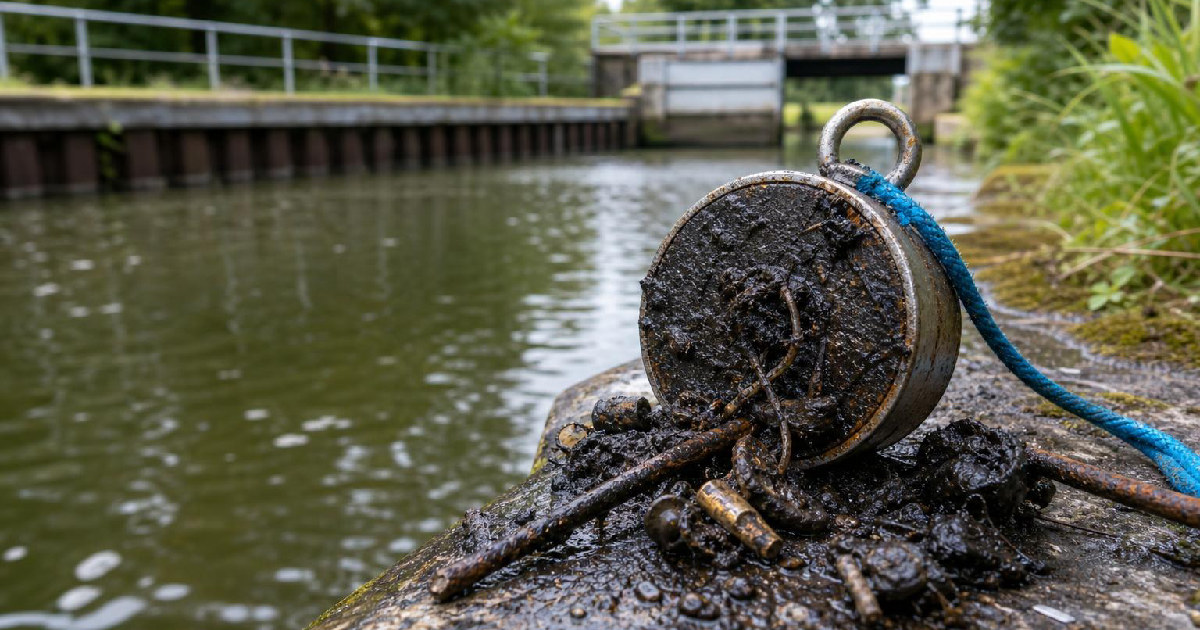
The short answer is that this magnet fishing trip in the city is defined by variety. Outdoors Weekly does not build the video around a single trophy find or a dramatic rescue. Instead, the magnet keeps bringing up a stream of different objects that make the water feel like a storage bin for whatever has been lost, tossed, or broken over time.
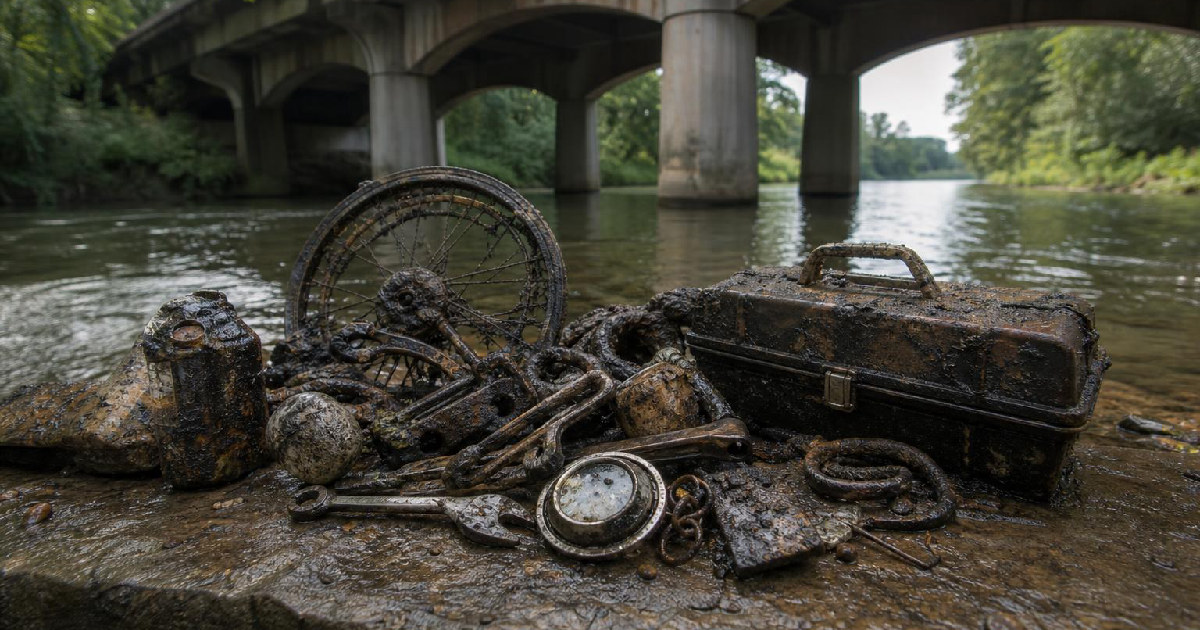
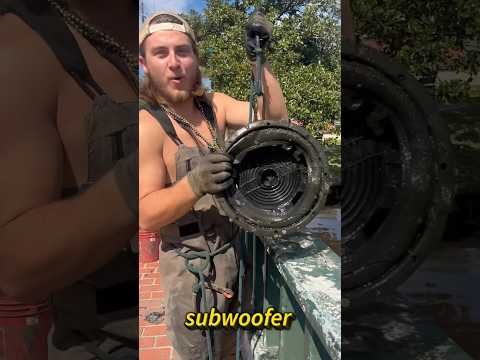
That is what gives the video its pace. One moment the find is something long and awkward, like a stilt. The next moment it is a set of beads, then a speaker, then a subwoofer, then a wrench. The rhythm keeps resetting because the river keeps offering something new. The result is less a hunt for one big prize and more a running inventory of what a city river can hold onto.
The mix of ordinary junk and surprising hardware
A lot of the appeal here comes from how the finds refuse to stay in one category. Some objects are obviously junk. Some are clearly usable parts. Some are just strange enough that they make you stop and look twice.
That is why the stilt stands out right away. It is the kind of object that hints at a larger story without telling it. The same goes for the support-beam-like piece and the crooked wrench. They feel like fragments from a longer chain of use, repair, or discard. Nothing in the video suggests where those items came from, and that uncertainty is part of the appeal.
Then there are the more familiar, everyday pieces: beads, a ball hitch, and a bike. Those finds ground the video in the practical reality of magnet fishing. This is not always about treasure. Sometimes it is about pulling out things that should not still be underwater, or things whose absence would have mattered to someone at some point.
The finds that make the water feel a little less casual
Two shotgun shells in the middle of the city shift the tone of the whole session. The video treats them as notable not because they are flashy, but because they are the kind of thing that makes an urban waterway feel more layered and more complicated than it first appears. Even in a short magnet fishing run, the river can hand back objects that raise questions rather than answer them.
That same sense of surprise runs through the “what is this?” moments. A couple of items are not immediately identifiable, and the creator asks viewers to help make sense of them. That openness matters. It keeps the feature grounded in the real experience of urban magnet fishing, where the magnet does not just find obvious metal. It finds context clues, scraps, and leftovers that may only make sense once someone else recognizes them.
The oddest visual in the transcript is probably the “river cucumber” line, followed by the floating object that seems to sit somewhere between debris and curiosity. Whether it is recognizable to viewers or not, the point is the same: city water does not only store metal. It collects all kinds of odd material that can look almost accidental until it is in your hand.
Why the practical finds matter just as much
Some of the most useful moments in the video come from the hardware itself. The shock is described as something worth pulling from the water because it leaks fluid. That brief detail tells you a lot about why magnet fishing can be satisfying beyond the novelty. It is not only about what the object is. It is also about getting it out of the water before it keeps creating a mess there.
The ball hitch works the same way. By itself, it is a simple automotive or towing-related find, but the missing receiver becomes part of the joke and the mystery. The creator keeps moving because the next pull is always waiting, and that steady turnover is a big part of the video’s energy.
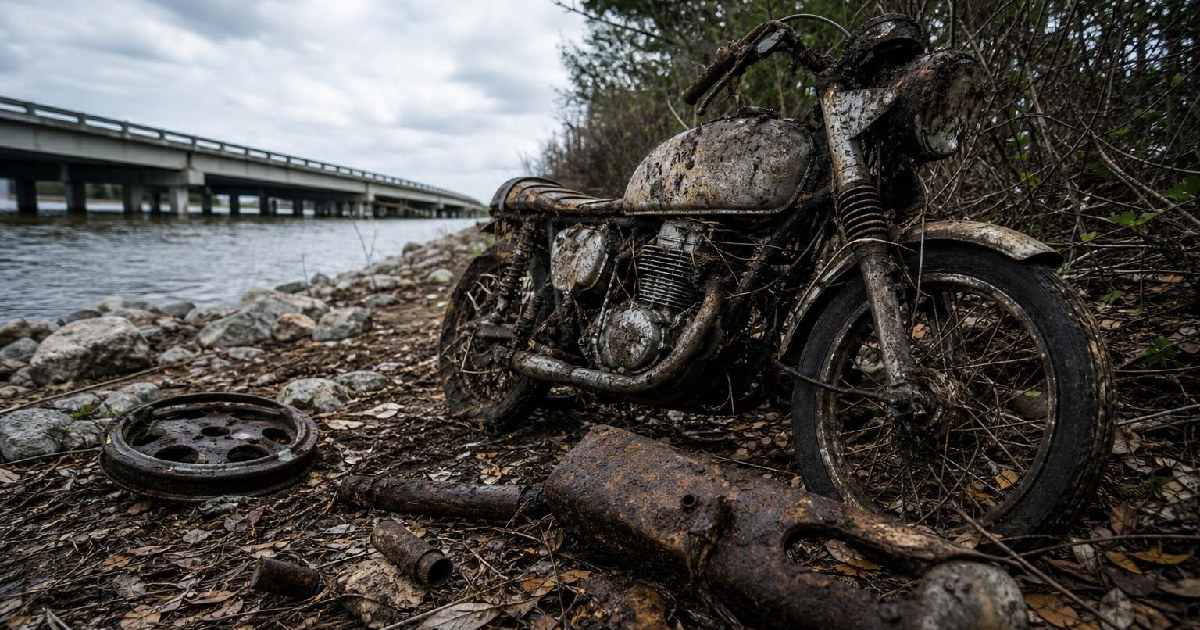
Even the bike lands in that practical category. It is the kind of find that instantly changes the scale of the day. Small objects show that the river has collected bits and pieces. Bigger objects remind you that the collection can be substantial.
The most memorable detail may be the smallest one
For all the bigger and stranger items, the most human moment in the transcript is the run of kitchenware. The creator jokes about “spoon heaven” and celebrates finally finding a fork after collecting many spoons. It is funny, but it also makes the whole video feel specific in a way that a generic “we found lots of metal” recap never could.
That spoon-and-fork stretch captures the real charm of magnet fishing in a city. It is not always dramatic. Often it is repetitive, a little absurd, and unexpectedly personal. A river can hold onto the ordinary stuff of daily life just as easily as it can hold onto the heavy or hazardous pieces.
What this kind of magnet fishing day says about the place
A city river does not have to produce a single spectacular object to make the outing worth watching. In this video, the interest comes from the pattern: discarded tools, broken parts, household items, a bike, and a couple of finds that feel more concerning than charming. Put together, they make the river seem busy with human history even when nothing is being said out loud about it.
That is the strongest thing the video leaves behind. Urban magnet fishing is not only a scavenger hunt. It is a way of reading a place through the metal it has kept, lost, or buried. And when the pulls keep changing from a stilt to shells to a speaker to a fork, the message is pretty clear: a city river never stays one thing for long.
Watch the original video: https://www.youtube.com/watch?v=sppk_ySHeek
RECOMMENDATIONS
All About The Life designs from Texas Thread Theory, inspired by the places you go and the stories you bring back.
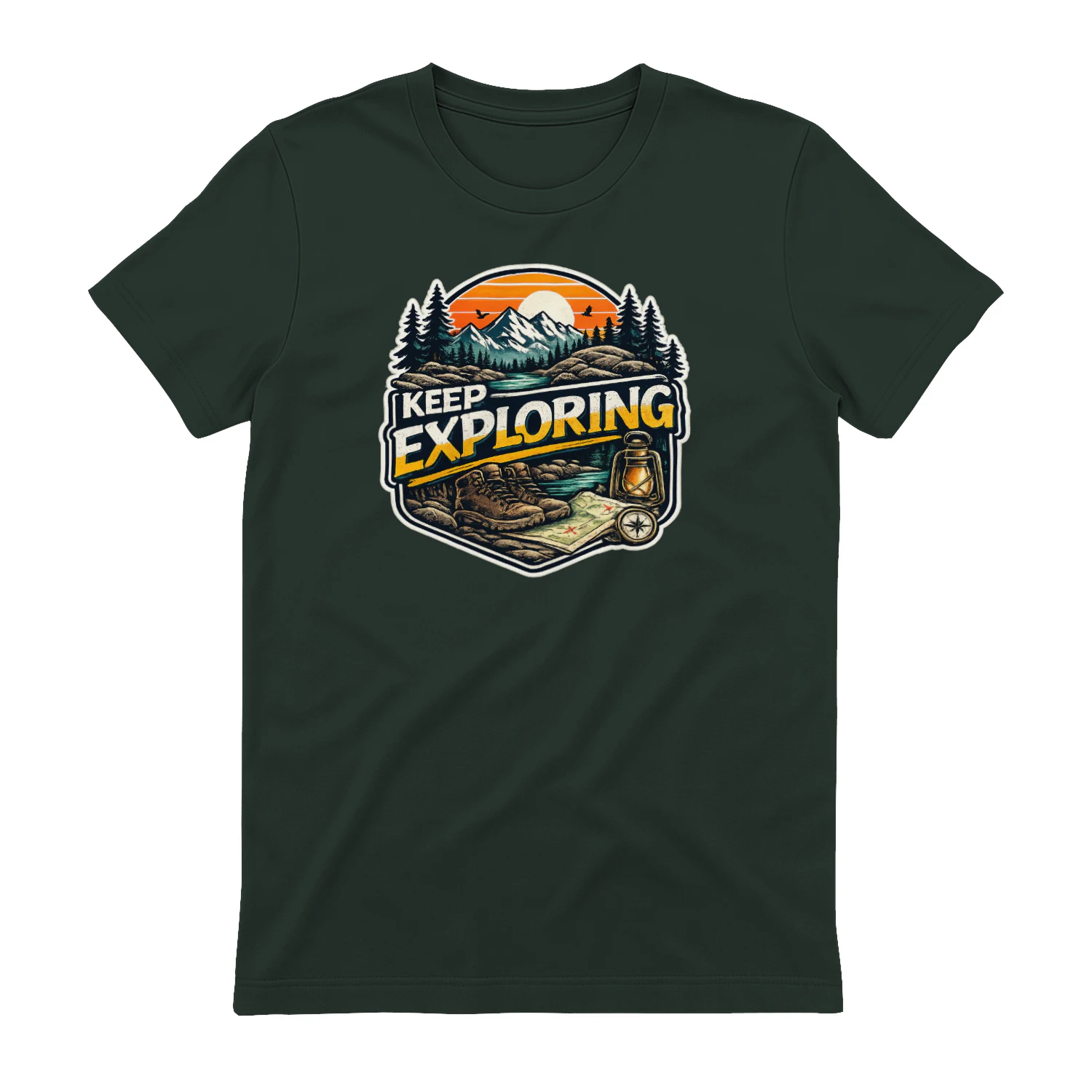
Keep Exploring Badge
A vintage outdoor badge centered on one simple message: “Keep Exploring.” With mountains, evergreens, a river, hiking boots, lantern, map, and compass details, it’s made for hikers, campers, travelers, and anyone who is always curious about what’s around the next bend.