What the bridge kept giving back
The clearest way to understand this magnet fishing video is that it is not really about one dramatic pull. It is about pattern, patience, and the way a familiar spot can still surprise you when the angle changes. Outdoors Weekly heads to a canal and bridge area that had already produced standout finds in a previous visit, including weapons and other unexpected items. This time, the setup is different: an orange barrier has appeared, active work seems to be happening on one side, and the magnet has to work around the new obstacle.
That change matters because it shifts the whole day from simple repeat visit to problem-solving session. The magnet starts out finding the kind of small debris that usually tells you a spot is active: bottle caps, fishing hooks, bent nails, little bits of scrap. But the video keeps showing the same thing in slightly different ways. Once the throw reaches a better edge, a better pocket, or the bank itself, the finds get heavier, stranger, and more useful.
Why the banks mattered more than the middle
One of the most interesting things about the video is how quickly the creator’s throwing strategy evolves. Early on, he keeps working around the obstacle and testing a few different directions, including the inside area near the grate and the side of the bridge. That produces a lot of smaller items, but not the kind of haul that makes a magnet fishing day memorable.
Then the pattern starts to show itself. The banks, not the open middle, become the productive lane.
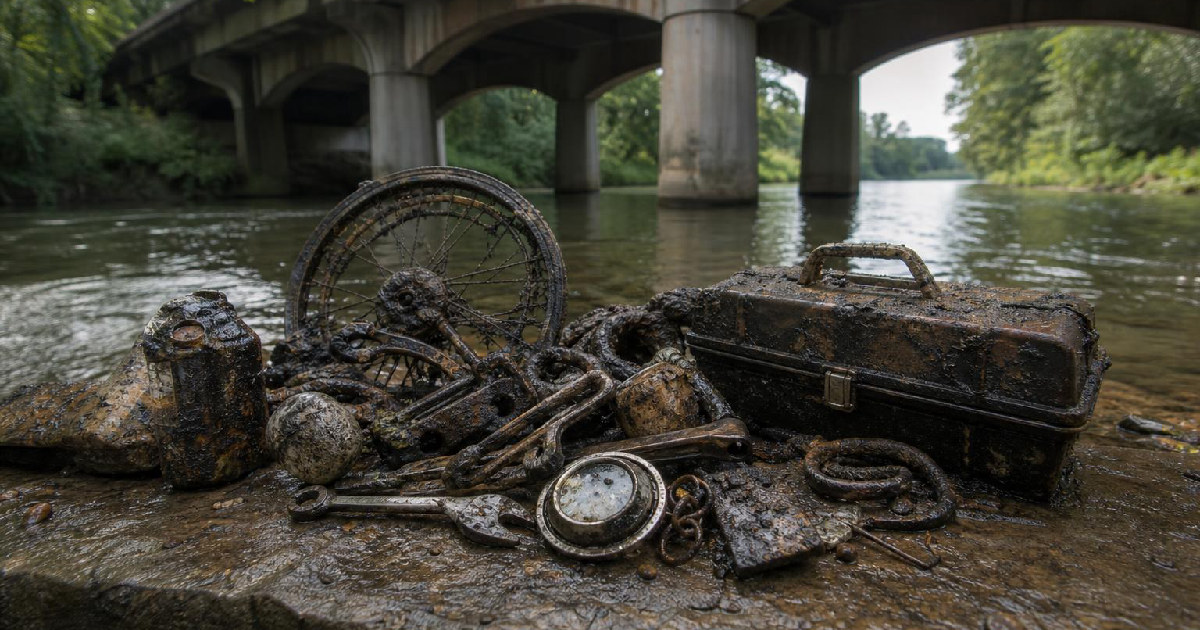
That is where the day starts producing larger and more defined objects: brackets, chain, rebar with cement still attached, fence pieces, a saw blade, a treble hook, and a surprising amount of bike hardware. The repeated phrase in the footage is essentially the same idea over and over: throw near the edge, get more back. The bank seems to hold the sort of items that have settled in place over time, while the middle offers more false starts and lighter scrap.
The creator even says the different angle seems to be helping. That observation becomes the backbone of the trip. Instead of forcing the same approach, he keeps adjusting until the magnet starts paying off.
The day’s biggest pulls: bikes, cart parts, and the car axle
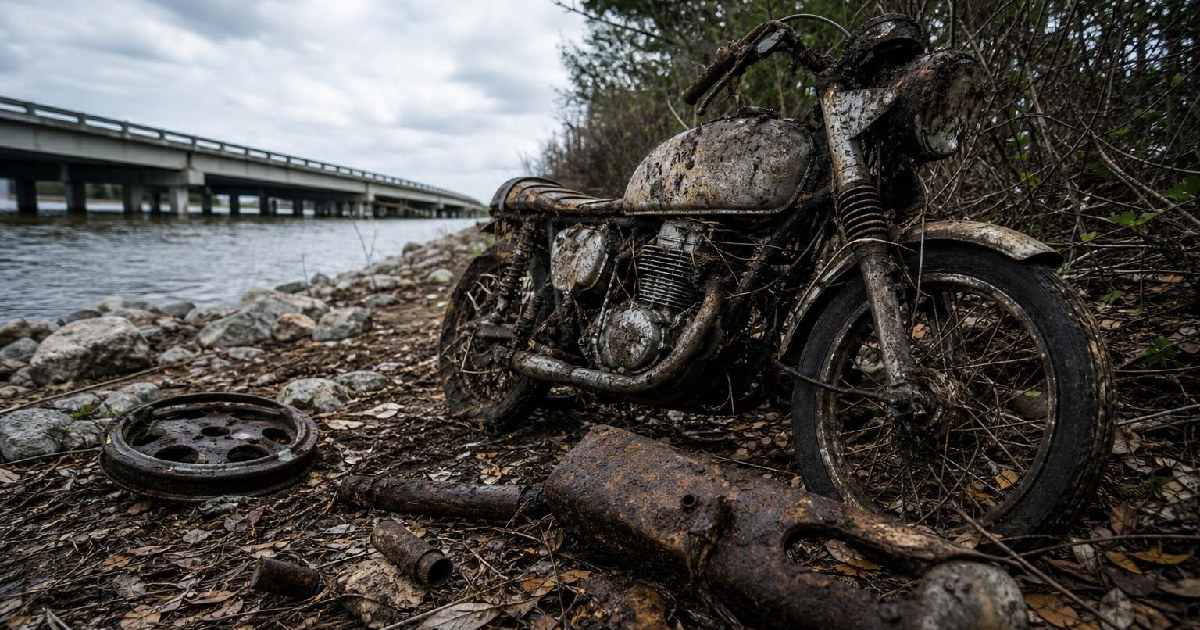
The larger finds are what turn this from a cleanup video into a true treasure-hunt style companion feature. The first major headline item is an old bike, pulled from mud and clearly down there for a long time. Later, a second bike comes up from another section of the same bridge area. Together, they make it feel less like a random dump site and more like a place that has been quietly collecting lost transportation for years.
A scooter follows. Then a shopping cart appears in halves rather than all at once, which seems to make the job feel oddly manageable in the moment. There are also handlebars from another bike, chain fragments, spoke pieces, and a mix of parts that suggest the water has been slowly taking apart whatever ended up there.
But the biggest find of the day is the one the video builds toward most dramatically: a car axle with the tire still on it. The creator spends real effort getting it up, and the footage makes clear why. It is heavy, awkward, and far bigger than it first appears. Once it finally comes free, the mystery is solved: the earlier oil, weight, and resistance all make sense.
That single pull gives the video its biggest payoff. It is not just large; it reframes the entire spot. If a whole axle can be down there, then almost anything could be.
The smaller finds still tell the story
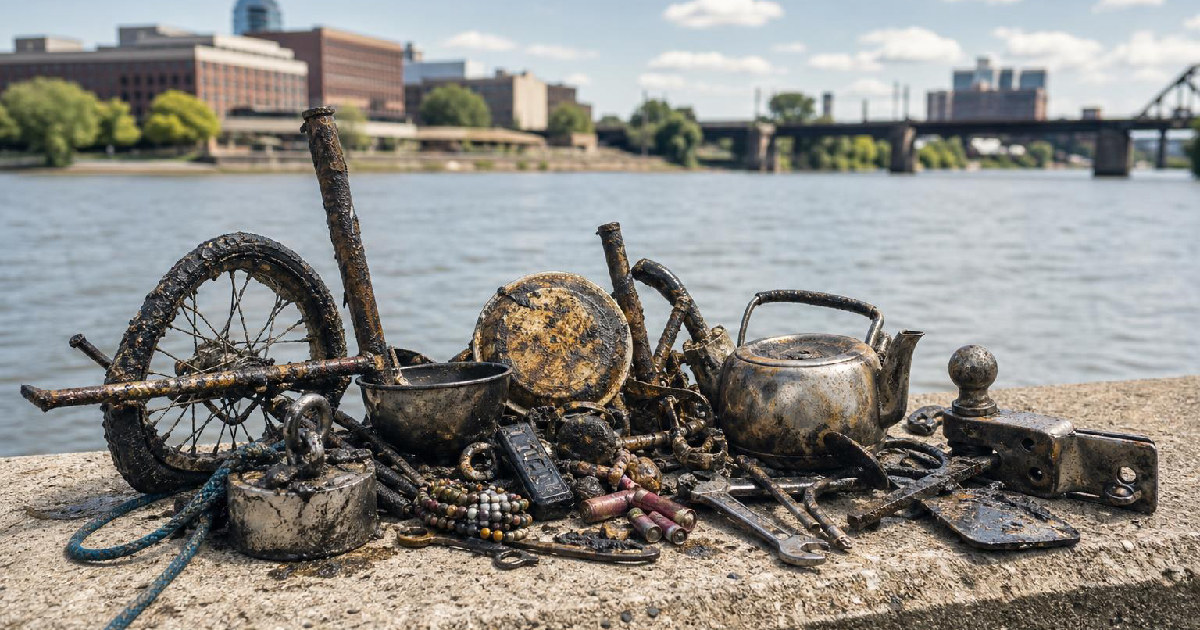
A magnet fishing feature can be easy to judge only by the headline items, but this video is also about the smaller evidence that a place has seen a lot of use. The bucket fills with nails, screws, bottle tops, bits of chain, a broken lock, a gun lock, a little battery, a paper clip, a piece of a license plate, and even a destroyed computer. There are also oddities the creator can only partially identify: a pin, a pipe-like object, a mystery weight, a strange dart-like piece, and a green light that seems tied to fishing or dock use.
These finds matter because they show the texture of the spot. It is not just one big discard site. It is a layered area where casual litter, old hardware, damaged gear, and occasional high-value or high-interest items all seem to have accumulated together.
A few items stand out for reasons beyond size. The handcuffs, for example, arrive at a moment when a police car is passing by, which gives the recovery an extra jolt without the video needing to invent drama around it. The lock with the key still in it is another memorable detail, because it is a rare version of a very common magnet fishing find. The headphones and broken case continue the same theme: everyday objects that have spent too long underwater to be useful, but still tell a story about what ends up in public waterways.
A spot that seemed to refill itself
Part of what makes this video work is the way the location keeps seeming to restock itself. Move a bike, and there is more underneath it. Pull one heavy object, and another item appears in the cleared space. Throw near the bank, and the magnet comes back with chain, fence pieces, or another unexpected bit of metal. That gives the whole day a layered rhythm. Every improvement in the haul reveals another layer of the spot rather than emptying it out.
The second day reinforces that feeling. The crew returns to the same general area and shifts a little farther down, where the finds continue with more scrap, more hardware, and more large pieces. The repetition is part of the appeal. Magnet fishing, at least in this video, is not a single lucky cast. It is an iterative process of reading the water, adjusting the throw, and letting the location tell you where the next pocket of metal is hiding.
That is also why the video feels satisfying as a companion piece. It is less about a clean beginning, middle, and end than about following the creator’s judgment as it changes in real time. He notices where the magnet clicks, where the bottom feels hard, and where the edges seem more promising than the center. The result is a day that starts with scraps and ends with a genuinely heavy recovery.
The original video URL: https://www.youtube.com/watch?v=R6t7QUWSS3s
RECOMMENDATIONS
All About The Life designs from Texas Thread Theory, inspired by the places you go and the stories you bring back.
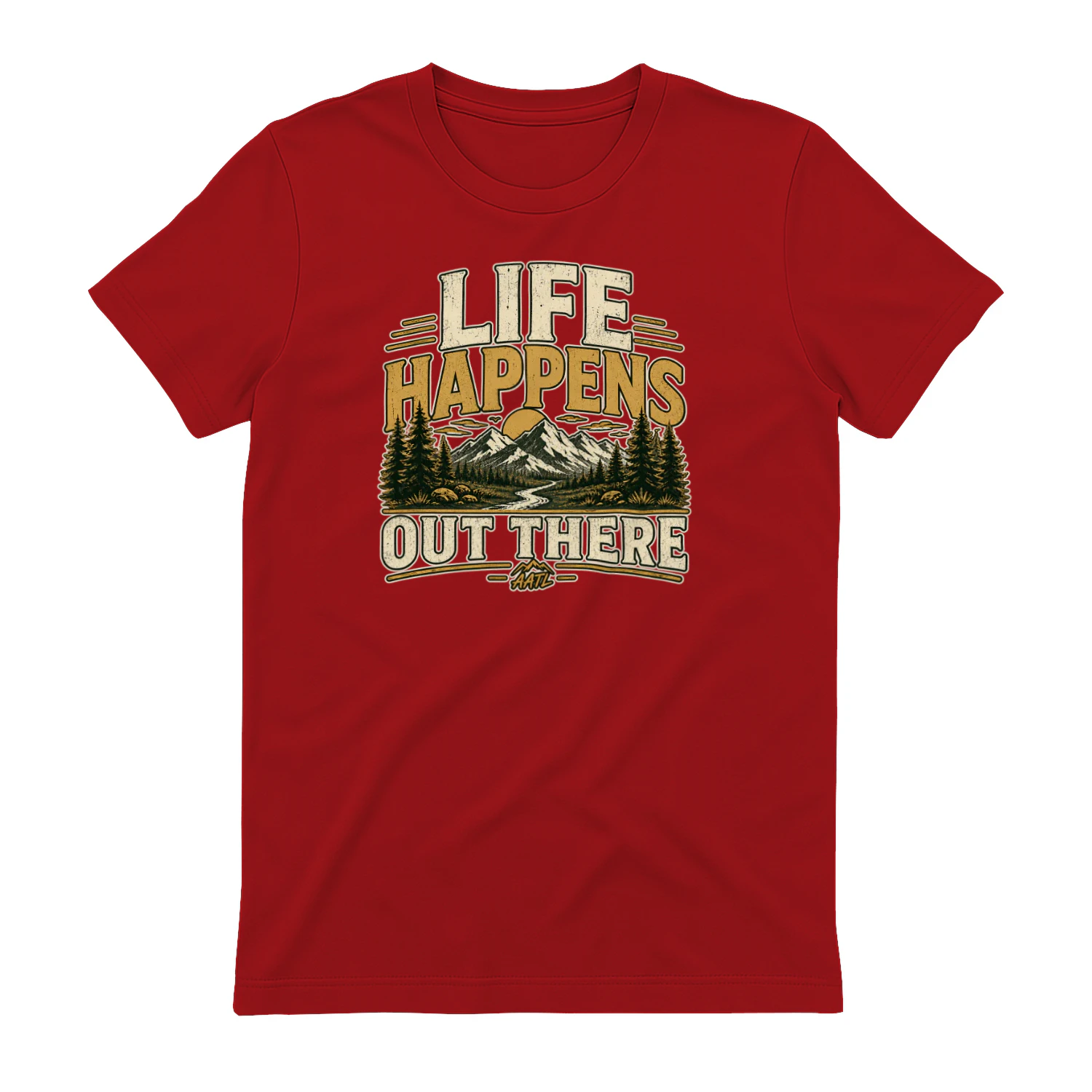
Life Happens Out There
An outdoor-focused AATL design celebrating mountains, forests, hiking, camping, road trips, and the simple idea that life happens when you get out there and explore.