Why this motorcycle find changed the whole day
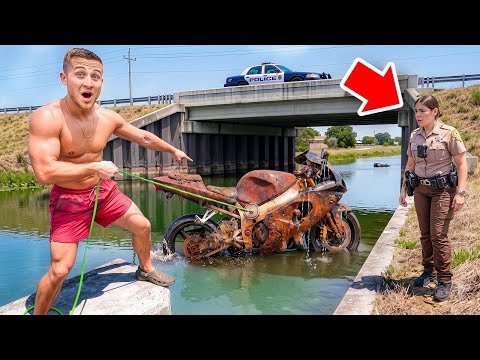
The plain answer is that this magnet fishing motorcycle recovery stops being a casual cleanup run the moment the crew hooks into a full-size bike in the Everglades. They do not just find an odd object in the water and move on. They return to the bridge with a plan, muscle, and a clear goal: get the motorcycle onto dry ground after failing to lift it on a previous trip. That makes the video feel different from a typical magnet fishing outing. The story is not about what the magnet can snag. It is about what happens when the thing in the water is too large, too awkward, and too questionable to ignore.
The setting matters too. This is not a neat urban canal or a calm pond edge. The crew is in Florida’s Everglades, near a bridge with a gate blocking easy access, and that changes everything about the recovery. A tow truck is not the simple answer. The bank has to become the worksite, and the water becomes the place where the real effort starts.
A bridge, a gate, and a problem bigger than the magnet
The video makes a strong case that magnet fishing is often less about the throw and more about solving access problems. The crew already knows the motorcycle is down there from an earlier trip. This time, they show up with Tyrone for extra strength because the last attempt ran out of manpower. That detail gives the whole day a practical edge. Nobody is pretending this is a tiny pull.
They also know the area is messy in another way. The spot has already proved to be an active dumping site, which means the motorcycle is not some isolated oddity. It sits in a place where people have clearly been tossing things into the water for a while. That helps explain why the crew keeps throwing the magnet before committing to the bike. They are still fishing the site, still checking for other surprises, and still trying to make the most of the location before taking on the biggest object there.
What the crew was finding before the big pull
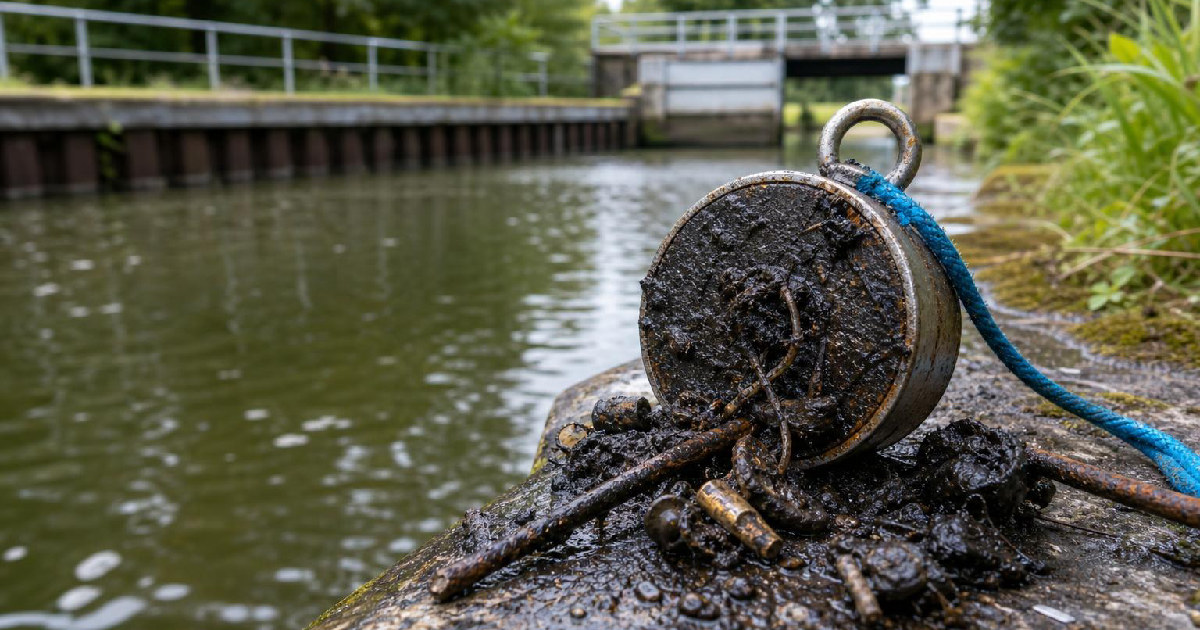
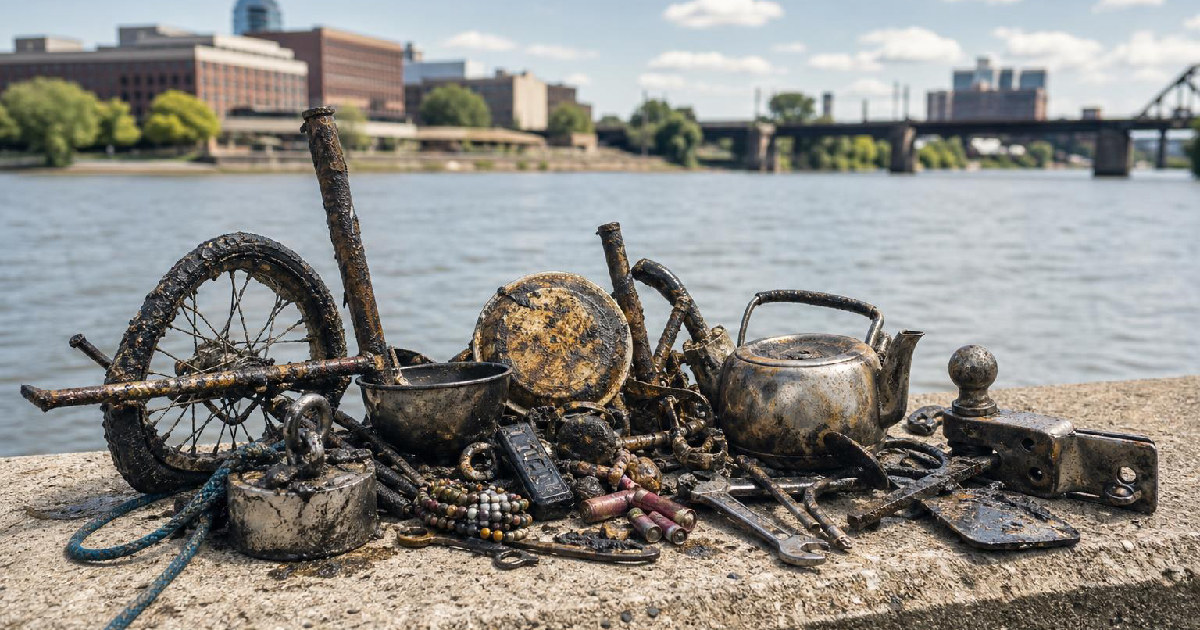
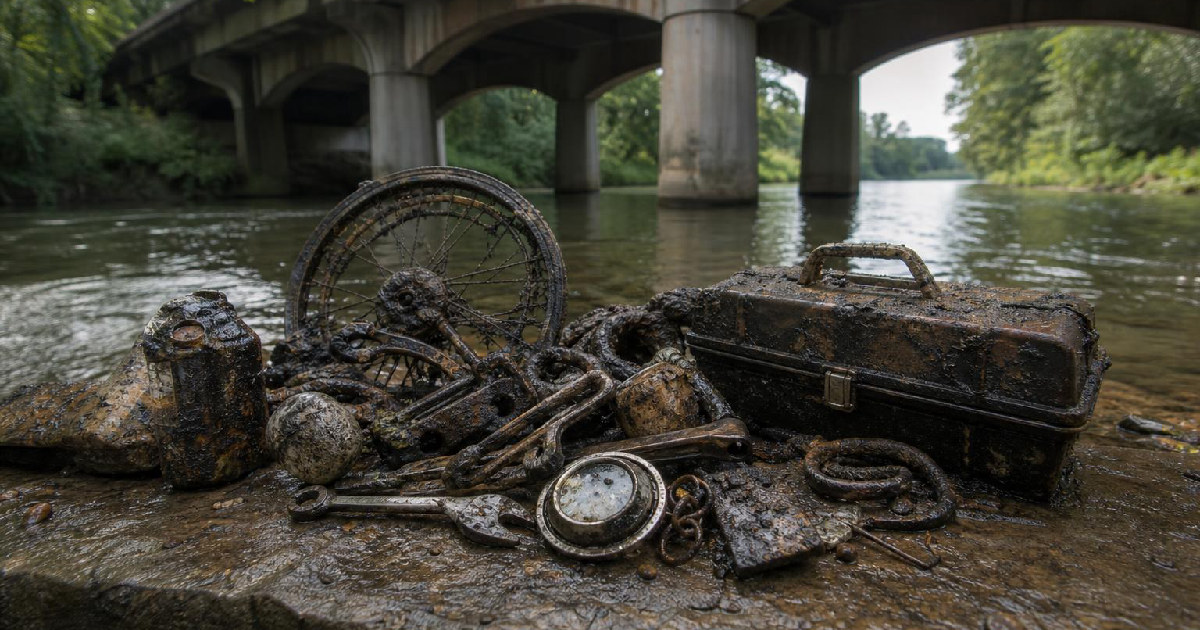
Before the motorcycle becomes the center of gravity, the day gives them a scatter of smaller finds: nails, a shell, a .556 round, bottle caps, a CO2 cartridge, a fishing jig head, bits of cloth, nuts, a horseshoe, a shotgun shell, a tape-measure piece, rebar, a screwdriver, and other little pieces of metal and junk. That mix is useful because it shows what kind of place they are working in. This is not a one-hit wonder. It is a spot that keeps handing over hardware, litter, and the occasional strange item, which is exactly why magnet fishing feels like treasure hunting instead of just cleaning.
Tyron’s first time magnet fishing also adds a fresh angle. He is not just a passenger on the bank. He is discovering the rhythm of ghost throws, small wins, and the sudden spike of excitement when the magnet comes back loaded. Some of his biggest reactions come from the sheer variety of what lands on the magnet at once. That gives the video a human pace: one person with experience, one person learning, both of them trying to stay organized as the stakes rise.
Why the police response mattered
The arrival of law enforcement changes the mood without killing the momentum. An FWC officer shows up first, and the crew immediately treats the encounter as part of the job rather than an interruption. They explain that the motorcycle had already been found on a previous trip and that they came back specifically to pull it out. The officer’s reaction is not dramatic, but it does nudge the story into another lane. Once the police are involved, the bike is no longer just a cool find. It becomes something that needs to be checked, documented, and possibly traced.
That is why the missing plate and the scraped VIN matter so much. The crew’s biggest clue is also the biggest complication. They can see that the bike is intact in most respects, but the identifying numbers appear to have been ground off. That means the motorcycle is no longer just a salvage problem. It is a potential stolen-vehicle issue, or at least something that cannot simply be handed off like scrap.
The later call chain adds another layer of oddity. Miami-Dade transfers the call, Florida Highway Patrol takes over, and the crew has to share their location by pin drop. The process itself becomes a little comic, a little procedural, and very much not what most people expect from a day spent tossing magnets into water.
The hardest part was not the lift
The lift is difficult, but the real obstacle turns out to be the ground around the bike. Once the motorcycle starts moving, the crew discovers how much easier the job becomes with two people and a better angle. They can get it to roll, shift it around, and work it toward the bank.
Then the ants arrive.
That part changes the whole feel of the video. The crew has to deal with a ground swarm while still trying to move a heavy object that is partly in the water and partly pinned by terrain. The story stops being just a recovery and becomes a race between patience and discomfort. The ants are not a side note. They are the thing that makes the path forward harder, more urgent, and more awkward.
That is also where the video’s best kind of magnet-fishing chaos shows up. The crew keeps talking through the problem, adjusting grip points, and trying to avoid getting trapped by the rope or the bank itself. There is no polished strategy here, just improvised teamwork. The motorcycle finally comes up because they keep changing tactics until one of them works.
What the scratched VIN left unresolved
Once the bike is on the bank, the story gets stranger instead of cleaner. The motorcycle appears to be a Suzuki Gixxer sports bike, and the crew notes that most of it is there except the seat and the damaged identification numbers. The VIN being scraped off with an angle grinder matters because it leaves the crew with a find that is physically real but administratively stuck.
That is the part of the video that lingers. The crew wants to do the obvious responsible thing: get the bike documented, figure out whether it is stolen, and dispose of it properly. But the answer they get from law enforcement is unsatisfying. They are told to leave it, and that leaves the crew with a strange outcome. They have done the hard part, they have moved the object, and yet they still cannot close the loop.
For readers wondering what happens when a magnet fishing find is obviously suspicious but not easily claimed, this is the answer: it can end in limbo. The motorcycle is out of the water, but it is not really “resolved.” It is just stranded in a different way.
Why the spot still feels active after the bike is out
Even after the motorcycle is moved, the day does not flatten out. The crew keeps finding little pieces of metal and fishing debris, and the area still behaves like a place where people have dumped more than one kind of problem. That matters because it means the bike was never the whole story. It was simply the biggest item in a place already full of evidence that someone has used the water as a hiding spot.
That is why the video works as a companion feature and not just a replay. The appeal is not only the motorcycle itself. It is the combination of recovery work, police involvement, Everglades logistics, and the unresolved final answer. The crew starts with a heavy magnet and ends with a bigger question than they began with: what do you do when the obvious next step is blocked by a scratched-off VIN and a shrug from the people you call for help?
Watch the original video: https://www.youtube.com/watch?v=fHf3ABBlwdg
RECOMMENDATIONS
All About The Life designs from Texas Thread Theory, inspired by the places you go and the stories you bring back.

Life Happens Out There
An outdoor-focused AATL design celebrating mountains, forests, hiking, camping, road trips, and the simple idea that life happens when you get out there and explore.