Why this bridge kept giving up the same kind of evidence
The direct answer is simple: the video is not really about one secret object under the bridge. It is about a stretch of water that keeps handing back the same message in different forms. Tools, bike parts, scrap metal, old accessories, and a few surprises keep coming up fast enough to make the whole outing feel less like a random treasure hunt and more like an excavation of everyday life that slid out of sight.
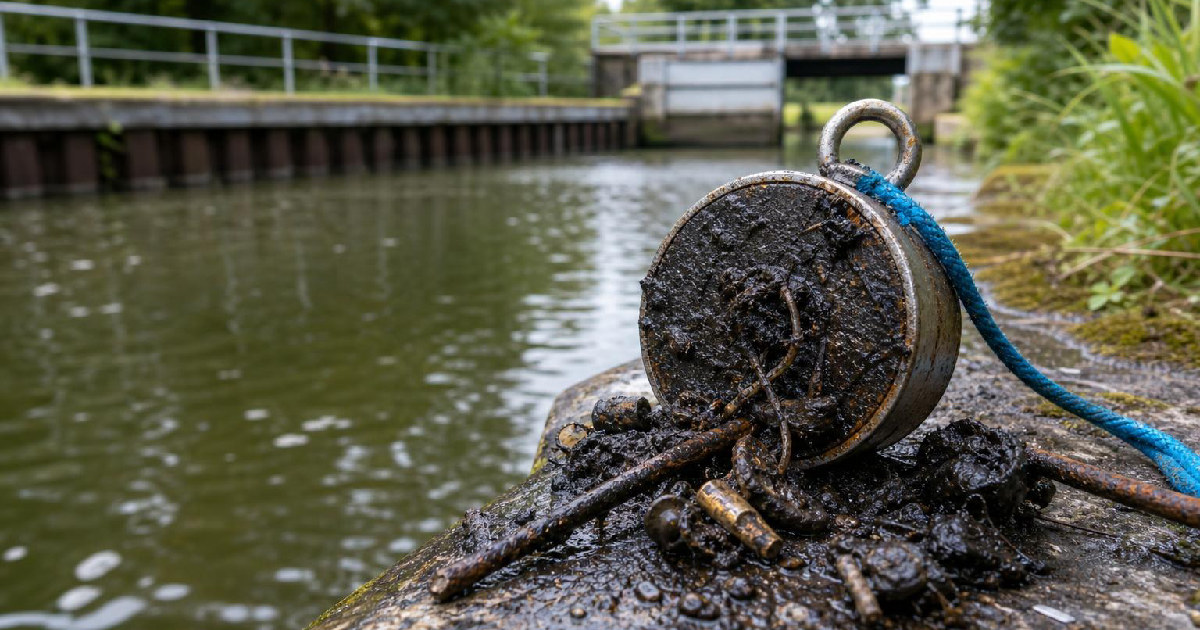
That is what makes this magnet fishing session work. The first location does not just produce one or two interesting items; it turns into a pattern. Once Bryce starts pulling up piece after piece, the bridge stops feeling like an ordinary fishing spot and starts reading like a catch basin for whatever gets dropped, tossed, lost, cut, or abandoned nearby. By the time the bucket starts filling, the story has already become bigger than any single find.
A first stop that turns into a toolbox recovery
The opening stretch sets the tone immediately. The magnet comes back heavy on the first throw, and that sets off a run of finds that barely lets up. Instead of a slow build, the video opens with a dense sequence of objects: bike parts, scrap, a speaker, a tape measure, a lock, a blade, and other small pieces that feel like fragments of larger stories.
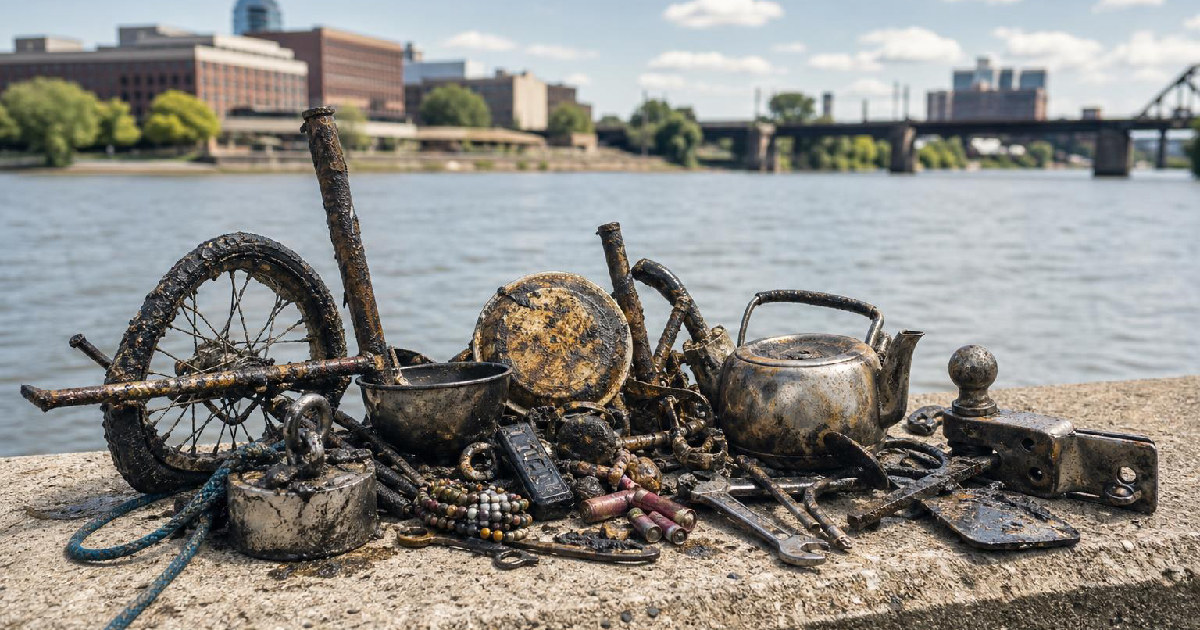
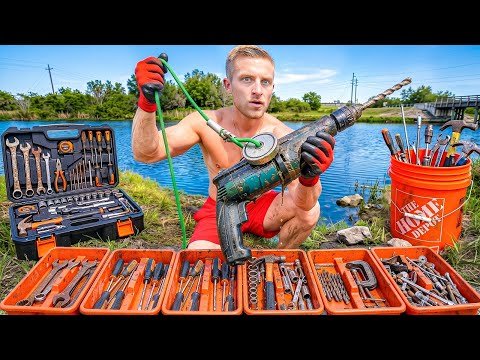
What stands out is how often the finds cluster around the same categories. Bike components keep showing up in different forms, as if a whole bicycle has been breaking apart over time and getting spread across the bottom. Tools also begin to dominate: screwdrivers, snips, a hammer, Allen keys, and a drill all appear in the same general area. At one point, the crew even pulls up a huge pot, which adds a strange domestic note to the pile. It is the kind of find that makes the location feel less like a stream and more like a catch-all drawer emptied into the water.
The most striking object in this first stretch may be the full toolbox. That find changes the mood of the video because it is not just scrap; it is a complete, recognizable set of someone’s working gear, with Craftsman branding visible and a cluster of sockets, wrenches, and other hand tools still inside. The box is held shut by a bungee cord, and that detail matters because it helps explain why magnet fishing can feel like opening a time capsule. Once something is enclosed, weighted, and left alone, the river can preserve its outline even while rust and mud take over.
The strange mix of everyday hardware and one-off surprises
If the toolbox is the headline, the rest of the haul is the texture around it. The video keeps moving between ordinary hardware and objects that seem to come from completely different parts of daily life. There is a fan with a Darth Vader face on it. There is a bra. There are AirPods, found more than once across the broader outing. There is a huge bungee cord, a jar lid, a hole puncher, a trailer pin, a jig head, a ruler fragment, and a lighter that does not work.
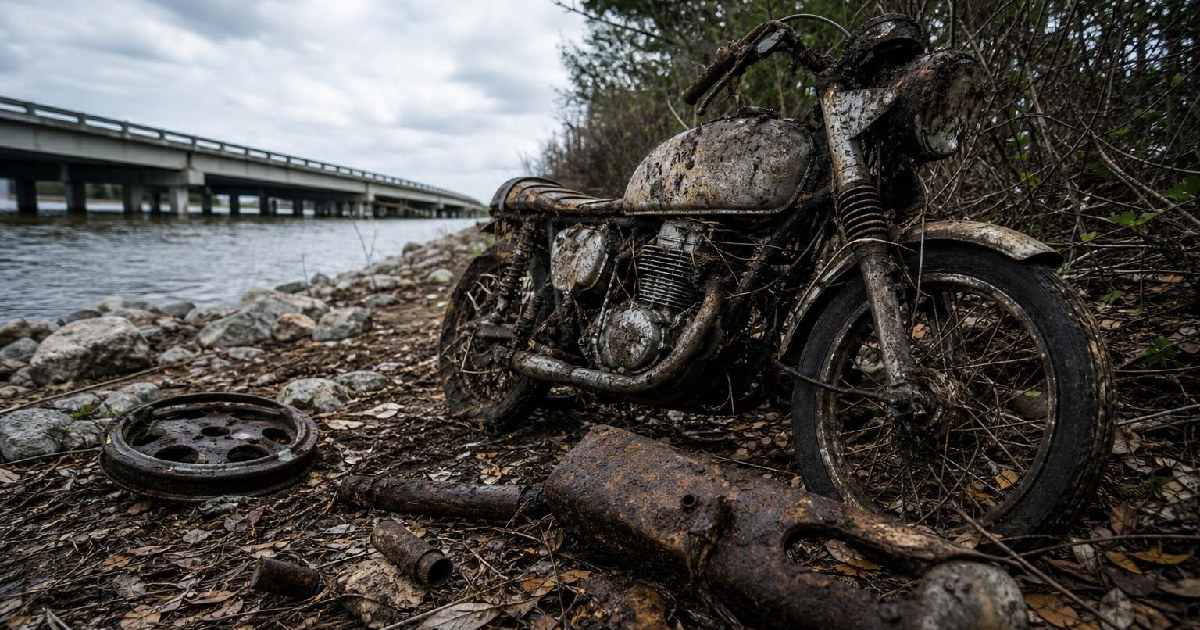
That range is part of the appeal. Magnet fishing often looks chaotic from the outside, but this video shows a practical truth: waterways near bridges collect whatever people carry, repair, drop, or discard. The items are not random in the sense of having no context at all. They are random in the more revealing sense that they represent actual use. Tools suggest work. Bike parts suggest movement and repair. Personal electronics and clothing hint at everyday carry. The bridge is not hiding a single mystery so much as holding onto evidence of routine human traffic.
There are also smaller moments that give the video its personality without changing the bigger picture. Snails appear on the magnet more than once, and Bryce carefully puts them back. A piece of fencing seems to explain why some heavy clicks keep failing to come free. A fence under the bridge gets caught in the process, showing that the bottom is not just messy but layered, with one obstacle hiding another. Those moments help the video feel lived-in rather than staged.
Why the second bridge felt like a fresh layer of the same story
After the first stop fills the bucket, the crew returns the next day to a different bridge. The shift matters because it keeps the video from feeling repetitive. The second spot has its own rhythm, but it also echoes the first in a useful way: another set of tools, another cluster of metal finds, and another sense that the water has been storing up objects for a long time.
The first meaningful catch at the second bridge is a 15-pound workout weight. That is a funny and practical opening find because it immediately says this spot is not going to be empty. A workout weight in a riverbed has its own kind of logic: something heavy enough to settle, awkward enough to stay put, and strange enough to stand out once retrieved. From there, the finds keep coming—wire snips, a box with a full tool set, hoses, gauges, clamps, wrenches, a pry bar, and more small pieces that add up quickly.
The toolbox recovery at this second bridge becomes its own mini story. It is another Craftsman case, again full of tools, and it feels different from the first haul because this one arrives after the channel has already established a theme. The video starts to read like a sequence of buried workstations: one bridge hiding loose tools and bike parts, another hiding a bundled-up kit that somehow stayed intact long enough to be pulled back out. Bryce’s comments about the spot being under active development in the past add context without overexplaining it. The place simply has a history of collecting the things people bring to work.
What the final stretch says about the spot, not just the haul
By the final part of the video, the main pattern is clear. This is not a story about one unbelievable discovery. It is a story about accumulation. The water under these bridges has kept almost everything it touched: broken gear, hand tools, scrap, personal items, fishing tackle, and odds and ends that suggest people have been using, dropping, or hiding things there for a long time.
That is also why the video feels satisfying even when the finds are small. A screw matters because it fits the larger picture. A paper clip matters for the same reason. Once the bucket is full of enough pieces, you stop seeing isolated objects and start seeing a kind of inventory. The bridge has a memory, and magnet fishing is simply the way Bryce and Gavin keep pulling it back into view.
For readers who enjoy magnet fishing videos, that is the real hook here. Not a single dramatic reveal, but the way repeated passes over the same kind of ground can expose a hidden layer of ordinary life. The tools tell one story, the bike parts another, and the odd surprises keep the whole thing from becoming predictable. Put together, they make the bridge feel less like a crossing and more like a long-term storage site for whatever never made it back out.
Watch the original video: https://www.youtube.com/watch?v=htxOFH7CdBo
RECOMMENDATIONS
All About The Life designs from Texas Thread Theory, inspired by the places you go and the stories you bring back.
Life Happens Out There
An outdoor-focused AATL design celebrating mountains, forests, hiking, camping, road trips, and the simple idea that life happens when you get out there and explore.