Why these two RV air conditioners are interesting
The direct answer is that this video is not just a numbers test. It is a practical comparison of two fixed-speed RV air conditioners that are trying to do a lot of the same work in very different ways. Mortons on the Move tear down the FOGATTI InstaCool Max and InstaCool Ultra, then measure airflow, power draw, cooling output, heat pump performance, and dehumidification under real conditions. That mix matters because RV air conditioners are often judged by one label on the box. This video asks a better question: what does the system actually do once it is on a roof, pulling air through a small opening, and trying to make a living space comfortable?
The other reason the comparison stands out is that both units are presented as newer-generation RV ACs using R32 refrigerant and fixed-speed compressors, but the parts and layout do not feel identical at all. One unit leans into a more compact, car-like design. The other uses a larger evaporator and a more refined-looking interior air distribution box. From the start, the video frames the comparison as something more useful than a spec sheet reading.
What the teardown reveals before the numbers
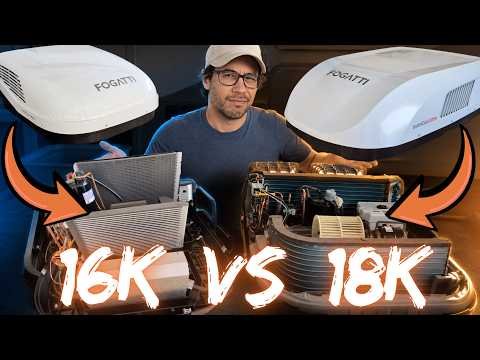
Before any testing begins, the teardown gives away a lot about how each unit may behave. The 16K model, the InstaCool Ultra, is described as heavier and larger in footprint, with a steel chassis and a more traditional fixed-speed arrangement. The 18K model, the InstaCool Max, uses a composite chassis, variable-speed fans, and a noticeably different interior layout. Those differences are not cosmetic. They affect weight, airflow path, sound, and how easy the units may be to live with in a real RV.
The construction inspection also shows that the two units are not built around the same kind of airflow strategy. The Ultra uses a larger interior evaporator and a more sound-deadened non-ducted air distribution box. The Max uses a smaller interior coil but a very different rooftop and interior arrangement, including variable-speed fan control and an interior unit that feels thinner and more compact. On paper, that sounds like the Ultra might have the edge in cooling comfort, while the Max might be the more sophisticated heat pump. The testing ultimately supports that split more than the headline BTU numbers do.
A useful detail in the teardown is the way the compressors compare. The video identifies a Gree compressor in the Ultra and a larger Rechi compressor in the Max. The point is not the brand name so much as the size relationship: the bigger unit does have the bigger compressor, but neither machine appears likely to deliver the full marketing number in the way a buyer might imagine. That is one of the main lessons here. The unit design can be more revealing than the advertised capacity.
How the two interior air distribution units change the install
The interior side of the comparison may be the most practical part for RV owners. These are non-ducted units, but they do not install the same way. The Ultra uses a more familiar ceiling plate and a flexible duct-style setup that is thicker and more heavily sound deadened. The Max uses a different interior air distribution box that is thinner and more compact, but it also needs a 12-volt supply in the roof and includes a furnace control line. That makes it more interesting as a replacement option for some older RV systems, especially where the furnace is controlled through the air conditioner.
That install difference is more than a footnote. It helps explain why someone might choose one unit over the other even if the raw output numbers were close. The Ultra’s interior assembly is described as quieter and more premium-feeling, and the Max’s is described as thinner, lighter, and better suited to certain ceiling layouts. In other words, the comparison is not only about comfort performance. It is about fit.
The video also points out a weakness that applies to RV air conditioners generally: exterior air leakage and condensate design. The Ultra’s condensate drainage path allows outside air to be drawn in more obviously than the Max’s arrangement, which is shaped to reduce short-circuiting. That does not make either unit unusable, but it does matter when you care about efficiency, dust, smoke, or outside air intrusion.
What the testing showed about airflow, power, and cooling output
The testing itself is the core of the episode, and the most useful takeaway is that the measured performance does not line up neatly with the big marketing claims. Using calibrated temperature, humidity, air velocity, and power measurements, the Mortons found that both units delivered respectable real-world output, but not at the level suggested by the headline BTU ratings.
In simplified terms, the Ultra landed around 9,276 BTUs of cooling output, while the Max came in around 10,150 BTUs. That puts the Max slightly ahead in cooling, even though the naming and sizing might make a shopper expect a larger gap. The important detail is that both units still performed well enough to be considered solid modern RV air conditioners, especially compared with older models. The video’s broader conclusion is not that these are weak systems, but that the rating language used in this part of the RV market does not map cleanly to the kind of capacity language shoppers may be used to seeing in home HVAC.
Power draw tells a similar story. The Max did not reach the full wattage level its rating suggested, and the Ultra also stayed near the same general range during the tests. Startup load was also checked, and both units showed a noticeable fixed-speed compressor spike, though not an extreme one. That matters if you are asking whether a generator or inverter setup can handle the start. The video suggests these units are manageable for many setups, but still benefit from a soft start approach where appropriate.
Airflow is another place where the testing sharpens the comparison. The Ultra’s airflow did not behave the way its published number might suggest, while the Max showed more output than the Ultra in the standardized traversal. That may sound backwards at first, but it fits with the rest of the video: the bigger, more refined-looking unit is not automatically the stronger airflow machine. The real answer depends on how the coil, fans, and ducts work together.
Why heating and dehumidification mattered here
The heat pump results are where the Max separates itself most clearly. In the conditions used for testing, it performed very strongly in heating mode and even surpassed its cooling output by a wide margin. The Ultra also did well in heating, but the Max came across as the more impressive heat pump of the two. That makes sense given the way the variable-speed fan system behaves and the way the unit can ramp harder in that mode.
Dehumidification was another strong point for both units. Because the tests were run in humid conditions, a meaningful part of the cooling load was latent rather than purely sensible. The result was that both units pulled a substantial amount of water from the air. The Max removed more moisture than the Ultra, which lines up with its slightly stronger overall output in the test sequence.
For RV owners, that matters because comfort is not only about air temperature. A unit that moves moisture well can make a rig feel better even when the thermometer does not look dramatically different. This video makes that practical point without overexplaining it: a good RV AC is one that handles the living environment, not just the label.
Which unit makes sense for which RV setup
The cleanest way to read the comparison is this: the InstaCool Max is the more refined heat pump and the better choice where a slimmer rooftop profile, variable fan behavior, and furnace integration matter. The InstaCool Ultra is the better fit where the thicker, quieter, heavily sound-deadened interior assembly and the specific non-ducted layout work better for the coach.
That is also why the Mortons say they would choose the Ultra for their own RV setup. Not because it won the test, but because the way it installs suits their camper better. That is the kind of conclusion RV gear comparisons often need and rarely get. A product can test well and still not be the best match for the rig in front of you.
The video ends up making a broader point about modern RV air conditioning: fixed-speed units have improved a lot, especially in sound and efficiency, but the best choice is still about matching the system to the coach. The testing helps separate what the units promise from what they actually do, and the teardown shows why that difference exists.
Watch the original video: https://www.youtube.com/watch?v=qyuHvEq3dkw
RECOMMENDATIONS
All About The Life designs from Texas Thread Theory, inspired by the places you go and the stories you bring back.

Go Somewhere — Life Is Better On The Road
A bold road-trip design featuring an RV, winding road, mountains, lake scenery, and the message “Go Somewhere — Life Is Better On The Road.” Made for travelers, campers, RVers, and anyone who feels a little more like themselves once the highway opens up ahead.