A through route that keeps changing the view
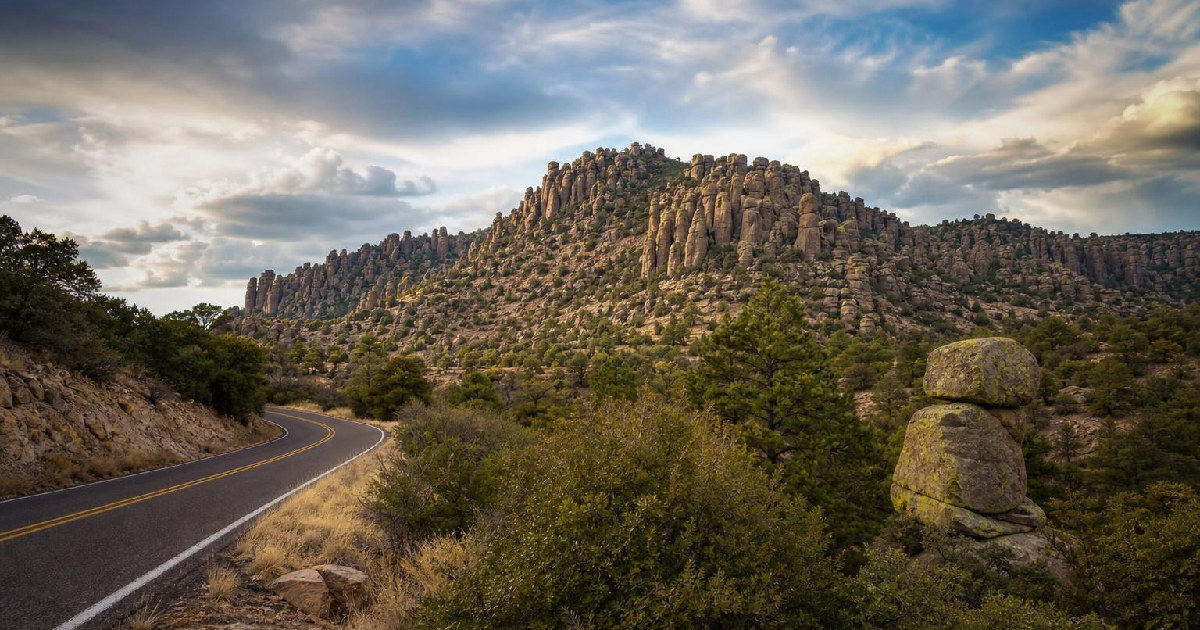
The Black Hills Back Country Byway is the kind of road that makes its best case simply by being a road you can keep driving. The plain answer is straightforward: it is a 21-mile primitive route in Arizona that runs between Safford and Clifton, climbs nearly 2,000 feet, and crosses the Black Hills on BLM land. But the detail that gives it shape is this: it is a through route, not an out-and-back. That changes how the trip feels. Instead of turning around and retracing the same scenery, every mile seems to carry you into something different.
That through-drive quality matters because it turns the byway into a crossing rather than a destination-only spur. The video treats the route as a moving experience, not a checklist item, and that is a useful way to think about it if you are looking for Arizona backcountry drives that feel connected to the land instead of merely passing through it.
What the byway is like on the ground
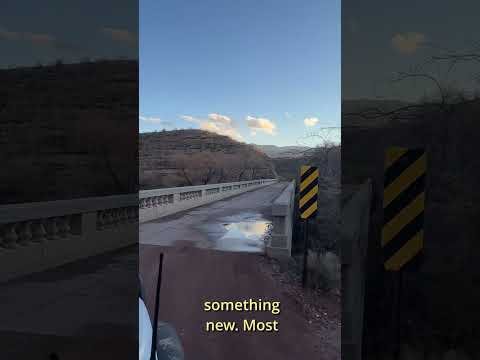
In the video, the route is described as a scenic drive through eastern Arizona’s BLM land, with a history tied to miners, ranchers and early settlers. That history gives the road a little more texture, but the present-day experience is what stands out. During the creators’ visit, the main road was surprisingly well graded.
That does not mean it is a polished highway or something to take casually in every season. The video is careful to point out that conditions can change quickly with weather. That is an important distinction for a primitive road like this, especially one that crosses remote country and branches into rougher side tracks. The main route may be manageable at the time of filming, but the surrounding terrain still carries the feeling of a place where weather and surface conditions can shift the whole character of a drive.
For travelers, that means the Black Hills Back Country Byway works on two levels at once. It is a scenic route with broad views and public-land openness, but it is also a reminder that “well graded” is not the same as predictable everywhere on the map. The video never turns that into a warning lecture; it simply shows the road as it was experienced and leaves room for conditions to matter.
Side roads, rocks and the campsite overlook
The main byway may have been manageable during the trip, but the side roads are where the terrain starts asking more of a vehicle and its driver. Mortons on the Move take a rough two-track off the byway and find enough rocks to make the drive feel more like an off-road detour than a casual scenic pull-off. That contrast is part of the appeal. The byway itself gives the sense of crossing a landscape, while the side tracks make the landscape feel more rugged and less edited.
That rough turn-off also leads to one of the video’s strongest practical details: a campsite overlooking the massive Morenci Mine. The setting does a lot of work here. It is remote BLM camping, but it is not just about being far from town. The overlook adds a visual anchor to the experience, pairing mountain views with a dramatic industrial landmark in the distance. The result is a campsite that feels memorable because it sits at the intersection of solitude, elevation and scale.
The video presents dispersed camping as one of the route’s draws, and that feels central to the byway’s identity. You are not simply driving to a scenic endpoint and leaving. You can pause, branch off, and find a place that makes the journey feel extended. That is part of why the road leaves an impression: the campsite becomes an extension of the drive rather than a separate activity.
Why this stretch feels different from a standard scenic drive
A lot of scenic drives promise views. The Black Hills Back Country Byway offers that, but it also offers motion with consequence. Because it crosses the mountains between Safford and Clifton, climbs nearly 2,000 feet, and remains a primitive road on public land, the route has a sense of exposure that more developed drives often smooth away. You are aware of the grades, the remoteness, and the fact that the road exists because people once used these corridors for work and movement, not just sightseeing.
That is probably why the video lands as more than a simple “look at this pretty road” piece. It is about the experience of moving through a place that still feels alive with practical use and backcountry possibility. The broad appeal is obvious: mountain views, dispersed camping and a route that does not force you to double back. But the deeper appeal is the feeling that each part of the drive changes the terms a little bit. A graded main road gives way to a rough two-track. A campsite opens onto a mine overlook. A scenic crossing becomes a small expedition.
For anyone asking what the Black Hills Back Country Byway actually offers, the best answer is that it combines accessibility with a real sense of terrain. It is not trying to be the hardest road in Arizona, and the video does not pretend otherwise. Its strength is in the balance: a drive that can be enjoyed for the scenery, the land status, the camping opportunities and the way it keeps revealing a new angle as it runs between two towns.
That combination is what makes the byway feel like a hidden gem rather than just another line on a map.
Watch the original video: https://www.youtube.com/watch?v=U27OJ9-22qw
RECOMMENDATIONS
All About The Life designs from Texas Thread Theory, inspired by the places you go and the stories you bring back.

Worth The Detour
A road-trip-inspired AATL design for scenic routes, mountain drives, back roads, and the unexpected stops that become the best part of the trip.