Amsterdam’s canals turn every throw into a small history lesson
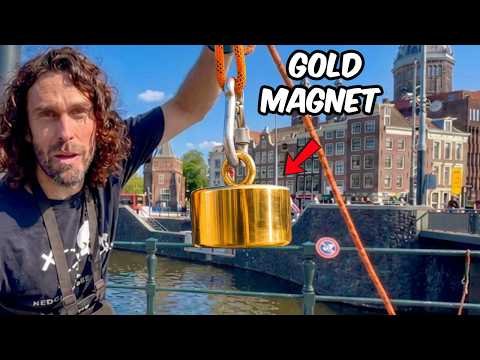
The plain answer is that magnet fishing Amsterdam canals works here because the water is old, busy, and full of human traffic. Bondi Treasure Hunter frames the session as a hunt for whatever has ended up on the bottom of a canal network that has been in use for centuries, and that history gives the whole video its shape. The canal edge is never just scenery. It is a place where bikes, keys, locks, tools, coins, and unidentifiable metal all have a way of collecting.
That is what makes this feature feel bigger than a simple treasure hunt. The creator is not looking for one guaranteed score. He is reading the city through what has been dropped, lost, dumped, or left behind. Amsterdam becomes both the backdrop and the source material. Boats move past while the magnet goes in, people walk by, and the pull from the bottom keeps reminding you that the canal is part waterway, part storage space for lost things.
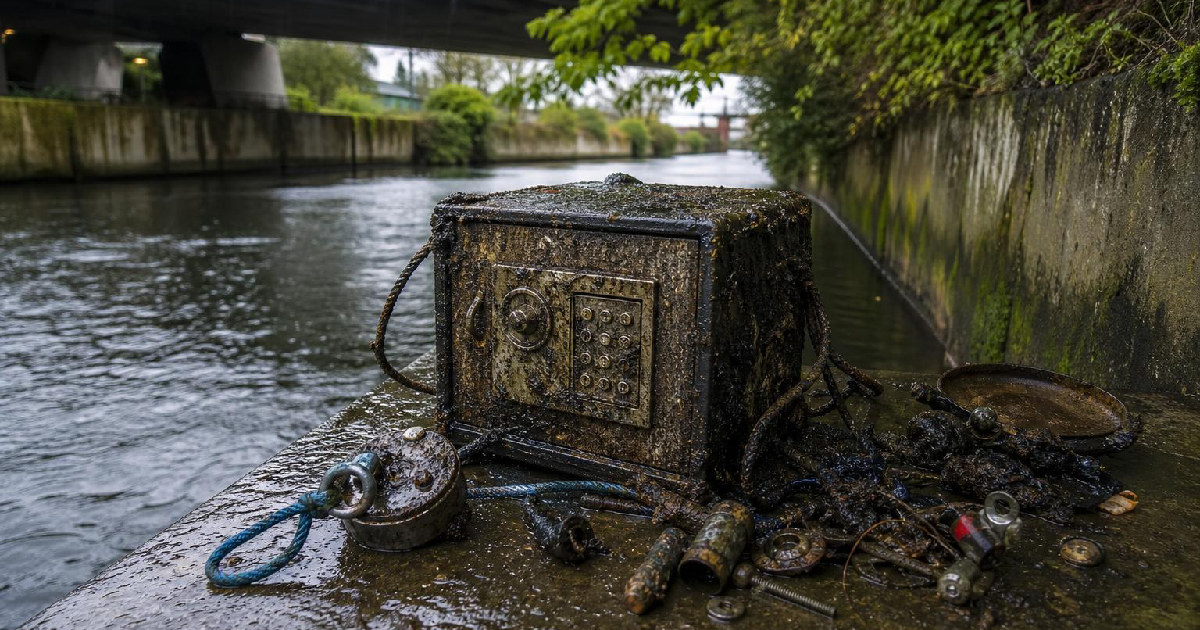
The video also leans on a useful idea: magnet fishing is never only about treasure. It is about trash, too, and the line between the two stays blurry. A coin can show up next to a bike chain. A lock can sit alongside a weird rubbery brick that nobody can identify. A heavy object might be a relic, a piece of infrastructure, or just a crusted lump of something forgotten. That uncertainty is the point.
The finds move between trash, lost property, and mystery objects
If you want the short version of what came up, the haul was a mix of ordinary and strange. Bondi pulls a love lock, umbrella remains, small coins, a stainless steel trimmer blade, a pre-euro 10 cent coin, bike keys, a vape, a bottle top, a ballpoint pen, a tow ball, a power drill, cutter blades, and several pieces of heavily encrusted metal that never quite announce what they are.
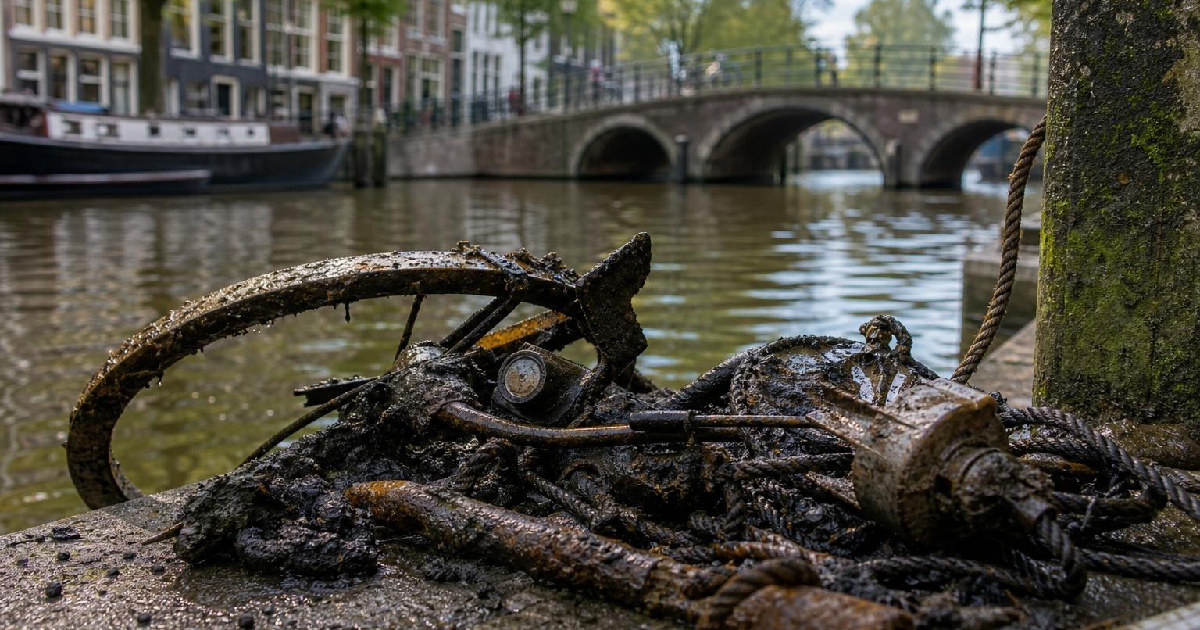
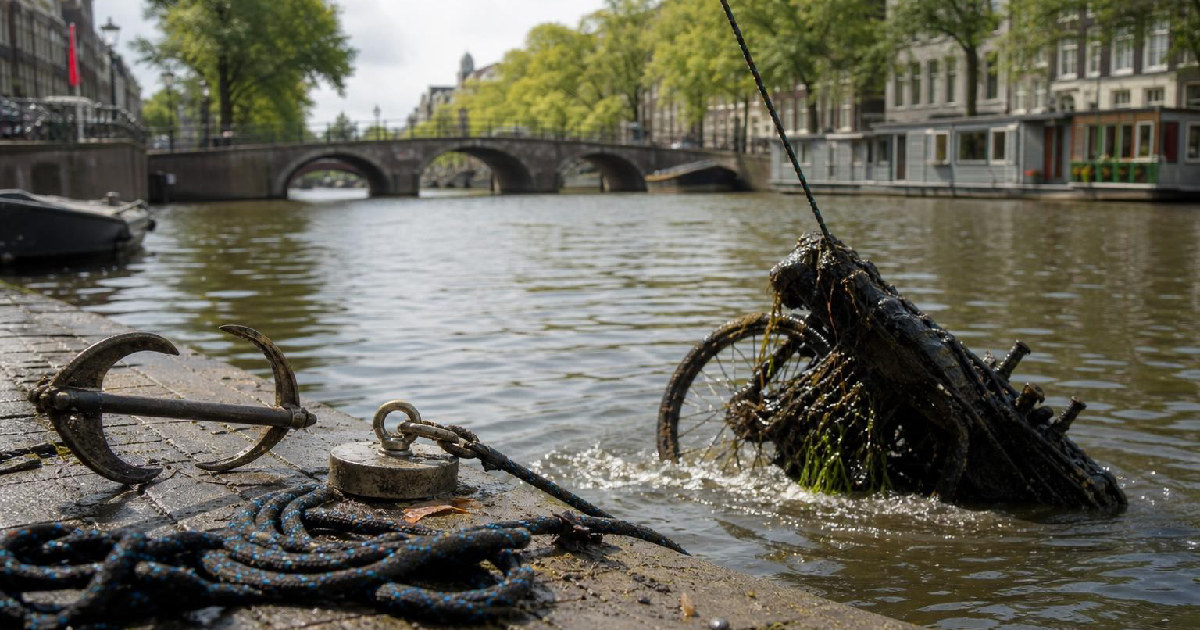
But the memorable part is how the finds are presented. They do not arrive as neat categories. The day keeps jumping between tiny bits of scrap and heavier items that need patience, hooks, or help from other people. A chair comes up filled with canal water and so heavy that it becomes a comic event. A giant, muddy metal piece appears so bulky that the magnet has trouble releasing it. A chain-like object looks almost snake-like as it drags from the bottom. Later, a bike surfaces with moss, muck, and signs of long neglect.
There is also a recurring theme of uncertainty. Several items get described by what they resemble rather than what they definitely are. That gives the video an investigative feel. Is it a Bible? Is it a brick-like metal object? Is that a piece of a fence? A drain pipe? A cannon fragment? The creator keeps working from visual clues, weight, texture, and the way each object reacts to the magnet, which is exactly what makes magnet fishing compelling to watch.
Why the heavy pulls changed the rhythm of the day
The heaviest finds reshape the pace of the video. At first the session feels like a brisk search for odds and ends, but once the bigger objects start coming up, every throw becomes a little more deliberate. The creator has to worry about boats, wall edges, slippery pulls, and the magnet itself getting stuck or thrown off line. That tension gives the hunt a physical rhythm.
Some of the most memorable moments come from effort rather than rarity. The chair is a good example. It is not glamorous, but it is a full-body job to get it out. The same goes for the long, muddy struggle to free larger objects buried in silt. The camera catches the strain, the laughter, and the way each successful pull feels earned. That sense of work is part of the appeal of Amsterdam canal treasure hunting in the video: the canal does not simply hand over items. It makes the crew wrestle for them.
The heavy pulls also explain why teamwork matters so much later in the session. Mark helps. So do Sam and Robert, two boaters who jump in when the magnet hooks onto something especially stubborn. The day gradually becomes less of a solo hunt and more of a shared recovery effort. That shift matters because it turns the finds into a social event, not just a personal one.
A canal hunt that became a group effort
By the time the hunt gets truly difficult, the video stops being about one person standing on a bank and starts becoming a small collaboration. Mark gets involved with the heavy lifting. Later, Sam and Robert help from a boat. The grappling hook comes out. A 3-meter pole is used to inspect what is below the surface, though that experiment does not settle the question the way everyone hopes.
This is one of the strongest parts of the video because it shows how treasure hunting often depends on improvisation. You do not always know whether the next pull will be a bike, a fence, a mystery block, or something that has been locked in place for years. So the crew keeps adjusting. They move spots. They switch tools. They eat. They laugh. They try again. The energy comes from persistence rather than certainty.
That persistence is also what gives the small finds their charm. A coin may not be dramatic on its own, but in the context of a day like this it becomes a marker of progress. Even a crusty bit of metal matters because it means the magnet is reading the canal correctly. By the end of the session, the hunt has become a test of patience as much as skill.
The setting matters as much as the haul
Amsterdam is not just the location; it is part of the story. The video keeps returning to the city around the water: Central Station nearby, the old canal network, the floating Chinese restaurant, the busy bridges, the floating hotel room, the Science Museum Nemo, and the commercial offices nearby that remind you this is a modern city layered over older ground. That mix is what gives the session its flavor.
The creator repeatedly points out how the canals connect to older history, including the idea that this part of the city was once open ocean. Whether the magnet is bringing up a modern bike lock or something that feels much older, the point is the same: the canal holds traces of everything that passes through the city.
The people passing by are part of that atmosphere too. Some stop to watch. Some joke. Some ask questions. Some offer help. Others just keep moving. That public setting makes the hunt feel lived-in, not staged. Even lunch on the floating restaurant becomes part of the experience rather than a break from it.
That is why the video works so well as a companion feature. It is not really about finding one legendary object. It is about spending a day letting the canal answer back in fragments, one crusty find at a time.
Watch the original video: https://www.youtube.com/watch?v=8Gn9Rkgk4z0
RECOMMENDATIONS
All About The Life designs from Texas Thread Theory, inspired by the places you go and the stories you bring back.
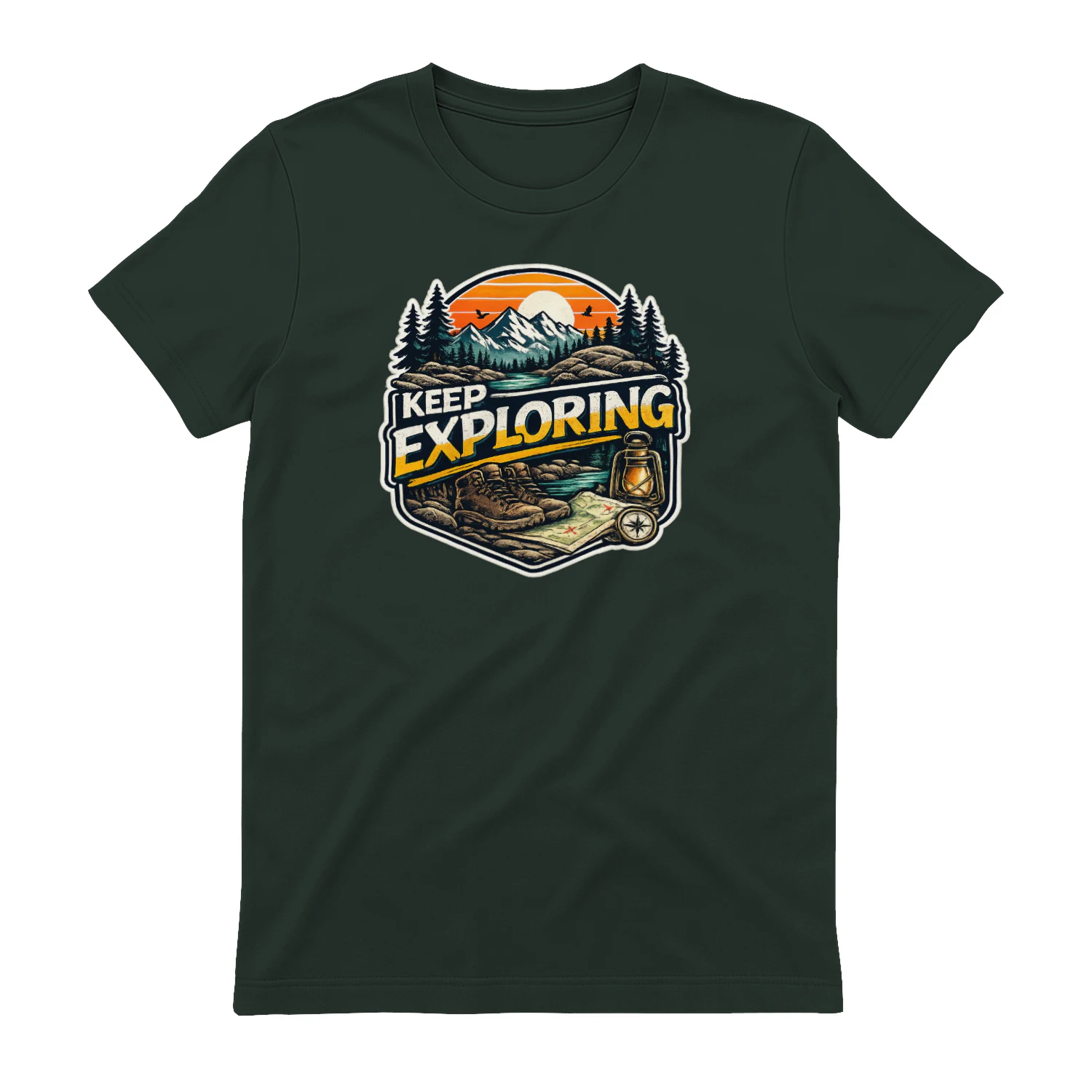
Keep Exploring Badge
A vintage outdoor badge centered on one simple message: “Keep Exploring.” With mountains, evergreens, a river, hiking boots, lantern, map, and compass details, it’s made for hikers, campers, travelers, and anyone who is always curious about what’s around the next bend.