A backpack test disguised as a survival trip
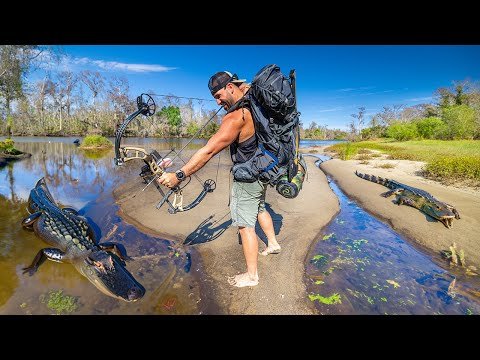
The short answer is that this video is really a field check on an old survival backpack. Jordan goes into Alligator Alley with a pack he says he assembled months earlier and had not touched since, then spends the video figuring out what is actually useful once the boat lands and the day turns into camp life. The setting gives the trip a harder edge, but the real story is organization: what was packed, how it was sorted, what got used, and what still made sense after the bag sat untouched for a long stretch.
That matters because the video is not built around a single rescue or emergency. It is built around a simple question: if you pull an old backpack off the shelf and drop it into a Florida backcountry night, does it still hold up? The answer, at least in this trip, is mostly yes. Not because everything is perfect, but because the kit covers the basics well enough to make the camp workable.
What was packed before the boat ever left
Jordan lays the bag out in a way that makes the logic easier to follow. The outer items include an axe, paracord, a water filter, pyro putty, and basic survival tools. Inside the main pack are the food and camp items: ready-to-eat meals, a skillet, jet boil cooking pieces, a French press, a Yeti mug, wipes, a lighter, and a pocket towel. Lower in the pack, he keeps the sleep system together with a hammock, straps, a pillow, rain flies, and a bit of lighting.
The impression is not of a stripped-down minimalist loadout. It is closer to a practical “everything in one place” setup. There is cooking gear, hygiene gear, sleep gear, and a few things that are clearly there because he expects to need them later rather than immediately. Even the way he talks through the backpack shows the point: he wants the contents visible, not mysterious, so the bag can be judged as a real working system instead of a vague survival prop.
There is also a little personality in the choices. Coffee gets its own place, and he treats it as essential rather than optional. That gives the backpack a clearer identity: this is not a fantasy wilderness kit, but a day-plus camp setup for someone who wants comfort where he can get it and flexibility where he cannot.
Camp split between comfort and improvisation
Once the backpack is unpacked, the trip becomes a contrast between Jordan’s setup and Travis’s setup. Jordan goes with a hammock in the trees, while Travis gets the ground-level arrangement with a cot, tent, sleeping bag, and pillow. The difference is not presented as competition so much as a practical division of comfort. Jordan’s position gives him a view of the water; Travis gets a more traditional, off-the-ground sleep setup.
That split helps the video feel grounded. It is still a survival-style outing, but the camp is not built to look miserable for the sake of it. Instead, each setup reflects a different way of handling the same environment. Jordan leans into the backpack system he brought. Travis gets a more familiar camp layout. Both approaches fit the broader idea of the trip: make the night work with what is available.
The location itself does some of the heavy lifting. The water is shallow in places, the sandbars shift the route, and the whole area feels like a place where you have to stay aware of changing conditions. But the video never turns that into a big speech about danger. It just lets the setting do what it does naturally, which is give every small task — setting camp, moving gear, checking water, keeping an eye on the boat — a little more weight.
Fire, water, and the meals that defined the night
The most useful part of the video is probably the camp workflow. Jordan tests the pyro putty and gets a fire going quickly, which makes that part of the kit feel immediately worthwhile. He also runs a gravity-style water filter setup, moving dirty river water into a clean bag and then onward through the system. The water does not become crystal clear in the way a marketing demo might promise, but the process visibly works well enough for the trip’s purpose, and Jordan treats that as a meaningful success.
Food is part of the same story. He prepares chili mac and eats under camp light with the boat visible below. The meal itself is not framed as a culinary achievement; it is more important as proof that the cooking gear is functional and that the camp has enough order to support a hot meal. When the fire, food, and water all come together, the backpack stops being a pile of equipment and starts looking like a system.
That is also where the tone of the video settles in. Jordan is not pretending the night is a full wilderness ordeal. He is comfortable, well-fed, and amused by how good the setup feels once it is working. The survival angle is still present, but the emphasis shifts toward something more interesting: a simple camp can feel surprisingly effective when the right pieces are in place.
Why the morning mattered more than the headline danger
The overnight portion is where the trip proves its point. Jordan wakes up having slept well, and the backpack gets its real endorsement there. The hammock, the flies, the gear organization, and the overall camp arrangement all did their jobs. Even the soundscape of the morning — birds, fish activity, and the general movement of the place — reinforces the idea that the night was less about fighting the environment and more about adapting to it.
That is why the title’s danger language ends up feeling more like a frame than the substance of the story. Alligator Alley supplies the atmosphere, and the alligator idea gives the video tension, but the actual outcome is practical. He tests the backpack, gets through the night, and comes away convinced that the bag still has enough in it to support a short survival-style stay.
The ending matters too. The boat starts to float away as the water rises, and that moment is a useful reminder that the environment never stops changing just because the camp is comfortable. It is a small, real complication — not a dramatic crisis, but the kind of thing that keeps a trip honest. Even after a solid night, the day still asks for attention.
What the trip says about the backpack challenge
If you are watching for a survival drama, this is not quite that. If you are watching to see whether an older backpack can still serve as a usable camp kit, then the video answers the question clearly. The gear is broad enough to cover shelter, water, cooking, lighting, and hygiene. The setup is flexible. The camp works. The backpack is not perfect, but it is functional in a way that matters more than a polished product dump.
The most useful takeaway is probably that the challenge is less about suffering and more about readiness. Jordan does not need every item to be flashy. He needs the bag to help him make camp, stay comfortable enough to sleep, and get through a night in a place that demands basic awareness. On that level, the backpack earns its keep.
And because he flags a follow-up idea for viewer-submitted survival bag items, the video also leaves room for a future version of the same concept — one built less around his own old pack and more around a crowd-picked loadout. That gives the trip a second life beyond the overnight itself.
Watch the original video: https://www.youtube.com/watch?v=K-IFFk_LwDk
RECOMMENDATIONS
All About The Life designs from Texas Thread Theory, inspired by the places you go and the stories you bring back.

Reservations Are My Love Language
A polished date-night design for anyone whose favorite words might be “I made reservations.” Featuring elegant dining details and the playful phrase “Reservations Are My Love Language,” it’s a perfect pick for restaurant lovers, foodies, couples, and anyone who takes a great night out seriously.