The cyclone changed the whole rhythm of island life
The plain answer is that this video is about surviving a cyclone in remote Australia while trying to keep food on hand, stay sheltered, and hold the whole operation together afterward. But that simple answer leaves out the pressure that shapes every part of the story. This is not a storm-chasing adventure. It is a life disruption that comes with no power, no reception, limited supplies, and no easy way in or out once the weather turns.
YBS Youngbloods frames the day with a familiar kind of coastal optimism: tide pools open up, the water is working, and there is still time to look for food. Then the cyclone starts to take over the horizon. From there, the mood shifts fast. The coast stops feeling like a place to explore and starts feeling like a place to brace against.
What survival looked like when power and reception disappeared
One of the strongest parts of the video is how quickly ordinary systems vanish. The storm does not just bring wind and rain. It takes away the basics that make isolated living manageable. Power goes out. Reception disappears. Roads are destroyed. The airport is gone. The road back to normal is not a single repair job; it becomes a long, uncertain wait.
That is why the video lands as more than a weather report. It shows what isolation actually means when a cyclone hits: no quick supply run, no steady updates, no easy contact with family or friends, and no guarantee that help or resupply can arrive on a normal schedule. The creator says the only way supplies can come into town is by helicopter, which underlines just how limited the situation has become.
There is also a very human detail in the storm response. When the cyclone intensified, he did not film everything from a safe distance and narrate it later. He grabbed Estrada and the kittens and hid on the bathroom floor for hours. That single choice says a lot without needing to be overexplained. The house becomes a shelter, the bathroom becomes the safest room, and the storm becomes something endured rather than observed.
Why the ocean became the food plan
Before the cyclone fully takes hold, the video keeps returning to one practical goal: catch food quickly. That priority never really leaves. Once the storm has passed, the question becomes what can still be found and cooked with the limited supplies available.
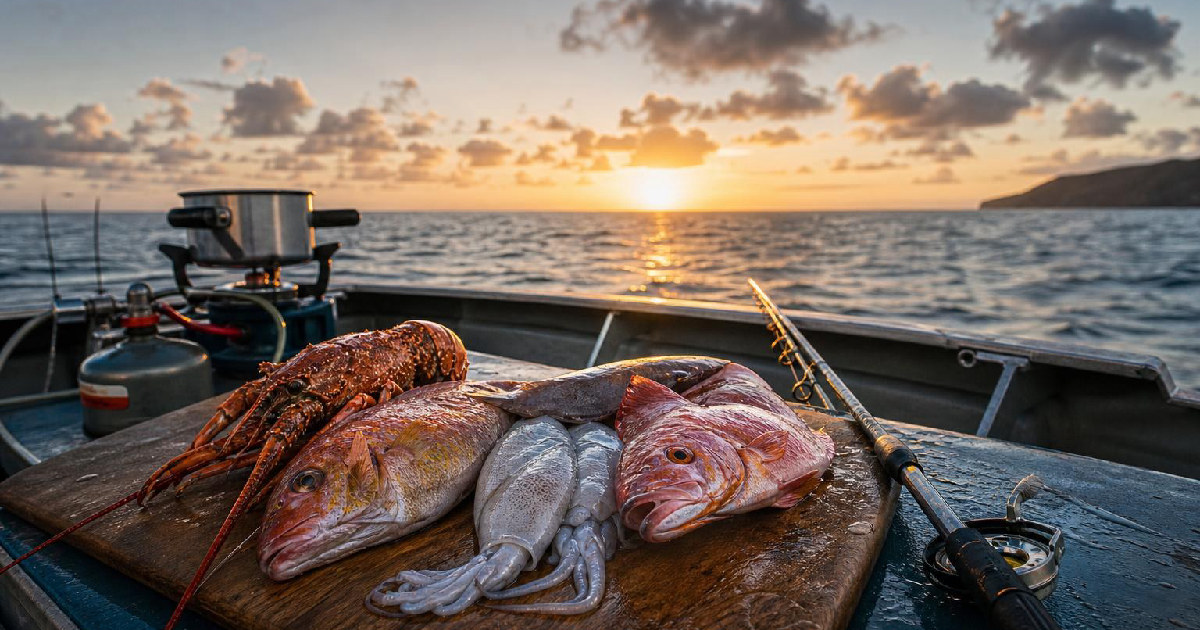
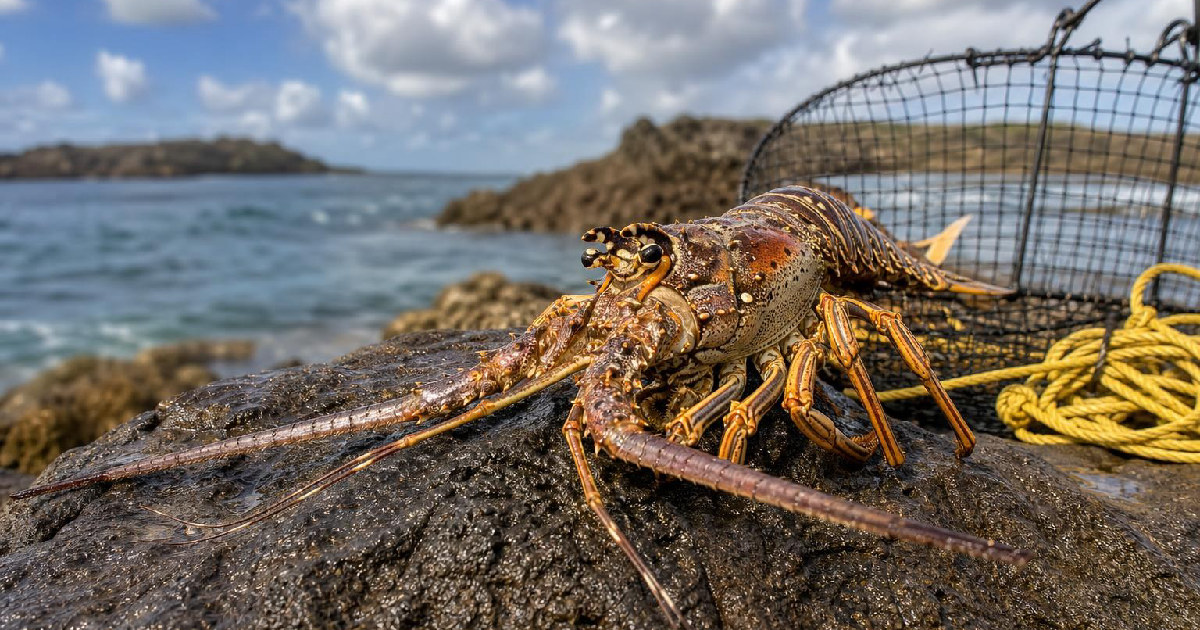
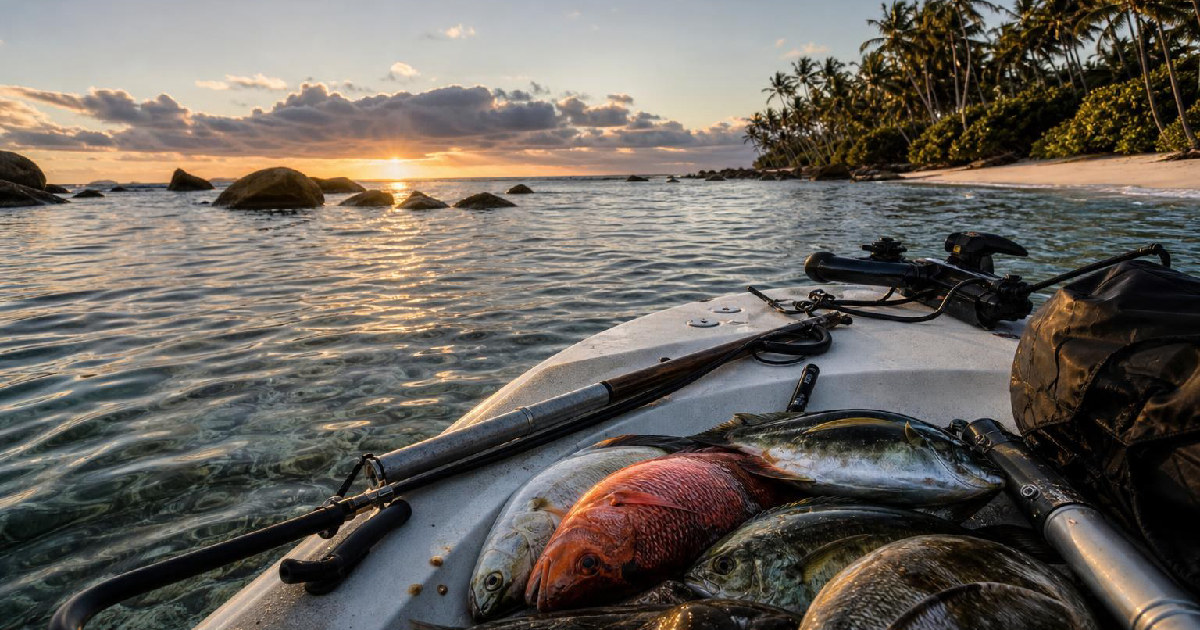
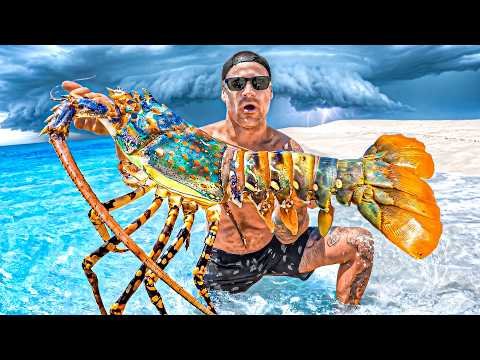
The ocean is not presented as a scenic backdrop here. It is the pantry. The creator goes from bommie to bommie and ledge to ledge looking for lobster grounds, keeping an eye out for giant lobster, painted lobster, or red rock lobster. A school of fish appears early on, but disappears just as quickly. Later, a manta ray drifts through the frame, a reminder that the water is still full of life even when food is hard to secure.
The best moment in this part of the video is not just the catch itself, but the way it is framed as a small victory in a difficult stretch. A good-sized giant lobster becomes the payoff after a period of real pressure. The catch matters because it is not a trophy hunt. It is dinner.
A cook built around limited supplies and hard conditions
Once the lobster is landed, the video shifts into a catch-and-cook that feels earned rather than staged. The processing is practical and direct: tail off, meat out, keep the head, manage the sharp spines carefully. He even notes that the shell can go straight on the barbecue, which suits the moment. There is no sense of excess or polish here. The whole point is to make a meal from what the situation allows.
The later fishing segment follows the same logic. He hooks a queenfish and acknowledges that on a normal day it would likely go back. Instead, with food still short, it becomes part of the plan. That decision is one of the clearest examples of how the cyclone has changed the rules of the episode. The fish is not just another catch; it is a response to scarcity.
There are also small, grounding details that make the environment feel real after the storm. A sea snake appears. A centipede crawls down toward the beach after apparently being battered by the cyclone. The natural world is still functioning, but not neatly. Everything feels unsettled, including the little creatures sharing the same damaged shoreline.
The longer shadow: damage, repairs, and missing footage
The storm’s damage becomes clearer once the immediate danger has passed. The house is flooded. The roof is damaged. Walls and flooring are destroyed or missing. Electronics are cooked. The coastline has been eaten away. Dead sea life is scattered along the shore. The tone here is not dramatic for its own sake; it is exhausted, which feels more honest.
The video also makes clear that the loss is not only physical. The creator says hard drives were lost, along with work computers and other electronics after a power surge. That matters because it means the cyclone damaged both the home and part of the work behind the channel. For a creator like YBS Youngbloods, that is a double hit: the place is damaged, and some of the footage and tools that support the work are gone too.
The future, as described in the video, is still in pieces at the time of filming. Builders have already looked at what needs to be replaced: new floors, walls, ceiling, electrical work, and more. That list tells the reader something important. This is not a quick clean-up. It is a rebuild.
What the video leaves you with
By the end, the video is less about a single lobster cook and more about the way a cyclone resets priorities. Food matters. Shelter matters. Communication matters. And so does the patience required to keep going when the landscape, the house, and the routine have all been knocked around.
The emotional center of the piece is not a dramatic speech. It is the feeling that the creator is trying to keep things moving while still processing how much has changed. The ocean provides a meal. The kitchen becomes a temporary sign of normal life. But the bigger story is the recovery still ahead.
For viewers, that makes the video compelling in a very specific way. It shows how fast remote living can turn from routine into survival mode, and how much of that survival depends on improvisation, local knowledge, and the ability to keep working even when the systems around you fail.
Watch the original video: https://www.youtube.com/watch?v=dXPJGh-Pnac
RECOMMENDATIONS
All About The Life designs from Texas Thread Theory, inspired by the places you go and the stories you bring back.
Life Happens Out There
An outdoor-focused AATL design celebrating mountains, forests, hiking, camping, road trips, and the simple idea that life happens when you get out there and explore.