A food-hunting trip with no fixed script
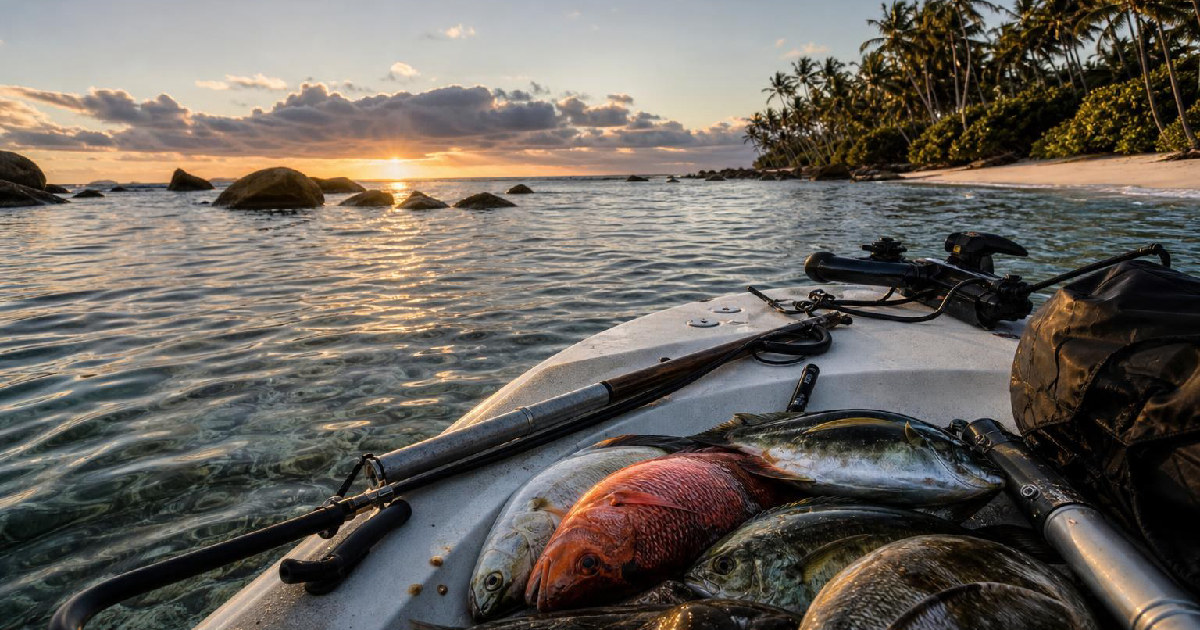
The clearest way to understand this video is as a moving search for dinner. YBS Youngbloods heads out boat camping for a few days with a simple but demanding goal: fish, spear, scout, and cook whatever the ocean gives him. The trip is not built around one big planned catch. It is built around adaptation. One moment he is talking through gear and heading toward a remote island; the next he is reacting to eagle rays, whales, sharks, changing swell, and the constant question of what might actually end up on the plate.
That gives the video its real shape. It is a catch-and-cook adventure, but it is also a test of how many different ways one person can keep feeding himself from the sea while living off a boat.
Why the shallow water never stays simple
Early on, the shoreline and reef edge look like the obvious place to start. He brings out the underwater bow and arrow, calls it one of the most challenging tools he uses, and treats the first session almost like a warm-up for the trip. But even before the fishing gets serious, the water starts making its own decisions. There are large eagle rays around the boat, fish under the hull, and enough activity to keep him switching quickly between excitement and caution.
That caution matters. The video keeps reminding you that this is not a polished fishing sequence where every move is tidy. The sea is crowded with life, and some of that life is convenient while some of it is a problem. Sharks appear fast enough to change the mood in an instant. A shot is attempted, then a fish gets away. A small catch is put back. The point is not clean success. The point is that every bite of food has to be worked for in a place that does not care about the plan.
The shallow-water portion also shows how much this style of adventure depends on judgment. He is not simply trying to catch everything he sees. He is deciding what is worth keeping, what is too small, and when the conditions are getting too messy to force the issue. That makes the video feel less like a highlight reel and more like a floating workday.
When the trip shifts offshore
The middle of the trip is where the pace changes. After the early attempts around the shallows and bommies, the video opens into bigger water, more drifting, and longer stretches of decision-making. He spots squid, uses some for eating and some as bait, and then starts talking in terms of the deeper offshore ground where the larger fish might be waiting.
This is where the trip becomes more interesting than a simple coastal camp. He is no longer just hunting nearby structure. He is moving toward the horizon, testing different depths and letting the boat become a base for each new attempt. The conditions are calm enough to make the water look almost unreal, but the calm also makes the waiting more intense. There is no hiding from the fact that offshore fishing can involve a lot of uncertainty before anything useful happens.
The video also gives the trip a lonely edge. YBS Youngbloods mentions that Strider is not with him, and that absence changes the tone. The boat is still full of movement, birds, whales, and fishing pressure, but the emotional center is different. It feels like he is carrying the trip by himself, and that adds a little extra weight to every decision.
The catch that turns the day around
The most important turning point comes when the deep water finally pays off. After a tense drop, a strong fish comes up, and he lands a cobia. That catch matters not just because it is a good-looking fish, but because it resolves so much of what the trip has been circling around: the uncertainty, the bait changes, the frustration, and the repeated attempts to turn open water into food.
He treats the cobia as the kind of catch that justifies the whole deep-water effort. It is presented as a perfect eating-size fish, and he immediately connects it to the larger purpose of the trip: feeding himself and the people and animals back home. The way he talks about it makes the catch feel practical rather than trophy-driven. This is dinner. That is the point.
It also helps that the sequence around the cobia is messy in a believable way. He thinks he has lost one fish, suspects a shark, and only then realizes the situation has turned into something different on the way back up. That confusion is part of the charm here. The sea keeps its own logic, and the video lets that confusion stay visible instead of smoothing it out.
Cooking, clearing space, and moving again
Once the fish is aboard, the trip becomes what boat camping always seems to be in these videos: a cycle of cleaning, cooking, and preparing for the next round. He fires up the cooker, cooks the earlier catch, and makes the camp feel temporary but functional. There is no elaborate kitchen setup, just the basics needed to turn effort into a meal.
That simplicity is one of the strongest things about the video. The food is not presented as a performance. It is the result of a very specific kind of day, where hunting, fishing, and moving between spots all blur together. Even the decision to save squid for bait shows how little room there is for waste. Everything has a role.
By the time the moon rises and the day closes out, the trip has already delivered on its central promise: boat camping really can become a working food strategy, but only if you are willing to keep adjusting. The next morning brings squid, more cruising, another deep drop, and another burst of tension. The routine keeps renewing itself.
What the video leaves you with
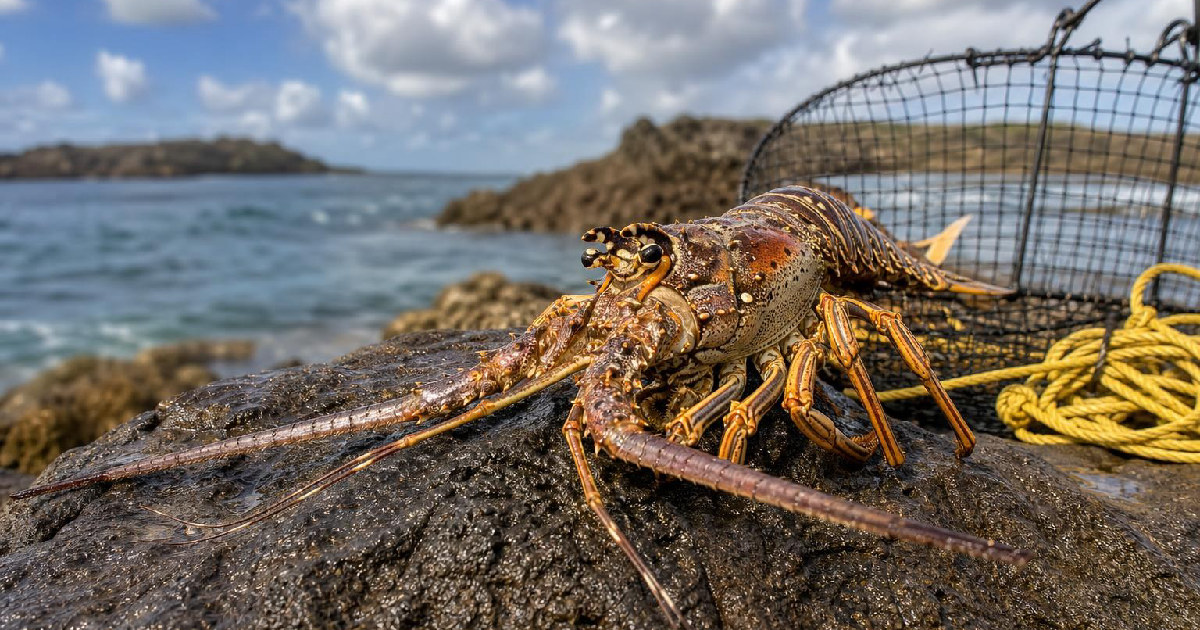
If you strip away the wildlife cameos and the constant banter, this video is about improvising a meal plan in open water. It asks a straightforward question: what can you catch and cook when the boat is your camp and the ocean is your pantry? The answer, at least here, is a mix of red crayfish, squid, a cobia, and whatever else the day happens to offer.
But the better answer is the feeling of the trip itself. It is restless without being frantic, practical without losing wonder. One minute he is watching whales and eagle rays. The next he is focused on bait, bottom drops, and dinner. That swing is what makes the feature hold together.
Watch the original video: https://www.youtube.com/watch?v=vPng0R_fzo0
RECOMMENDATIONS
All About The Life designs from Texas Thread Theory, inspired by the places you go and the stories you bring back.
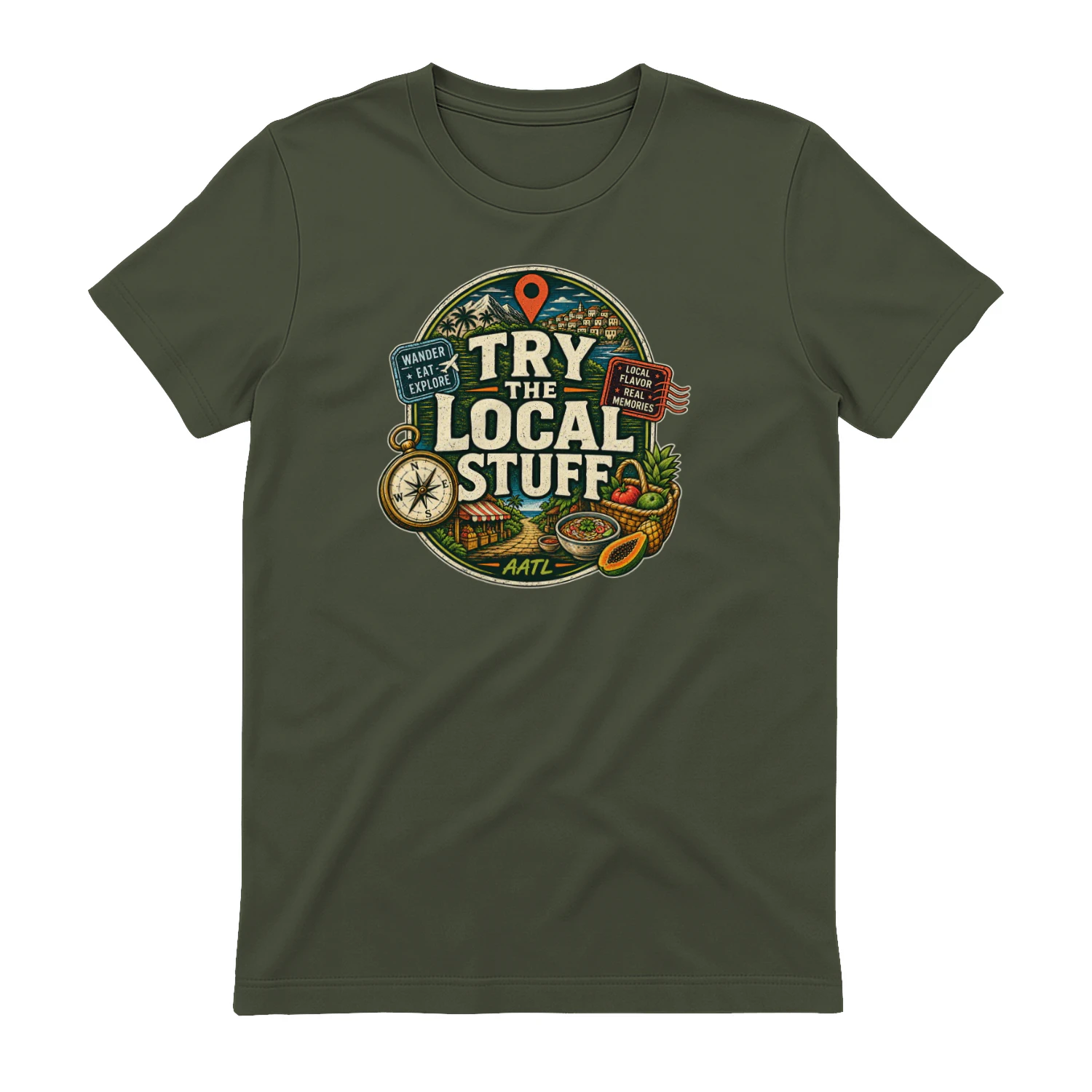
Try The Local Stuff
A vintage travel-and-food design encouraging you to “Try The Local Stuff.” Inspired by markets, local ingredients, destination scenery, and the thrill of discovering something new, it’s made for travelers and food lovers who believe tasting a place is part of experiencing it.