Why a giant hole changes the whole ice-camping setup
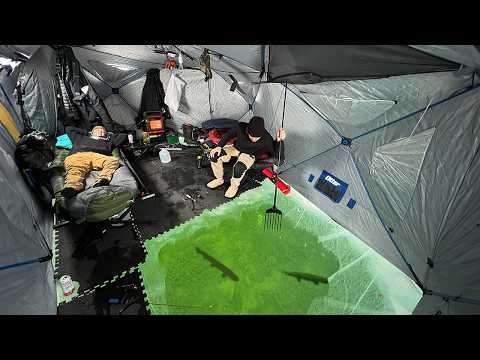
Mav’s three-day ice camping trip is built around one idea: cut a giant opening in the ice, place the tent over it, and use the clear water below as a live sight-fishing window. That is the whole foundation of the video, and it changes everything about the camp. This is not a normal day of drilling a few holes and moving around. Once the hole is cut, the fishing spot becomes the campsite, and the campsite becomes the fishing spot.
That setup also explains why the video feels so different from a standard winter fishing outing. The crew is not simply chasing bites; they are trying to live with the consequences of camping directly over open water. The hole has to be placed carefully. The tent has to fit the layout. The floor, the heater, the lights, and the sleeping setup all have to work around the fact that the main attraction is a window straight into the lake.
How the camp was built around sight fishing
Before the cutting starts, Mav and Murray look for the right place on the lake. They check the bottom, see weeds and fish, and settle on a spot that seems promising. That matters because the trip depends on visibility as much as it depends on fish. The water is described as crystal clear, and the depth sits around 10 to 11 feet, which makes this a sight-fishing situation rather than a blind hunt.
From there, the work becomes physical fast. They line up the cuts, use an ice saw, and carve out a hole large enough to function like a swimming pool in the middle of the lake. It is a huge opening, and the scale of it is part of the story. After that comes the less glamorous job of slushing, which the video treats as the tedious cleanup that always follows the exciting part.
The tent setup is just as important as the cut itself. They bring in a large “monster tent,” arrange the sleeping area, and add foam flooring for insulation. That gives the camp a basic livable shape, but it also sets up one of the central tensions in the video: they need the inside dark enough to see into the water, while still making the space functional enough to cook, sleep, and stay warm.
What the fish activity told them over three days
Once the camp is running, the whole trip becomes a rolling test of patience and reaction time. Mav fishes with a small jig and a flashy spoon, hoping the spoon will call in pike while the jig can tempt smallmouth bass. That pairing tells you a lot about how they are approaching the spot: they are not locked into one species, and the giant opening gives them room to watch different fish move through.
The first day brings immediate action. They see smallmouth, watch a pike roll through, and eventually land a solid fish after an evening adjustment to the setup. There is also a spear attempt for pike, which adds another layer to the trip. The spear is not just a prop; it is part of the experiment, another way to respond when a fish slides into view.
By the second morning, the video shifts into that familiar ice-fishing rhythm where the action comes in bursts. They watch shadows and flashes move through the hole, lose a few opportunities, and then finally connect on a pike. Murray also lands a pike using what the video calls a tiny crappie jig, which is a good reminder that ice fishing often rewards whatever happens to work in the moment more than whatever looks ideal on paper.
Rock bass make a brief appearance too, including one that Mav clearly treats as comically oversized. That catch is not the main event, but it adds to the feeling that the hole is functioning like a little aquarium of winter fish traffic, even when the target species are proving stubborn.
When the ice house became the biggest challenge
The fish are only half the story. The other half is what happens to the camp itself once heat, slush, and time start working on it. Early on, the setup already has one built-in complication: slushy ice. Mav notes that on slushy lakes, water can collect under the floor, and sure enough, the camp starts to get wetter as the trip goes on.
That makes the floor situation a bigger issue than the fishing. The crew notices the ice level dropping below the water level, and the house begins to feel as though it could start floating if conditions get worse. Their response is practical and improvised: they go outside, gather snow, and stack it in an attempt to absorb some of the water and improve the footing. It is not a perfect fix, but it shows the kind of problem-solving that winter camping often demands.
The other pressure point is visibility. Because the hole is used for sight fishing, the inside has to stay dark enough to see fish below. That means the camp is never fully relaxed in the way a sealed winter shelter might be. Light management matters. Movement matters. Even dinner happens in a space that is partly camp kitchen and partly observation post.
The meals, heat, and small comforts that kept the trip workable
A video like this could easily become just about the catches, but the food and comfort details end up giving it texture. They make soup on a Jetboil, later cook chicken wraps, and bring along homemade garlic naan. There is also tea, peppermint included, and enough discussion of seasonings and prep to show that the trip was set up with at least some thought toward eating well on the ice.
That matters because the food is not presented as a luxury side note. It is part of how the trip stays livable. The heater runs on propane, they manage sleeping pads and a full-size pillow, and Mav even brings a 20-degree sleeping bag for the colder stretch of the trip. Those details make the setup feel less like a stunt and more like a workable if slightly chaotic winter home base.
The compact comforts stand out because everything else is a little rugged. They are cooking in a darkened tent with a giant hole in the floor, moving gear around to keep the space usable, and trying not to let wet feet or slush dominate the mood. In that context, a good wrap or a hot cup of tea feels like part of the survival strategy, not just a nice extra.
What the trip leaves you with before they pack out
By the end of the three days, the video has settled into a clear idea: this is a successful ice-camping experiment because it produced fish, but also because it proved the concept of living around a giant sight-fishing hole without losing the plot. They caught pike, saw plenty of smallmouth, dealt with changing ice conditions, and learned what works when the lake starts pushing back.
There is also a small ethical note tucked into the exit. They explain that if you cut a sight-fishing hole, it needs to be marked properly so snowmobilers can see it. They also mention pushing their block underneath the ice rather than leaving it sitting on top, which is the kind of practical detail that sticks because it is clearly part of the day’s real-world responsibility.
The trip ends the way a lot of Mav outings do: with the sense that the memorable part is not just what got caught, but how the whole system held together long enough to make the catches possible. For readers who want to understand ice camping with a giant hole, that is the simple takeaway. The fishing was fun, but the bigger story is how a camp, a hole, and a few cold-weather compromises turned one patch of ice into a short-lived winter base.
Watch the original video: https://www.youtube.com/watch?v=Y5d0-4BKW4k
RECOMMENDATIONS
All About The Life designs from Texas Thread Theory, inspired by the places you go and the stories you bring back.
Keep Exploring Badge
A vintage outdoor badge centered on one simple message: “Keep Exploring.” With mountains, evergreens, a river, hiking boots, lantern, map, and compass details, it’s made for hikers, campers, travelers, and anyone who is always curious about what’s around the next bend.