Why this RV build starts with a ferry and a material hunt
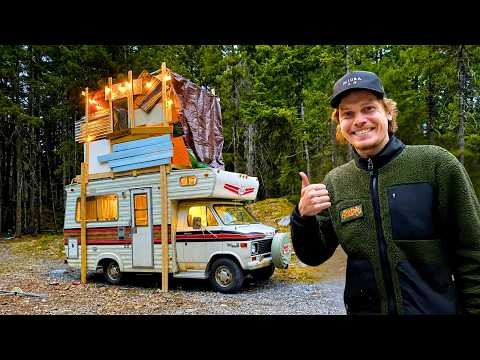
The direct answer to what happens in this video is simple: Mav meets up with Steve Wallis on Vancouver Island and the two of them turn a vintage motorhome into a temporary double-decker camp. But the appeal is in how practical the whole thing feels, even while the idea itself sounds slightly unhinged. This is not a polished renovation. It is a one-night build made from whatever they can find, with the clock, the island, and the sun all pushing them toward a finished platform before dark.
That urgency starts early. Mav is on the first ferry out of Horseshoe Bay, headed toward Vancouver Island and a long day of sourcing, measuring, cutting, and hauling. He is also already trying to solve the build before he has even reached the campsite, scrolling for materials and messaging people for wood, metal, and windows while the boat ride is still underway. The setup tells you everything about the project: this is part camping trip, part scavenger operation, part “figure it out as you go” experiment.
Building the second story with whatever the island had
Once Mav reaches Steve, the video shifts from travel logistics to construction logistics. The vehicle has a name on the front, Woody, and that old RV becomes the base for everything that follows. The main goal is not subtle. They want a rooftop structure strong enough to walk on, sleep on, and use as a second level, even if it is clearly temporary and a little improvised around the edges.
The materials run the full range from reclaimed oddments to straight lumber. At a Restore store, they find scrap pieces with a lot of character, then move on to Home Depot for the cleaner structural pieces they still need. That mix matters, because the video is not trying to pretend this is a minimalist art project. It is openly a budget build. They are looking for anything useful: support pieces, wall material, flooring, siding, and the kinds of odds and ends that can be repurposed into something stable enough for one night.
A lot of the humor comes from how seriously they treat the measurements while still acknowledging how ridiculous the plan is. They measure the roof, cut stringers, notch around a vent, and adjust the supports to fit the existing shape of the RV. There is real attention paid to spacing, load, and alignment, but the whole time they are aware that this is a camp build, not a permanent addition. That balance is what makes the video land. It is practical improvisation with a sense of humor about its own limits.
The campsite choice that made the project possible
The location ends up being just as important as the materials. After checking a few options, they settle on a wide-open old shooting range with hard, flat ground and plenty of room to work. That matters because the build is not only going onto the roof; it also needs a place where tools, lumber, and the whole temporary structure can exist without bothering other campers nearby.
That choice gives the project breathing room. It is easier to build when the surface is level, and it is easier to accept a bit of movement in the finished platform when the whole thing is clearly a temporary camp experiment. The video keeps coming back to that reality. They are not pretending the structure is a permanent cabin. It is a raised rooftop room with a tarp roof, wall panels, and enough shape to count as a second story, even if it still feels like a roof-borne science project.
The surroundings also add texture. Vancouver Island is part of the story here, and the forest setting gives the build a surprisingly scenic backdrop: moss, tall trees, and that damp Pacific Northwest feeling that makes even a scrap-lumber project look cinematic. That contrast helps the video. The setting is beautiful, but the object they are building is gloriously silly.
What the finished setup says about the two builders
By the time the walls go up and the roof goes on, the video stops being about “can they do this?” and becomes more about the way Mav and Steve work together. Steve seems to be the calm, capable anchor who knows how to keep the process moving, while Mav plays the energetic second set of hands, the camera-side commentator, and the person willing to climb up, hold boards, and react to the whole thing as it takes shape.
That partnership is one of the best parts of the video. They are clearly comfortable poking fun at the build, but they are also genuinely collaborative. When a measurement needs adjusting, they adjust it. When the support pieces are slightly short, they shim and make it work. When the structure flexes a bit, they laugh about it, then keep going. The final result is funny because it is so plainly a compromise, yet it also works well enough to host a sleeping pad, string lights, and a dinner plan.
The finished rooftop space has exactly the kind of charm you would expect from a project built from reclaimed material and a tight timeline. It looks handmade because it is handmade. That is the point. The video never tries to hide the seams.
A night up top, then a quick teardown
The overnight portion gives the build its real test. After dinner in the RV — beef stroganoff cooked in the cramped mobile kitchen — Mav heads up to the rooftop sleeping area with a pad and sleeping bag, then wakes to find the setup still standing and surprisingly usable. There are bugs, a little movement, and at least one wall panel that has decided to fall out, but the structure did what it needed to do.
That is probably the most interesting thing about the whole project. It is not framed as a permanent triumph. It is a temporary success. They built a double-decker RV, slept in it, enjoyed the ridiculousness of it, and then took it apart the next morning. The teardown is almost as brisk as the build, which reinforces the sense that the whole point was the experience, not the object.
If you are wondering whether the setup was practical, the answer is yes, but only in the narrow way that one-night camp experiments can be practical. It gave them a rooftop hangout, a raised sleeping area, and a memorable shared project. It also left behind a cleaner site than the one they found, which the video makes clear is part of the responsibility that comes with using a rougher spot.
There is a reason this video sticks. It is not just because of the absurd headline idea of a double-decker RV. It is because the build is rooted in a real day: early travel, material hunting, teamwork, sunlight, tools, dinner, sleep, and cleanup. That gives the whole thing a rhythm that feels lived-in rather than staged.
Watch the original video: https://www.youtube.com/watch?v=UW59gkqb98A
RECOMMENDATIONS
All About The Life designs from Texas Thread Theory, inspired by the places you go and the stories you bring back.

Go Somewhere — Life Is Better On The Road
A bold road-trip design featuring an RV, winding road, mountains, lake scenery, and the message “Go Somewhere — Life Is Better On The Road.” Made for travelers, campers, RVers, and anyone who feels a little more like themselves once the highway opens up ahead.