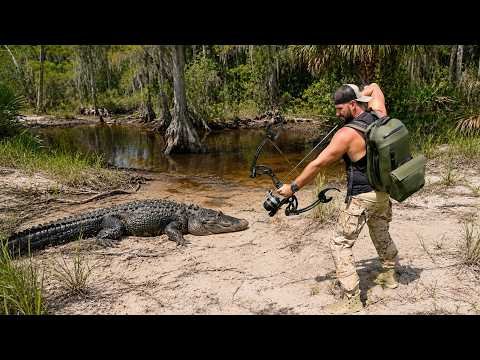
The most useful thing about a hunt like this is that it doesn’t look polished. The boat gets stuck, the bugs are relentless, the plan changes fast and the whole evening runs on a mix of luck, local knowledge and heavy equipment. In the video, Cory, Clayton and Jordan head out on a last-minute alligator hunt for food, trying to locate a legal target, work the right gear and bring a big animal in without much prep time. What follows is less a tidy adventure edit than a field note from the swamp.
A last-minute gator hunt with real gear, real mud and not much prep time
The hunt starts with the crew already behind the curve. They are moving quickly, dealing with rain, bugs and a boat that is taking a beating before the real action even begins. That matters, because alligator hunting is not a clean-water, wide-open kind of pursuit. It is a swamp job. You are covering back cuts, checking pockets, trying to locate an animal before dark and doing it with enough control and coordination to work safely.
That pressure is part of why the video feels different. The crew is not easing into a fishing trip with time to spare. They are hunting first and filming second, which means the useful parts of the story are the parts most outdoor videos skip over: how a boat handles in ugly water, how quickly a hunt can go from searching to active, and how much gear has to be ready before the first sign of an alligator.
How hunters size up an alligator before the shot
One of the questions people have about an alligator hunt is simple: how do you know what you are looking at? In the video, the crew is not guessing at size from a photo afterward. They are making field judgments based on what they can see through the water, how the animal presents itself and whether it looks worth targeting. They discuss wanting a big one, with Cory saying he would be happy with an 8-footer but clearly eyeing something larger if it shows itself.
That kind of judgment is not exact science. Water, light and angle can all make size hard to read. But the hunt does show the basic logic: locate a gator, assess whether it is a worthwhile target, and decide if it is big enough to commit the time and effort. The crew eventually lands on a substantial animal, and later measures it at nearly 10 feet, with a bit of tail missing. That detail matters because size is not just about bragging rights. It affects the harvest decision, the handling process and the amount of work waiting at the dock.
What the rods, hooks, harpoon and bang stick are doing in the boat
The gear in the boat is built for control, not comfort. Heavy rods and large snatch hooks are used to connect with the animal and keep it from disappearing into the cover. A harpoon gives the crew another way to secure the alligator once they are close enough, and the bang stick is the final tool used to dispatch it under the water.
That sequence is not glamorous, but it is the reality of a tagged harvest in tight swamp conditions. You need enough power to manage a strong animal, enough precision to avoid chaos and enough coordination that everyone knows what happens next. The video makes that clear when the crew moves from spotting an eye in the dark to closing distance, setting another hook, using the harpoon and then loading the bang stick before bringing the animal into the boat.
For readers who have only seen alligator hunting in edited clips, this is the part worth noticing: the boat is not just transportation. It is the working platform for every step after the target is found.
What happens after an alligator harvest
Once the alligator is in the boat, the hunt is not really over. That is when the paperwork and logistics start to matter. The video shows the crew filling out the tag information and documenting the harvest before moving on to the processor. That step is easy to overlook if you only think about the hunt as a moment of capture, but it is central to the harvest workflow shown here.
The tag is not treated as an afterthought. The crew completes the paperwork before moving on to measuring and processing, making it part of the practical harvest workflow rather than just the moment of capture.
Tags, measurements and the trip to the processor
After the field work comes the measuring. The crew notes the length, documents the animal and then heads to the processor with the gators on ice. That is where the practical meaning of “for food” becomes visible. The animal is not just a trophy or a story point. It becomes meat, hide and, in some cases, a mount or other finished product depending on how the hunter chooses to use the harvest.
The processor is also where the hunt connects to the broader food chain. When people order alligator tail at a restaurant, that doesn’t appear by accident. Here, it comes from the harvested animal and a processing step that turns the field outcome into usable product. The video shows Cory choosing one gator for processing and planning to use the value from that animal to help cover mounts and hide work on the other.
That choice is part of why this kind of hunt is about more than the moment in the swamp. There is a second half to the story, and it is a little less dramatic but just as important.
Why American alligators are more than a trophy
The U.S. Fish & Wildlife Service describes the American alligator as a large semi-aquatic reptile, with adults commonly ranging from about 6 to 14 feet. The animal in this hunt falls well within that range and, by the end of the video, is clearly a serious specimen. But size alone misses the ecological role of the species.
American alligators are often called wetland engineers because of the way they shape habitat. Their movement and the alligator holes they create can change water conditions and provide refuge for other wildlife, especially in dry periods. If you want to understand why alligators matter beyond hunting season, that is the place to start. They are not only top-tier predators; they also alter the landscape in ways that affect fish, birds and other animals sharing the swamp.
The wetland-engineer role that shapes swamp habitat
That wetland-engineer role adds context beyond the hunt itself. American alligators are part of the ecology as well as the outdoor culture around them. A hunt like this is a food harvest, but the surrounding swamp is also an active system shaped by the animals living in it.
The footage also hints at another truth: conditions in a wetland are never static. Bugs swarm, visibility shifts, mud swallows a boat and an animal can appear or vanish in a heartbeat. The habitat is working on you even as you work through it.
Why this style of hunt feels different from a standard outdoor video
A lot of outdoor videos lean on long setup, bright daylight and a neat finish. This one does not. It is faster, rougher and more improvised, which makes the useful details stand out. You see the mess of the boat, the pressure of running a hunt on short notice, the gear required to secure a large reptile and the paperwork that follows a tagged harvest.
If you want to understand this kind of alligator hunt as something more than a headline or a viral clip, that is the value here. It is a hunt, yes, but it is also a reminder that the work starts before the animal is hooked and keeps going long after it is on ice.
You can watch the original video here: https://www.youtube.com/watch?v=oNpkfIk2WjM
RECOMMENDATIONS
All About The Life designs from Texas Thread Theory, inspired by the places you go and the stories you bring back.
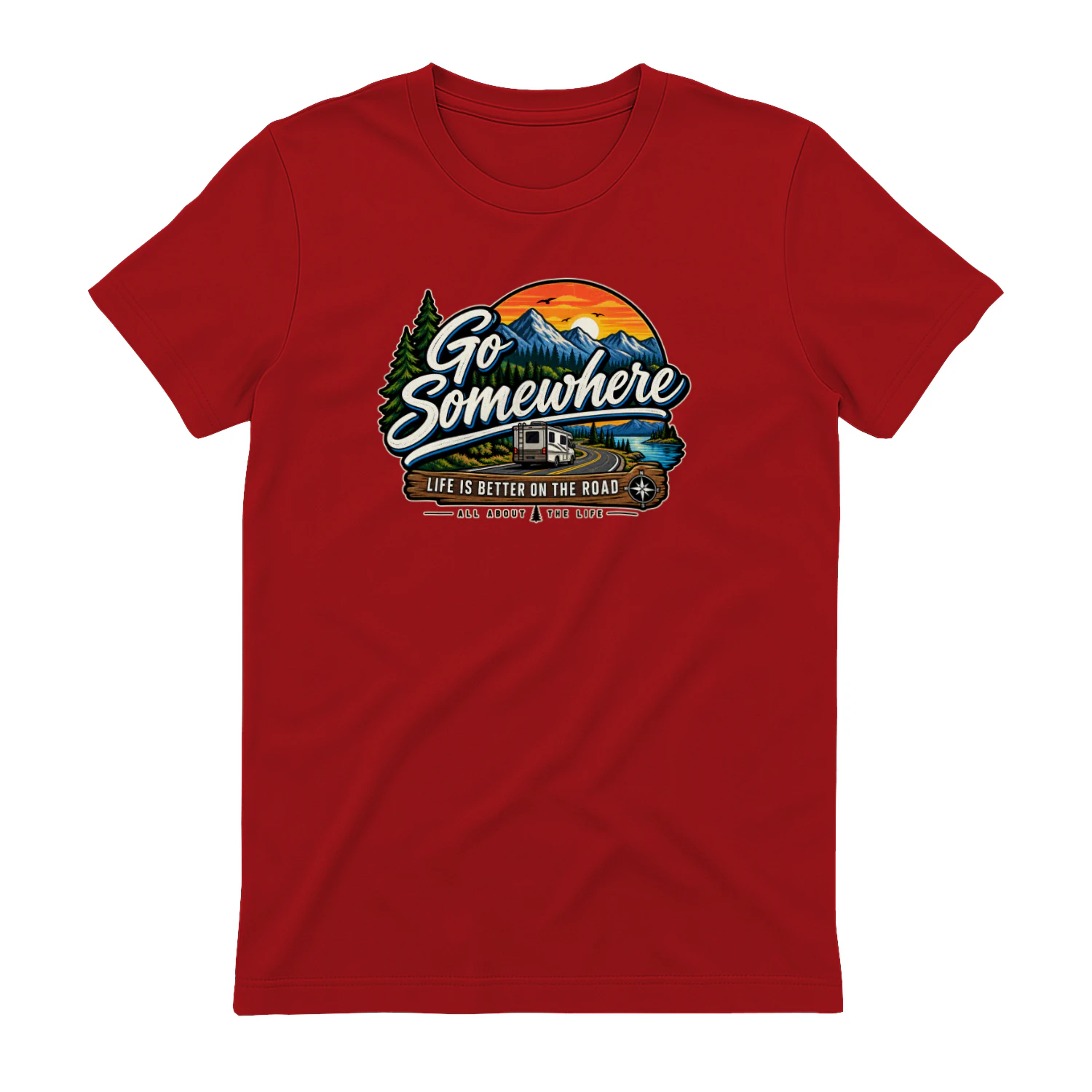
Go Somewhere — Life Is Better On The Road
A bold road-trip design featuring an RV, winding road, mountains, lake scenery, and the message “Go Somewhere — Life Is Better On The Road.” Made for travelers, campers, RVers, and anyone who feels a little more like themselves once the highway opens up ahead.