Why this van matters before the build even starts
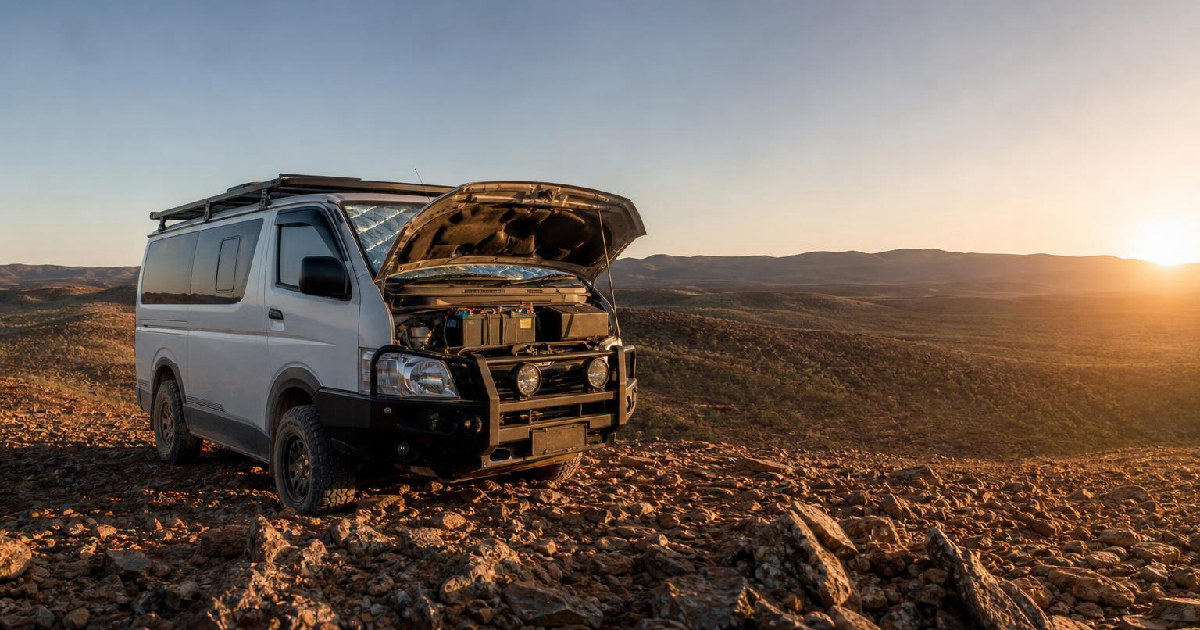
The short answer is that this Toyota HiAce conversion is being judged as a serious off-road platform, not a novelty. Andrew St Pierre White is not approaching it as a van with oversized tires and a few accessories. He is treating it as a potential replacement for the Troop Carrier, which means the standard has to be much higher than style, packaging, or even simple capability. The question running through the video is whether a converted HiAce can deliver the two things that matter most in rough travel: proper low-range four-wheel drive and real ground clearance.
That is why the opening tone feels more like a field assessment than a build reveal. The van is interesting, but the argument behind it matters more. Andrew makes it clear that he wants to know whether the claims have merit, and the only honest way to do that is to examine the vehicle, understand the hardware, and eventually drive it.
The van market comparison that frames the whole argument
Before getting into the conversion itself, the video steps back and asks a broader question: what heavy-duty four-wheel drive vans are actually out there? That comparison is important because it reveals why this HiAce stands out. Andrew points to Toyota’s Troop Carrier as the obvious reference point, and then looks at a small handful of other options, including the Mercedes Sprinter 4x4, the Mitsubishi Delica, and the Sportsmobile conversion based on the Ford E-Series.
The comparisons are not made casually. They serve a purpose. The Sprinter is discounted because, in Andrew’s view, it does not qualify as a true heavy-duty four-wheel drive system in the way he values it. The Delica is dismissed with visible disappointment. The Sportsmobile gets more respect, especially because it can be configured with diesel power and low-range capability, but it is not the vehicle being built in Australia here. That leaves the HiAce conversion to answer a very specific challenge: can a van platform be rethought in a way that keeps the off-road fundamentals intact?
The answer, at least in theory, is yes. The conversion uses a 2.8-litre four-cylinder turbo diesel and a six-speed automatic, then adds serious four-wheel drive hardware underneath. Andrew’s attention keeps returning to the same standard because he sees it as non-negotiable: if a vehicle lacks low transfer gearing and clearance, it is out of the conversation.
What Bus 4x4 changed underneath the HiAce
The mechanical heart of the story is Bus 4x4’s conversion work. The company explains that it began with mining and commercial fleet needs, where the challenge was not just getting people to a site, but getting them there safely, comfortably, and in greater numbers than a typical ute or smaller all-wheel drive vehicle could manage.
That background matters because it explains the build philosophy. This is not a cosmetic exercise. The conversion is based heavily on Toyota components, including Land Cruiser 200 parts, and the rear differential is swapped to a Toyota unit with a factory locker already fitted. The reason is practical as much as it is technical: the locker is convenient, and the gearing matches the front differential that will be installed later.
The rear suspension is reworked with a leaf-over conversion. In plain terms, the axle is moved underneath the leaf springs, and a bracket and shim help correct the angles so the driveline geometry remains sensible. That detail sounds small, but the video treats it as essential because poor geometry would accelerate wear and make the vehicle less robust over time. Andrew clearly respects the simplicity of the fix, especially because it preserves the kind of durability that a remote-travel platform needs.
Why the front end is the hard part
The front of the HiAce is where the build becomes more demanding. The rear is relatively straightforward by comparison. The front independent suspension, transfer case adaptation, and installation of the front differential are the more technical pieces, and the video lingers there for a reason: this is where a converted van either starts to make sense or falls apart.
Bus 4x4’s approach is to trim and adapt rather than reinvent everything from scratch. The transfer case adapter allows the Land Cruiser 200 transfer gearbox to bolt to the back of the automatic transmission. The company emphasizes that the vehicle itself does not require major cutting or welding, which is a significant part of the appeal. The front suspension cradle still bolts to Toyota mounting points, and the original structure is respected instead of being hacked apart.
That matters to Andrew because he is evaluating the vehicle as an overland tool, not simply a fabrication project. A build can look impressive and still be awkward to maintain, weak in the wrong places, or compromised in the drivetrain. What stands out here is the effort to combine adaptability with durability.
What makes the interior and systems story different
The van’s promise is not only mechanical. The interior space is a major part of why it keeps pulling the discussion back toward the Troopy. Andrew and the people around the project immediately start imagining what the cabin could become: fridge, seating, storage, lighting, and a layout that feels more generous than the familiar troop carrier footprint.
That wider body and easier side-door access are not treated as superficial benefits. They support the argument that the HiAce may solve a practical problem the Troopy cannot solve as well: getting more people in and out of a vehicle without sacrificing the off-road basics. The company says the long-wheelbase version is the one being converted here, and Andrew notes that the interior space opens up new possibilities for seating and equipment placement.
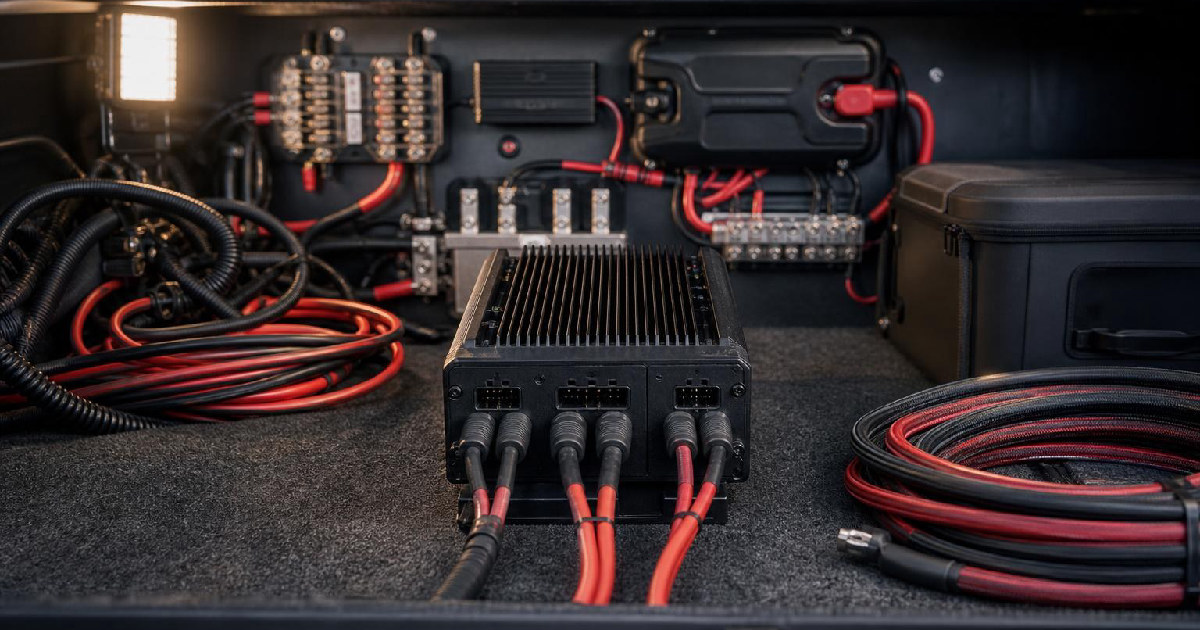
The project is also framed as a technology demonstrator in partnership with Egon, with new electrical thinking at the center of it. Andrew says the van will use a 48-volt system, and while he is careful not to overclaim his own understanding of it, he clearly sees the electrical package as part of what makes this build genuinely new. It is not only about drivetrain hardware. It is also about how the systems inside the vehicle can be simplified and modernized for use in a remote-travel context.
The real comparison is not style, it is purpose
What makes the video work is that it never lets the conversation drift into mere admiration. Yes, the van is big. Yes, the build looks smart on its wheels. Yes, there is excitement about the amount of usable space. But the comparison with the Troopy keeps pulling everything back to purpose.
Andrew keeps asking the same practical questions in different forms: How does it perform? How does it feel? How does it compare when the job is remote travel, not city driving? That is why the line between van and overland machine matters so much. If the HiAce is still just a van in spirit, then it does not replace anything. If it really becomes an off-road platform with proper driveability, durability, and usable packaging, then it enters the same conversation as the Troop Carrier.
The video does not pretend to settle that question immediately. In fact, it resists closure. Andrew has seen the build, sat in it, compared it with the Troopy, and even imagined how gear and seating could be arranged. But the final judgment is still left for the road.
Where the verdict is left open
That is probably the smartest thing about the feature. It understands that a serious off-road platform cannot be judged by static impressions alone. Clearance matters, but so does confidence. Hardware matters, but so does the way the vehicle makes a driver feel when the surface changes and the terrain starts asking more from the machine.
The HiAce conversion is being offered as a credible answer to a specific problem: how to combine van practicality with genuine four-wheel drive seriousness. Whether it can fully replace the Troopy is still open, and the video knows that. What it does establish is that Bus 4x4 has built something worth taking seriously, because it starts from the same fundamentals Andrew insists on: low-range gearing, clearance, and a platform designed for real use rather than showroom theater.
Watch the original video: https://www.youtube.com/watch?v=iutheor0cfw
RECOMMENDATIONS
All About The Life designs from Texas Thread Theory, inspired by the places you go and the stories you bring back.

More Trips. Better Stories.
A travel-inspired design built around a simple formula: “More Trips. Better Stories.” With vintage travel-stamp, airplane, compass, luggage, and mountain details, it’s perfect for frequent travelers, weekend wanderers, and anyone already thinking about where they want to go next.