The road into Zimbabwe changes the tone of the trip
The clearest way to understand this part of the expedition is that it is not just about getting from one country to another. It is about what happens when a long overland trip starts asking for patience at every turn. The route from Botswana into Zimbabwe brings border paperwork, rough roads, soft ground, and a lot of waiting. Then, just when the logistics begin to settle, Mana Pools National Park turns the whole journey back toward what the trip was always chasing: close wildlife encounters in a genuinely wild setting.
That shift is the heart of the video. The creator is not treating Zimbabwe as a simple pass-through country. He frames it as a place where travel becomes more demanding, but also more memorable. The result is a feature that moves between practical overland realities and the specific kind of atmosphere that only comes from driving, camping, and watching animals in their own landscape.
Mud, flooded pans, and the limits of a lonely track
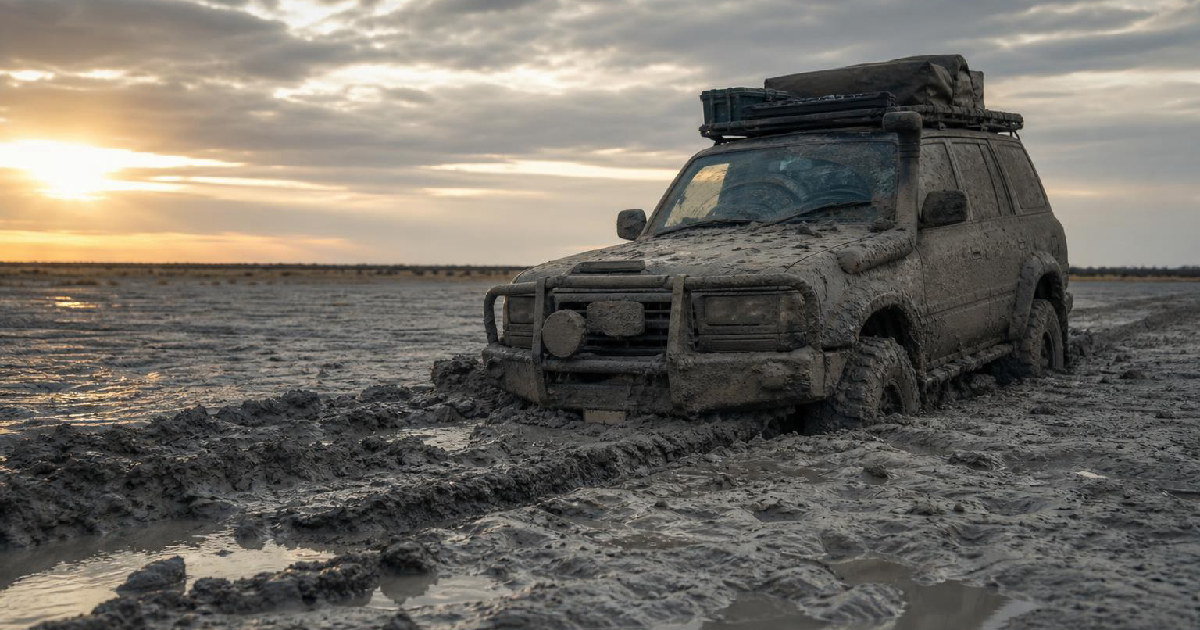
Before the wildlife spectacle really takes over, the trip is already testing the vehicle and the driver. The route around the pans is lonely and tricky to follow, with animal tracks, fence lines in poor shape, and water standing where the land is usually dry. The video makes a point of how unusual that is. These pans are normally dry, but flooding has opened the area up and changed what can be seen there.
That change is part of the appeal. The creator stops to look for signs of elephants and notes the dung and trampled fence line, showing how animals move through terrain that is supposed to contain them but clearly does not. He also takes time to explain that the flooded conditions can bring in birds such as flamingos and pelicans when the depth is right. In other words, the landscape is not static. It is alive to water, animals, and season, and every one of those things can affect the route.
The mud itself becomes its own character in the story. When the vehicle sinks in, it is not described as some dramatic disaster so much as an increasingly unpleasant reality. The clay-like material clings to the recovery gear and adds weight and frustration. That part of the experience matters because it shows the difference between a scenic overland drive and a genuinely complicated one. The trip is still beautiful, but now it is beautiful in a way that can also slow you down, strain the equipment, and punish any small mistake.
Why the border crossing matters before the wildlife does
One of the strongest through-lines in this episode is the contrast between what the landscape offers and what the border process demands. Crossing into Zimbabwe is not presented as impossible, but it is definitely presented as cumbersome. The creator spells out the repeated checks, the paperwork, and the overall feeling that Botswana is much easier to pass through than Zimbabwe. Even the emotional tone shifts once he is through: there is a clear sigh of relief that the border is behind him.
That matters because it gives the wildlife section a real foundation. The magic of Mana Pools does not arrive in a vacuum. It arrives after a day that has already taken energy, cash, time, and concentration. The border crossing, the road fee, the visa, and the road conditions all make the reward feel earned rather than assumed.
He also makes room for a small but telling overland detail: the need to stop in towns like Nata and Francistown for supplies, a car wash, and a proper overnight break. These stops are not glamorous, but they are what make a trip like this possible. The episode understands that overlanding is built out of exactly these kinds of interruptions.
Mana Pools shows what wild camping can still be
Once the trip reaches Mana Pools, the video opens up in a different way. The setting shifts from roads and border queues to a campsite where animals are not kept at a distance by fences. That alone changes the mood. The creator is explicit about what makes this special: animals can come into camp, sniff around, and in some circumstances come very close indeed.
That is what gives the campsite its edge. It is not just a scenic place to sleep. It is a place where the boundary between camp life and wildlife is very thin. The family’s reactions, the rangers’ presence, and the constant awareness of hippos, elephants, and other animals all reinforce that the experience is active rather than passive. Even the ordinary business of dinner becomes part of the atmosphere.
The video is also careful not to romanticize danger. When an elephant comes close, the creator notes that this does not mean elephants are generally friendly or that people should expect that kind of proximity. That distinction is important. It keeps the story grounded in observed behavior rather than turning a rare encounter into a rule. The point is not that the animals are tame. The point is that the setting is wild enough to make these moments possible.
Lodge comfort, local knowledge, and the value of changing pace
A quieter but important part of the episode is the comparison between camping and lodge life. The creator does not treat them as rivals. Instead, he presents them as different ways of taking in the same country. Camping gives immediacy, independence, and a front-row seat to whatever happens around camp. The lodge adds comfort, laundry, easier meals, and local knowledge from guides who know the area deeply.
That balance is one of the most useful ideas in the video. The family’s arrival changes the tone again, and the episode starts to feel like a shared expedition rather than a solitary one. Having family along means there is banter, more eyes on the landscape, and more people to notice details. It also means there is more room for practical support, from guides to game drives to camp logistics.
The lodge section adds another layer by showing that these trips are not just about surviving difficult roads. They are about the quality of the experience once you arrive. The creator clearly values the way a lodge can sharpen understanding through guided game viewing, while still preferring the rawness of camping for the full wild effect. That tension gives the story depth.
What this stretch sets up next
By the end of this part of the expedition, the trip has become something bigger than a route from one place to another. The creator has crossed into Zimbabwe, dealt with muddy tracks and flooded pans, reunited with family, camped in a place where wildlife can enter the margins of daily life, and compared that experience with the comfort of a lodge. He also makes it clear that the hardest logistical stretch is still ahead: supply stops will be farther apart, and the journey toward Lake Kariba and beyond is about to get more remote.
That is why this episode works so well as a companion feature. It is not simply “the Zimbabwe episode.” It is the moment when the expedition becomes more exposed to terrain, more dependent on timing, and more rewarding because of it. The roads are rougher, the border is slower, and the wildlife feels closer. In that combination, the video finds its own rhythm.
Watch the original video: https://www.youtube.com/watch?v=BbBPZmzSaT4
RECOMMENDATIONS
All About The Life designs from Texas Thread Theory, inspired by the places you go and the stories you bring back.
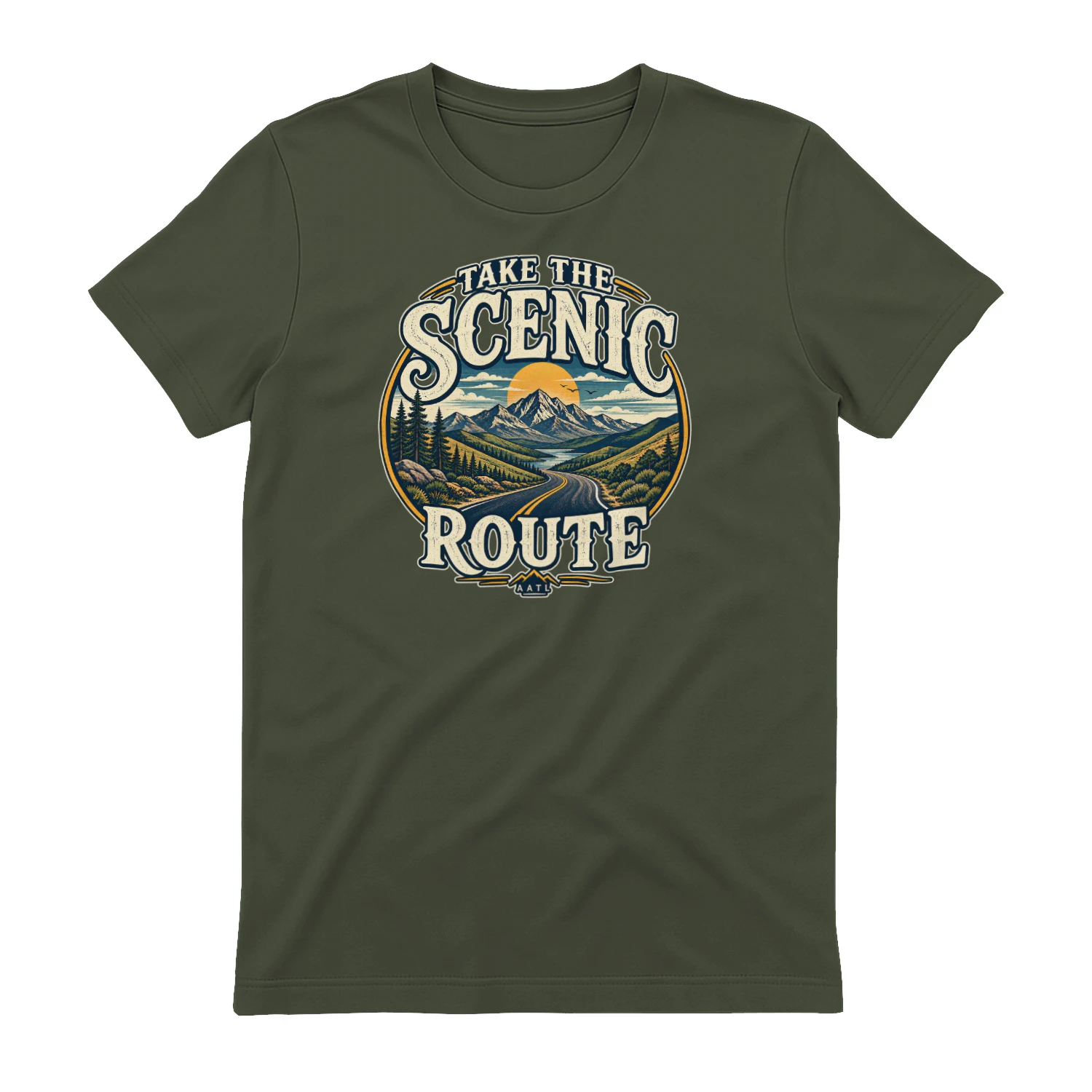
Take The Scenic Route
A scenic-route AATL design built for road trips, mountain drives, sunsets, back roads, and travelers who know the long way can be the best way.