The part of spring that makes bass hard to pin down
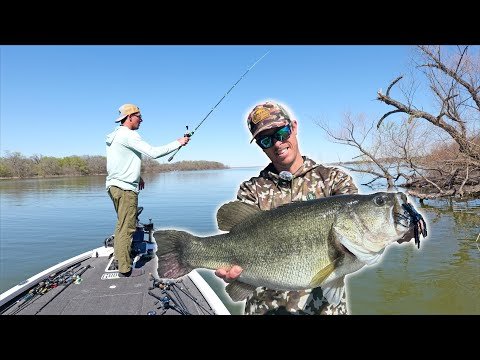
The short answer from this video is simple: the fish were there, but they were not all set up in the easiest places to catch. LakeForkGuy and Jon B spend the day on a North Texas lake that feels close to the spawn, yet still has enough cold water and weird positioning to keep the bass from behaving in a clean, predictable way. That pushed the whole trip toward a slower, more deliberate style of fishing.
The lake itself becomes part of the story. The crew keeps talking about full moon conditions, warming water, and the fact that the main lake and the back water are not matching up. That mismatch matters. Fish are moving, but not all at once. Some are sliding toward shallow cover. Some are hanging off it. Some are already in the shallows but not committing in a way that makes them easy to spot.
That is why this video never feels like a simple “cast and catch” day. It is more like a read on how spring bass really distribute themselves when they are close to spawning but still one step away from the full move.
Why the jig and punch bait won the day
One of the clearest takeaways from the video is that the heavier, more precise presentations earned their keep. The crew starts out probing different kinds of water, but the real action builds once they commit to cover fishing with jigs and plastics that can get through brush, wood, and awkward little pockets.
LakeForkGuy explains why he switches between jig styles. He likes a more dragging-friendly jig for docks and general bottom contact, but when the cover gets thicker he wants a compact head that slides through instead of hanging up. That is not just tackle talk. It is a direct response to the kind of places the fish are using.
The same logic applies to the soft plastics. He makes a point of using a punch-style bait with a tougher, less cluttered profile because it handles cover better and avoids some of the hang-ups a flappier craw can create. In other words, the bait is not being chosen for looks alone. It is being chosen because the fish are sitting in places where clean entry matters just as much as action.
That is a useful lesson for anyone watching the video for spring bass fishing ideas. When fish are buried around heavy cover, the best lure is often the one that gets in and out without announcing itself too much.
Fishing the water fish were about to move into
A big part of the day is spent working water that is not quite the final destination. The anglers keep circling back to the idea that the bass are using areas just before the actual spawning spots, almost like a staging zone. That includes rock, docks, seawalls, and shallower pockets with access to deeper water.
This is where the feature of the lake becomes more important than the obvious surface look. The best stretches are not necessarily the prettiest ones. They are the places where fish can shift between deeper and shallower positions without making a dramatic move. That is why a dock line, a seawall, or a brushy opening can matter more than it would at another time of year.
The video also shows a practical contrast between visible fish and invisible fish. At one point the crew spots a bed, but later they also talk about how many beds probably go unseen. That idea hangs over the whole day. The fish are not always where you can plainly see them, and spring bass fishing often rewards the angler who fishes like there are fish present even when the bank looks quiet.
That is part of what makes the wacky rig and the flipping setup work so well here. When bass are suspended just off cover or tucked into small openings, you do not need a mile of water to trigger them. You need the right little lane.
The missed giants tell the same story as the catches
The fish that do get landed are memorable, but the misses may say just as much about the lake. There are several hard bites, a few lost fish, and a couple of moments where the anglers think they have a true giant pinned only for the fish to come unbuttoned or pull free near the boat.
Those losses are frustrating in the moment, but they also fit the conditions. The fish are not feeding in an open, reckless way for the entire day. They are around cover, reacting at the last second, and often carrying a lot of weight for their length. That creates bites that feel solid but do not always finish cleanly.
The biggest fish of the day lands with exactly that kind of energy: not long, but extremely heavy and thick through the body. It is the kind of bass that makes the whole trip feel justified, because it confirms the setup the anglers had been building toward all day. The fish is where it should be, doing what a near-spawn Texas bass is supposed to do, and the jig is what finally makes it happen.
There is also a human side to those moments. The video has the usual back-and-forth you get from two anglers working the same stretch, but it never drifts away from the fishing itself. The excitement comes from connection, not performance. When a big one loads up, the whole day changes.
What the day says about Texas spring bass timing
If there is one useful takeaway here, it is that spring bass fishing in Texas is not a single switch flipped by moon phase or calendar date alone. The lake in this video is close enough to spawning conditions to feel promising, but the water temperature is still just off enough to keep the fish split between modes.
That means the angler has to think in layers:
- fish the transition water,
- fish the cover fish can use to stage,
- slow down when the obvious bites are not happening,
- and be ready to adjust between bottom contact, flipping, and finesse-style presentations.
The day also makes a broader point about confidence. LakeForkGuy says he would not have rushed back to this lake on his own, but fishing it with company changes the experience. That does not mean the lake suddenly becomes easy. It means the day becomes readable. The frustrating stretches, the warm fish, the sight bites, the missed giants, and the final heavy bass all start to form one picture.
That picture is basically what spring bass fishing feels like when the fish are moving, but not all the way moved. You are not chasing a simple pattern. You are trying to intercept fish in motion.
Watch the original video: https://www.youtube.com/watch?v=OAFmsY7aZsc
This was a day where the lake never gave up its answers quickly, but the bigger fish eventually told on themselves. That is usually how these Texas spring trips go when the timing is close and the cover is right.
RECOMMENDATIONS
All About The Life designs from Texas Thread Theory, inspired by the places you go and the stories you bring back.

Life Happens Out There
An outdoor-focused AATL design celebrating mountains, forests, hiking, camping, road trips, and the simple idea that life happens when you get out there and explore.