Why this farm feels built for whitetail from the ground up
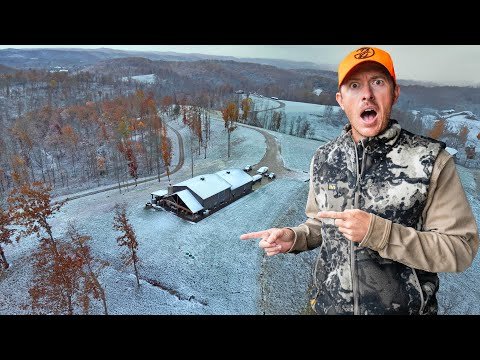
The direct answer to what this video shows is simple: it is a tour of Jeremy Starks’ West Virginia hunting property, along with the custom barndominium and deer camp setup he has built around it. But that plain description misses the real appeal. This is not a place that looks finished because it is polished. It feels finished because every part of it has a job.
That idea comes through right away in the way the land is described and explored. The farm is not just a scenic backdrop for a hunt. It is a long-term project that has been cleared, planted, shaped, and adjusted over years. By the time LakeForkGuy arrives, the place already looks like a system: fields, timber, trails, food plots, bedding cover, and living space all connected to the same goal.
The land plan: clover, timber, trails, and pressure points
One of the strongest parts of the tour is how clearly the land has been organized around whitetail behavior. The video keeps circling back to clover, turnips, rye, winter peas, buckwheat, crabapple plantings, native grass pockets, and the white oak timber that is loaded with acorns. None of that is presented as decoration. It is all part of the hunting setup.
The property also seems to be built with a careful balance in mind. Some areas are mowed, some are left rough, and some are intentionally patched with native growth. That matters because the place is not being over-cleaned. There are spots left for rabbits, cover, and other small habitat pieces, while other sections are opened enough to create visibility and deer movement. The result is a property that looks managed without feeling sterilized.
That balance shows up in the details LakeForkGuy keeps noticing from the truck and on foot. He points out the cleared mountain, the bench planted below, the food source edges, the new growth, and the way deer can be seen at long distance from the house and overlook areas. The elevation gives the property a commanding feel, but the real strength is how much of the land is usable. The phrase “everything you see, you can hunt” captures the point without needing to exaggerate it.
There is also a clear emphasis on natural forage. Jeremy is not relying on a single tactic to make the property huntable. The video makes a point of saying there are no corn feeders in play, even though corn is legal there. Instead, the deer are working the land through the food plots, the acorns, the cover, and the natural movement patterns that come with rut conditions. That creates a very different kind of hunt from the kind LakeForkGuy describes as familiar in Texas.
Inside the barndominium: a deer camp that actually functions
The barndominium is not treated as a novelty. It is presented as part of the hunting operation, and that is what makes it memorable. It houses boats, gear, tools, hunting equipment, and living quarters in one place, and the layout reflects someone who clearly thinks about how a season works day to day.
The garage side brings together fishing and hunting in the same practical space. There are bass boats, tackle storage, archery equipment, reloading tools, and hunting gear all tied into one large working area. Upstairs storage adds another layer, which suggests this place is designed to keep everything close at hand instead of scattered across separate sheds or rooms.
The most interesting room is the mission prep space. It is exactly what it sounds like: a room where gear is staged, organized, charged, and left ready for the next hunt. Bows, arrows, camouflage, cameras, tools, knives, scopes, boots, and meat-processing items all have their place. The ozone machine and scent-conscious routine are mentioned as part of the process, along with changing before going back inside. That makes the room feel less like a trophy display and more like a functional command center.
Even the living quarters keep the same tone. The kitchen and living room are comfortable, but the details connect back to the land: turkey decor, mounts from West Virginia and Kentucky, canned vegetables, honey, and views over the property. The house sits where it can look out across the farm, and the windows make that feel intentional. This is not a hunting cabin hidden away from the land. It is positioned to live with it.
Another practical detail stands out: the water system. The property uses rainwater collection stored in an underground tank and pumped into the house. That setup adds to the sense that the whole place has been built with long-term use in mind, not just aesthetics.
What the first bow sit revealed about the property
The hunt itself does not turn into a clean payoff in this video, and that matters. Instead of pretending the property instantly produces a giant buck, the footage shows something more honest: a promising system still being learned. LakeForkGuy gets into a stand for what he says is his first bow hunt on the property, and the evening is described as a tough one. There are tracks, rubs, sign, and plenty of movement potential, but the deer are not cooperating in a simple way.
That is where the comparison to fishing lands well. He notes that the place feels like a big fishery with tons of cover—full of opportunity, but not easy to pattern. That is a useful way to understand the farm. It is not a guarantee. It is a well-designed whitetail property that still requires timing, patience, and reading the rut.
There is also an important clue in how Jeremy talks about the land. He believes the deer are starting to lock down with does, and the hunting plan is built around that movement. The property is not being hunted as a one-stand-fits-all setup. Different edges, food sources, and transition areas are expected to matter at different times of day. That kind of thinking is why the place feels so advanced. The layout is not just about feeding deer. It is about anticipating where they want to be when the rut changes the equation.
Why Jeremy’s setup stands out to a Texas hunter
LakeForkGuy says plainly that this is his first time in West Virginia and that the hills, hardwoods, and color change make a strong impression. That perspective matters. He is coming from a different kind of hunting culture, one he describes as more familiar with corn piles and a different style of deer management. Watching him adjust to a natural-forage rut hunt in mountain country gives the feature its shape.
What stands out most is the amount of thought behind the whole property. Jeremy’s background in fishing and biology is referenced, but the bigger takeaway is that he has spent years refining the land and the living space around it. The farm, the home, the fishing setup, the hunting gear, and the habitat work are all tied together. Nothing feels accidental.
That is why the video lands as a companion feature about more than a deer camp. It is about a place where hunting, habitat, and home have been built into one working system. The views are impressive, sure, but the real story is the logic underneath them.
Watch the original video: https://www.youtube.com/watch?v=UUPLr_2Gyrs
RECOMMENDATIONS
All About The Life designs from Texas Thread Theory, inspired by the places you go and the stories you bring back.
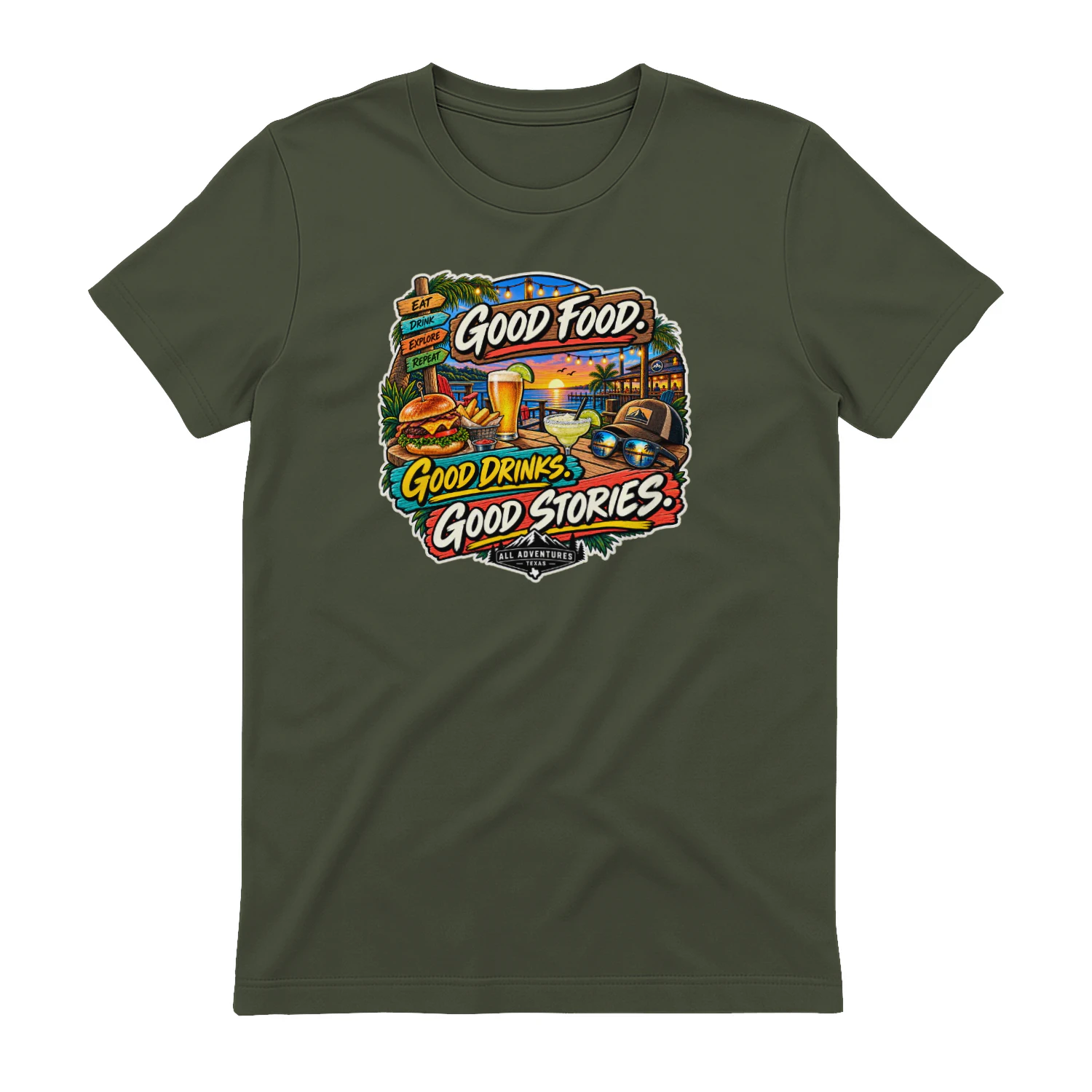
Good Food. Good Drinks. Good Stories.
A vintage-inspired food and nightlife design celebrating three things that make a night worth remembering: “Good Food. Good Drinks. Good Stories.” Perfect for restaurant lovers, cocktail fans, travelers, foodies, and anyone who believes the best experiences are even better when shared.