Why this truck review is really about how the RV life actually works
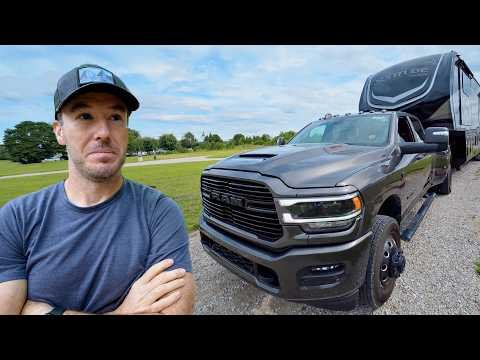
The direct answer is simple: this Ram 3500 long bed dually can tow the fifth wheel, and it does that part well, but after 18 months the owners are questioning whether it was the right truck for the way they actually live on the road. That is the real story here. It is not a complaint that the truck is weak or unreliable. It is a lived-in assessment of what happens when a vehicle is chosen for the worst-case scenario and then has to fit everyday RV life too.
That distinction matters. A tow rig can be perfectly capable and still be the wrong fit. In this case, the video keeps returning to the same tension: the truck solves one problem beautifully, but creates a different set of problems when the road gets tight, the campsite is cramped, or the driver has to manage the truck as a daily vehicle rather than a once-in-a-while hauler.
What the long bed dually gets right
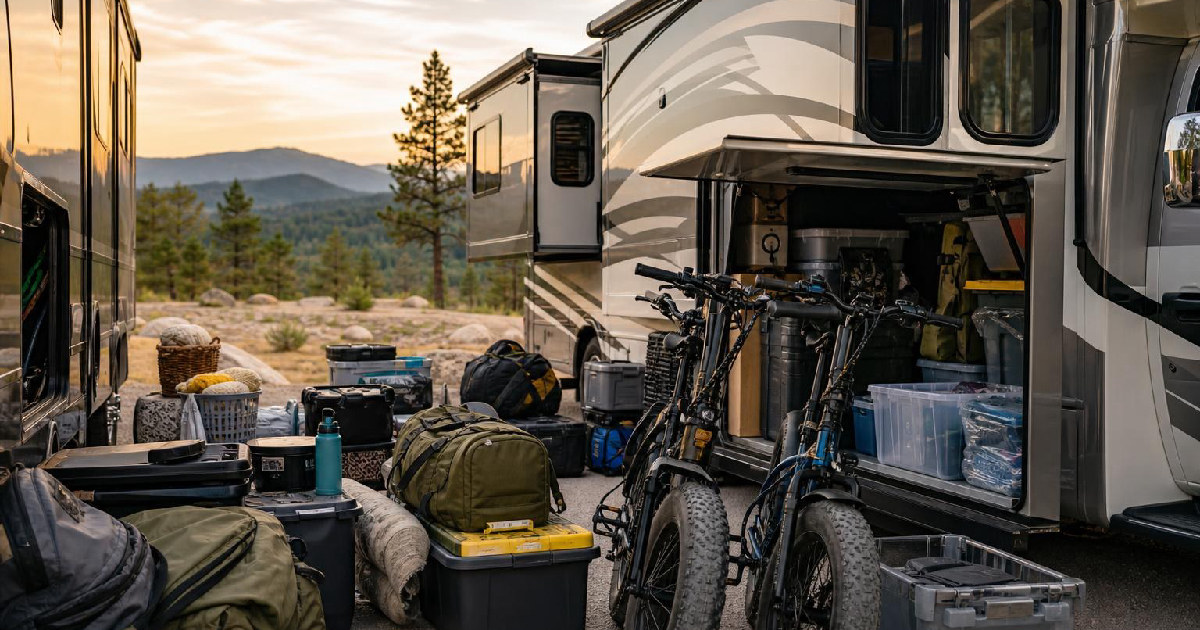
The strongest argument for the truck is also the easiest to understand. The long bed gives a huge amount of usable space, and that space changes how the whole setup feels. The owners talk about keeping outdoor gear in the bed and appreciating that there is room to work without constantly worrying about the fifth wheel coming too close to the cab.
Just as important, the long bed lets them avoid the old inconvenience of a big slider hitch. Compared with their earlier short-bed setup, this truck makes hitching feel cleaner and faster. They describe the connection to the Gen-Y hitch as simple and practical, and that matters in a life where setup and teardown repeat often enough to become either a nuisance or a small victory.
There is also the fuel tank advantage. The 50-gallon stock tank is one of those details that seems minor until you live with it. For towing a large RV, range and fewer fuel stops are a real comfort, and the truck offers that without requiring a special workaround.
Then there is the powertrain. The Cummins engine and Aisin transmission combination is presented as dependable and strong, with noticeably better power than the earlier 2015 Ram 3500 they had owned. Braking is another high point. The exhaust brake is one of the things they clearly trust, and for a truck this size and purpose, that confidence counts.
The features that feel good, but not perfect
Not every preference in the truck is purely functional, and that is part of what makes this review feel honest. The night package gets a lot of love because it simply looks good. Marissa likes the darker exterior accents, and the truck’s overall appearance clearly matters to both of them because they spend so much time in it.
Inside, the leather seats are another plus. The reasoning is practical as much as aesthetic: they seem easier to clean and likely to hold up better than a full suede-like setup, especially in a family travel environment where spills happen and messes are inevitable.
The giant screen is another feature that stands out because it makes the cabin feel more modern and usable. The truck is not being judged like a showroom object; it is being judged like a place where people spend hours at a time. That is why light from the sunroof, the overall cabin feel, and the screen all matter.
Still, the truck was not configured exactly the way they would have chosen if every option had lined up. The missing 360 camera and backup camera situation is part of that gap. They have found workarounds, including using an action camera, but the need for a workaround is itself a clue that the truck is not fully ideal for their use case.
Where the setup starts to feel awkward
The first real friction point is storage. The long bed is great for hauling gear, but the interior storage feels limited compared with the mega cab they owned before. That tradeoff becomes more noticeable when you live with the truck constantly and need places to put small things, not just the big items in the bed.
The second issue is the roll-top cover. The owners installed it to test it, and the verdict is clear enough: they do not like it. That is not framed as a catastrophic mistake, but as part of learning what works and what does not on a rig that is still being refined.
They have a similar uncertainty about the bed mat. It is useful in theory, but in practice it does not fully solve the problem of items sliding around in the bed. Again, the issue is not that the truck is bad. It is that the truck’s accessory choices still leave room for improvement in everyday use.
The moments that expose the real problem
The strongest evidence in the video comes not from the highway but from the ordinary awkward moments: the tight turns, the campsite approach, the parking spots, and the fuel stop. These are the places where a tow rig proves whether it fits the life.
One memorable sequence is the fuel stop confusion, where a pre-pay charge gets tied to the wrong pump. That scene is funny, but it also reinforces how much friction exists around simply moving a large truck through normal travel tasks. When a vehicle is this big, even a routine stop can become a small logistical event.
Parking is just as revealing. Marissa’s experience shows that the truck feels more intimidating in tight spaces than the Mega Cab did. She can drive it, and she likes certain parts of it, but the everyday confidence level is different. She describes the long truck as smooth and comfortable on the road, while also admitting that it is not as easy to place in cramped spots.
That is the heart of the issue. The truck is not too much for the RV. It is too much for the driver’s daily preferences.
Why the long bed may have solved the wrong fear
The video does a good job of naming the psychological trap behind the purchase. The long bed was chosen to avoid the risk of cab contact during tight turns. In other words, the owners planned for the worst possible turning scenario and built around it.
But after living with the rig, they think they may have overcorrected. They rarely make the kind of extreme turn that originally justified the long bed. So instead of paying for a benefit they use all the time, they ended up with a truck that is harder to park, harder to maneuver, and less pleasant in the spots that matter most.
That is why the comparison to the mega cab keeps coming up. It is not nostalgia for its own sake. It is a recognition that the shorter, more manageable truck may have fit the actual pattern of use better, even if the long bed looked like the safer answer on paper.
The verdict is capability without full satisfaction
By the end, the owners are careful not to call the truck a failure. And that caution feels right. A truck can be excellent and still not be the right truck. The Ram 3500 delivers on the heavy-duty promise. It tows, it brakes, it feels stable, and it gives them the confidence to move their home from place to place.
But the real verdict is less flattering: they think they bought for the 5 percent of situations that worried them, and in doing so made the other 95 percent harder than it needed to be. That is a useful lesson for anyone comparing long bed vs mega cab, or trying to decide what kind of truck makes sense for towing a fifth wheel.
If you are asking, “Was this the wrong truck?” the video’s answer is basically yes, but only in the lived-in, practical sense that matters after the novelty fades. It is the wrong fit, not the wrong machine.
Watch the original video: https://www.youtube.com/watch?v=ffYcwkmWqYY
RECOMMENDATIONS
All About The Life designs from Texas Thread Theory, inspired by the places you go and the stories you bring back.

Go Somewhere — Life Is Better On The Road
A bold road-trip design featuring an RV, winding road, mountains, lake scenery, and the message “Go Somewhere — Life Is Better On The Road.” Made for travelers, campers, RVers, and anyone who feels a little more like themselves once the highway opens up ahead.