Why Scotland tested a familiar RV routine
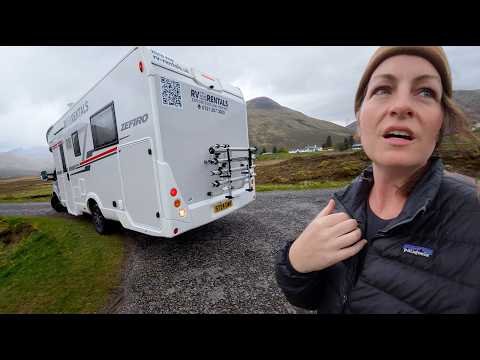
The clearest answer to what this video is really about is simple: a week in Scotland turns into a test of whether years of RVing create confidence or just familiarity. The crew starts with a 44-foot fifth wheel as their normal reference point, then steps into a 25-foot motorhome that immediately puts them out of their comfort zone. That change matters before they ever reach the first major stop. It shapes how they think about parking, sleeping, roads, timing, and how much the day can change once weather and access stop cooperating.
That is what gives the trip its shape. Scotland is beautiful in the obvious way the camera keeps confirming, but the video keeps returning to the less glamorous side of travel: finding a place to stay, getting through narrow roads, and deciding what to skip when the plan gets squeezed. The result is less a postcard tour than a moving lesson in flexibility.
A small motorhome, big roads, and a lot less certainty
One of the strongest running threads in the video is how different this vehicle feels from the one they usually live with. The move from a large fifth wheel to a compact rental does not make travel easier in the way people might assume. It changes the kind of stress they feel. Instead of the challenge being only size and setup, the trip becomes about whether the motorhome will fit into the spaces Scotland allows and whether the route ahead is going to stay manageable.
That pressure shows up almost immediately. The roads are described as narrow, often one-lane, and sometimes far more demanding than they look on a map. The crew also has to deal with the timing of stops and the reality that campsites and pull-offs can be full. They are told they can wing it, but winging it turns out to be an active daily decision rather than a carefree philosophy.
Even the ordinary parts of the day carry friction. There is the diesel mishap, the realization that fuel has to be paid for in a specific way, and the uncomfortable feeling of being followed by consequences from a stop made earlier in another country. None of those moments are the center of the trip, but they do explain why the crew keeps sounding half amused and half drained. In a small rig, even small mistakes feel larger.
Isle of Skye: the day the weather rewrote the plan
If the first part of the trip is about adapting to the vehicle, Isle of Skye is about adapting to Scotland itself. The video treats Skye as a place the crew really wants to spend time, but it never lets that desire become a guarantee. The weather, crowds, and road conditions all push back.
The day’s mood changes constantly. Rain rolls in, fog comes and goes, and the trail they want does not cooperate on schedule. At one point they wait nearly an hour and a half before deciding to give up and move on. Later, the same general frustration turns into the kind of reward RV travelers remember for years: a view that opens up in pieces, then suddenly gives way to the full landscape. That is part of the appeal here. The scenery does not arrive politely. It appears and disappears, and the crew has to be patient enough to catch it.
The Old Man of Storr ends up being one of the trip’s defining moments for exactly that reason. The hike is windy, wet, and uncertain, but the payoff is the kind of layered view that feels almost unreal. The video dwells on the way the land stacks up: water, rock, mist, and distance all in one frame. It is not just a beautiful overlook. It is a reminder that difficulty can sharpen the reward.
Loch Ness, castles, and the pull of the famous places
Once the route moves south, the video starts connecting Scotland’s famous names to the actual experience of being there. Loch Ness is one of those places many people know before they can place it on a map, and the crew leans into that shared familiarity. They get out on the water, look for the monster, and let the legend do some of the work.
But the segment works because it does not stop at the novelty of saying they were there. The crew notices the deep water, the cold, and the odd mix of tourist infrastructure and folklore. There is a snack bar, a coffee stop, and a very practical cruise setting sitting right next to one of the world’s most famous mysteries. That contrast is part of the charm. The legend may be old, but the trip itself is rooted in today’s logistics.
The castle stop brings a similar balance. The structure is presented as dramatic and historically layered, with a backdrop that makes the place feel larger than the language used to describe it. The video mentions film connections and the long history of the site, but the deeper impression is about standing somewhere that has clearly outlasted many different eras and owners. For the travelers, that makes the stop feel less like a checklist item and more like a pause in a landscape that has seen a lot.
Why the reindeer stop lands differently than the scenic overlooks
The reindeer experience in Cairngorm National Park gives the trip a different kind of payoff. It is not just another view. It is a guided interaction with wild reindeer, and the video treats that as something genuinely memorable rather than merely cute.
What stands out is how unusual the encounter feels within the rest of the journey. The crew has already been through weather, road stress, parking pressure, and campsite uncertainty. By the time they hike up to the reindeer, the experience feels earned. They are not just passing through a tourist stop; they are arriving after a week of tradeoffs.
The reindeer themselves add a quieter kind of wonder. The group learns enough to understand what they are seeing without turning the segment into a lecture. Antlers, movement, and the sound of the animals walking all become part of the memory. It is a fitting end point because it shifts the trip away from driving stress and back toward the kind of close-up travel moment people hope for when they think about Scotland.
What this trip says about confidence versus comfort
The most interesting idea in the video may be the one the crew circles without saying too neatly: after 11 years of RVing, experience does not remove discomfort. It just changes how you recognize it. They know what they are doing, but Scotland makes them feel it anyway. The roads are tighter. The parking is harder. The weather is less forgiving. The vehicle is smaller than what they know. And yet the trip still works because they keep moving, adjusting, and letting the day become something other than what they first imagined.
That is why this RV trip in Scotland feels memorable. It is not a polished success story. It is a trip where the scenery is constantly competing with the conditions, and the conditions keep winning just enough to make the scenery feel deserved. By the end, the crew is ready to go home, see their kids, and get back to their own RV. But the video leaves behind a useful takeaway: comfort and confidence are not the same thing, and a beautiful place can remind you of that in a hurry.
Watch the original video: https://www.youtube.com/watch?v=_7p92A-k69g
RECOMMENDATIONS
All About The Life designs from Texas Thread Theory, inspired by the places you go and the stories you bring back.

All About The Life Adventure RV Badge
A vintage All About The Life RV adventure badge featuring mountains, pine forests, lake scenery, a glowing sunset, and classic compass details. It’s made for RV travelers, campers, road trippers, and anyone who believes home can be wherever you park for the night.