Not a caravan in a van: the design idea behind the HiAce
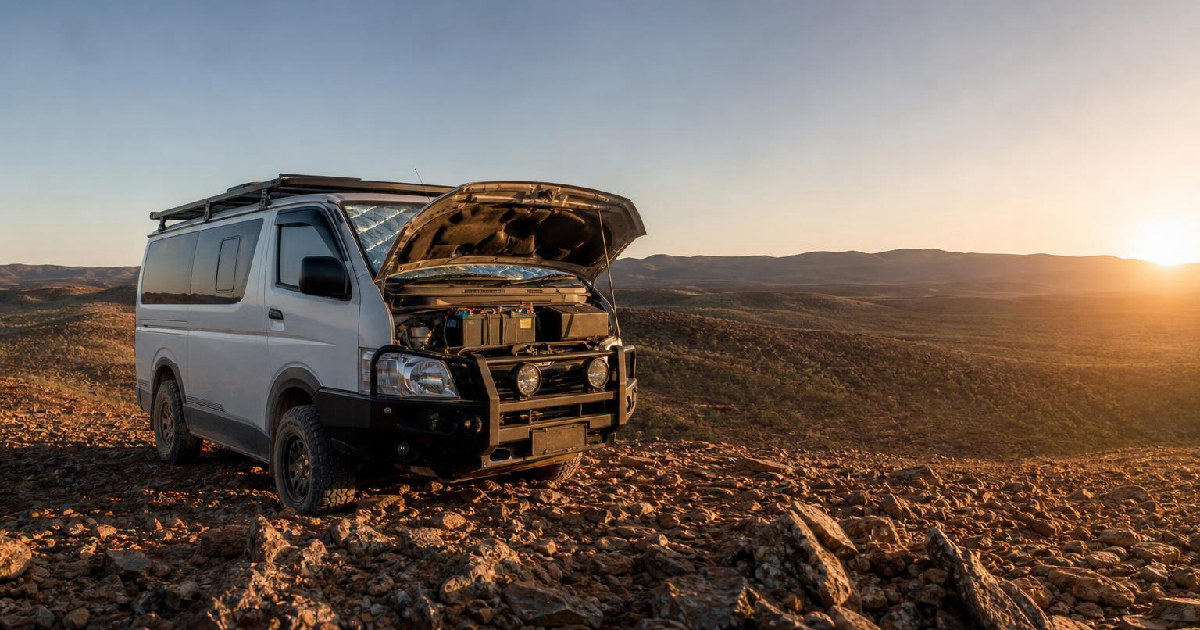
The clearest answer in this video arrives early: this HiAce is not meant to be a little apartment on wheels. It is an off-road overlander first, and that changes almost every choice in the build. The creator and Gwynne keep returning to the same point from different angles: if you approach the vehicle expecting a polished Instagram van with a kitchen run along one side and a lounge on the other, you will miss what this project is trying to do.
That distinction matters because it explains the whole tone of the Q&A. The van is being judged against the wrong category by a lot of viewers. Once you stop treating it like a miniature caravan, the layout starts to make sense. The logic is closer to a Troopy taken to a more spacious extreme: compact, practical, and built for travel where weight, access, and ground behavior matter more than showroom neatness.
Why the layout looks unusual until you think like an overlander
One of the strongest parts of the discussion is Gwynne’s own realization that the build was never aiming for the usual van-life template. Her description of the expected “galley kitchen, bed on the other side” setup is useful because it shows how easy it is to project a familiar idea onto an unfamiliar vehicle. Once she saw the finished layout, she understood that the project had been built from a different reference point entirely.
That reference point is the Troopy philosophy: a simple, hard-working off-road vehicle that prioritizes usefulness over domestic comfort cues. The HiAce build takes that idea and stretches it into a van platform. The result is something that behaves less like a small house and more like a highly considered travel tool.
That’s why some of the common objections do not land in the way critics expect. Cooking inside, for example, is not treated as a default lifestyle feature. It is an option for bad weather, wind, rain, insects, or those times when conditions make outdoor cooking miserable. The same goes for the toilet. The video does not romanticize those features; it treats them as practical responses to real conditions.
What the build gives up, and what it gains back
The most useful way to read the Q&A is as a series of trade-offs. Every feature takes space from something else. Every convenience carries a cost in weight, access, or flexibility.
That’s especially clear in the roof conversion discussion. The creator’s position is not that the lift-up roof is unimportant. He says quite plainly that it transforms the vehicle. But he also makes the case that, unlike a Troopy, the roof conversion is not a first-phase necessity in this van. A HiAce already gives enough internal height to sit up comfortably, which is a major difference from the tighter Troopy environment.
That one point shapes the whole budget conversation. The van can be built in stages. You do not have to do every major conversion immediately. The idea is to start with a capable four-wheel-drive HiAce and add the expensive pieces when they make sense for the way you actually use it. That phased approach is one of the more grounded parts of the video, because it resists the common internet assumption that a build only counts if it is finished all at once.
The same thinking shows up in the interior access decisions. A few viewers question the choice to block off the rear area, but the explanation is practical: the layout separates the sleeping zone from the kitchen area and helps manage insects and light at night. In places where bugs are aggressive, a lit open interior can become a trap. The partitioned arrangement is not decorative; it is there because the vehicle is supposed to work in the real world, not just in photos.
Weight, range, access, and the arguments that matter most
If there is one theme running through the entire discussion, it is weight distribution. The creator keeps pushing back on the idea that a small van automatically means poor handling. His point is that what matters is where the mass sits. A vehicle with a heavy rear overhang and a badly loaded back end can feel worse than this HiAce, even if it looks more conventional.
He gives a concrete example: moving a 100-litre water tank behind the rear axle, along with a rear-mounted spare, makes the van feel less settled. That is the kind of detail that matters because it shows the build is being evaluated by how it drives, not just by how much it carries. The critique is not dismissed; it is tested against actual use.
Range is the other big pressure point. The current fuel setup is not portrayed as ideal, and the video is refreshingly direct about that. The creator says the van’s range is the biggest single issue for him. His solution is to combine a larger Brown Davis tank with jerrycans, aiming for the kind of distance that makes remote travel realistic. That honesty gives the feature its shape: the build is good, but not without compromises.
Access also comes up again and again, especially around the fridge. A lot of the critique seems to assume the fridge belongs in the living space. The response is simple: that would force out too many other important items, from clothes storage to water to first aid gear to the electrical control box. In a small vehicle, fridge placement is not a side note. It changes the rest of the interior.
The creator’s answer to that is consistent: the fridge must be accessible from outside, because that is how the vehicle is actually used most of the time. That makes more sense here than in a house-like van where the interior is meant to function as the main living room.
The 48V system: fast charging, practical wiring, and the limits of the format
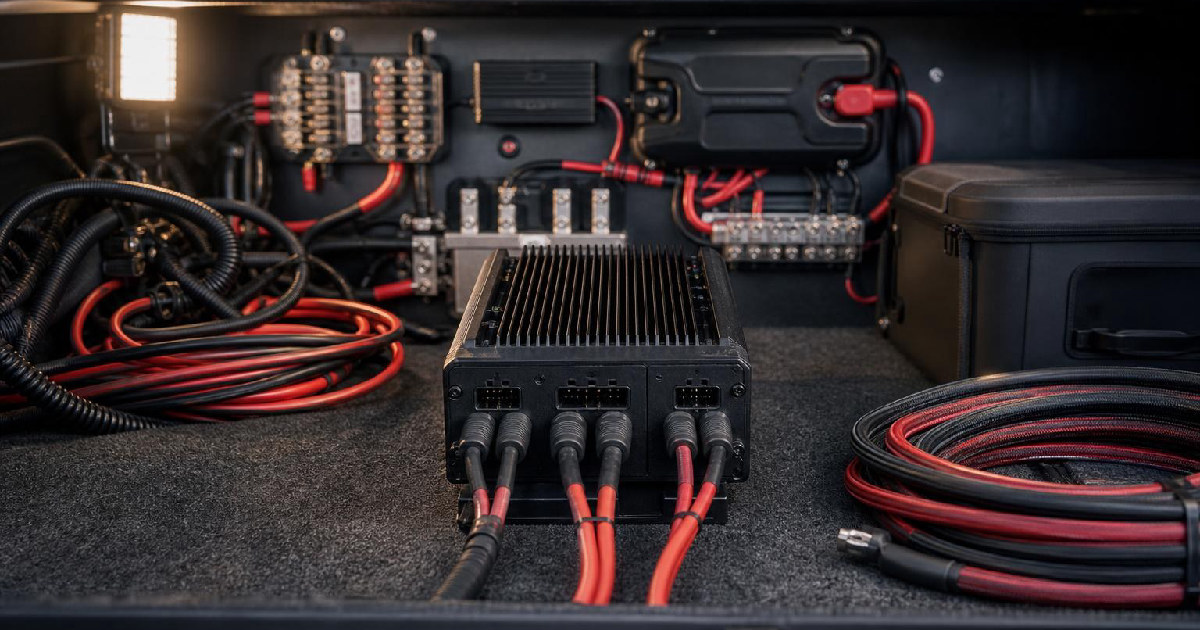
The electrical discussion is one of the more technical parts of the video, but the framing remains simple: the 48V system is there because it charges very fast, and because it fits the way this build is used. The creator is clear that it is not for everyone. It is a choice for people who value rapid charging and are willing to accept the associated design approach.
He gives a specific example from recent driving: leaving home with the battery at 11 percent and reaching 98 percent before turning off toward Lancelin. That anecdote is used to illustrate speed rather than to make a grand technical claim. The point is practical. If you want very quick recharge times, this system does something a standard 12V setup cannot do as easily.
That said, the video does not pretend the system is universally necessary. The creator repeatedly pushes back on the idea that a feature is useless simply because it is not essential. His answer to the “do you need this?” objection is that overland travel is full of optional choices. You need food, water, and a few specific essentials. Beyond that, the question becomes what kind of travel you want to do, and how much comfort or convenience you want built into the vehicle.
The compressor and start-battery explanation also reinforces that point. The system is arranged to handle high-demand spikes in a practical way, rather than forcing every load through the same path. Even when the discussion gets technical, the underlying reasoning remains the same: the build is a series of deliberate compromises, not a guess.
What this HiAce says about off-road travel choices
The most interesting part of the video may be the way it reframes old arguments. Solid axles, ladder frames, live axles, and chassis strength all come up because viewers keep trying to map familiar off-road expectations onto a different platform. The creator does not claim the HiAce is better than everything else. He says something more specific: it is strong enough for the kind of use he intends, and it solves some important problems better than the vehicles people keep comparing it to.
That is what makes the video useful beyond the vehicle itself. It is really about deciding what kind of travel you want to support. If you want a tow rig, buy a tow rig. If you want a compact overlander with its own accommodation, then towing logic starts to matter less. If you want a vehicle that behaves like a small caravan, this is probably the wrong answer. If you want something that is easier to live with, easier to store, and shaped around off-road use, the HiAce starts to look a lot more coherent.
There is a strong audience tension running through the comments the video responds to: some viewers want the build to prove something, while the creator is mostly trying to solve practical problems in a way that suits his travel style. That difference is why the Q&A works. It is not trying to win an argument so much as explain the internal logic of a vehicle that makes sense once you accept its purpose.
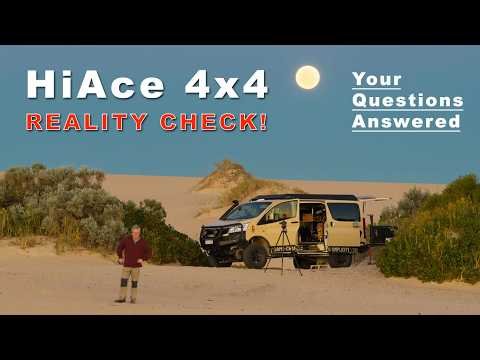
Watch the original video: https://www.youtube.com/watch?v=NcSjXwOy-6U
RECOMMENDATIONS
All About The Life designs from Texas Thread Theory, inspired by the places you go and the stories you bring back.

Go Somewhere — Life Is Better On The Road
A bold road-trip design featuring an RV, winding road, mountains, lake scenery, and the message “Go Somewhere — Life Is Better On The Road.” Made for travelers, campers, RVers, and anyone who feels a little more like themselves once the highway opens up ahead.