Why this Shark Bay leg mattered
The plain answer is that this solo trip to Shark Bay was never just about getting to a famous stretch of coast and calling it a day. It became a working trip with moving parts: winter-cold mornings, long distances on back roads, campsite decisions made late in the day, and a strong sense that the best moments would come from being flexible rather than committed to a single plan.
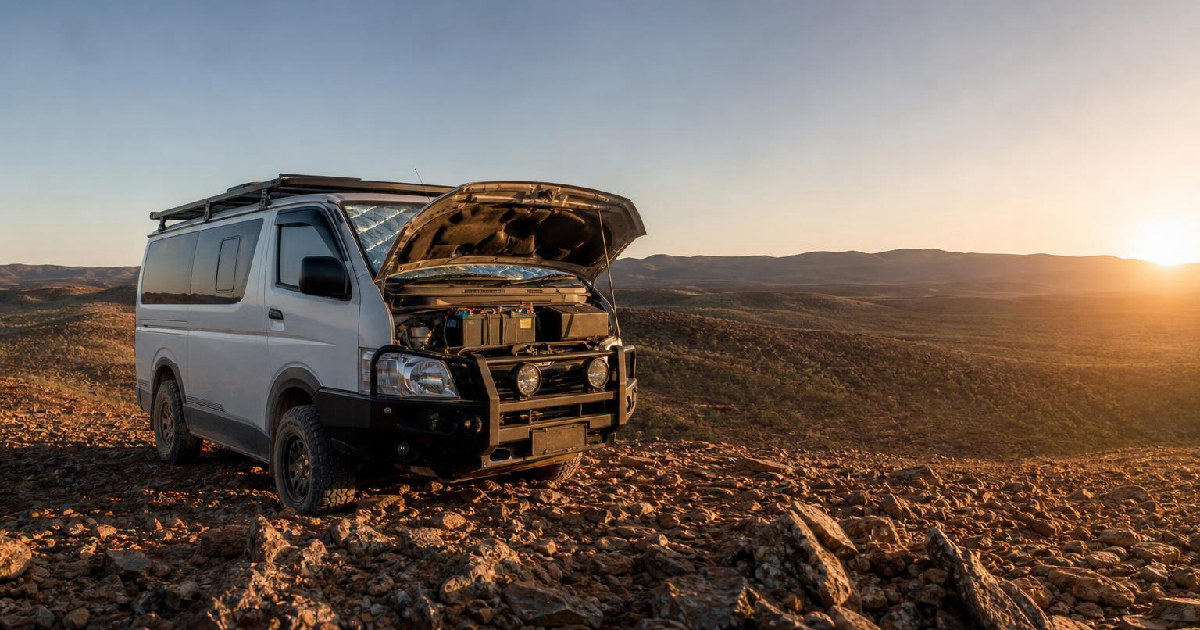
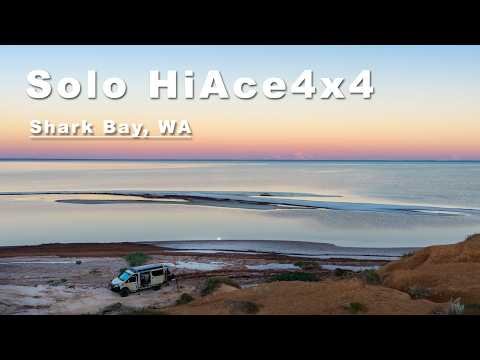
That is what gives the video its shape. The creator is driving north from Perth in a HiAce 4x4, filming material for a new course, and trying to make sense of a route where holiday traffic, campground availability, fuel range, and daylight all matter. The result is not a polished loop with tidy milestones. It is a solo overlanding run that keeps asking him to choose again.
When campsite plans changed
The first plan was simple enough: keep heading toward François Peron National Park and find a place to stop along the way. That idea shifted quickly. Holiday traffic made it unlikely that a late arrival would find a camping spot, so the search turned into a side-road hunt for somewhere quiet enough to spend the night.
That detour did not immediately solve anything. The bush was too thick to offer an easy clearing, and with limited fuel on board, the range for extra exploring was not unlimited. The fallback was a booking-based campsite that turned out to be full. Even the remaining option, campsite one at Goulette Bay, sounded remote enough to be disappointing before he even reached it.
And yet the trip kept opening up from there. He looked beyond the obvious allocation and took a chance on a closer spot near the coastline. There were only a few designated sites in the area, no fires were allowed, and the ground was soft, but the low-impact setup worked. It was a simple reminder that on a trip like this, the best camp is often the one that makes sense in the moment, not the one that sounded ideal on the map.
The bay, the sharks, and the quiet of the water
Once he settled in, the coast did what it was supposed to do: it took over. The water was calm, fish were visible in the shallows, and the bay was full of the kind of movement that makes a place feel alive without ever becoming busy. He noticed rays in the water, then spent time identifying sharks in the area and describing the local species with the interest of someone who has stopped moving long enough to actually look.
The important thing here is not a checklist of wildlife sightings. It is the way the place changes the mood of the trip. Shark Bay is framed as quiet and beautiful rather than dramatic. The sharks are part of that, but so is the stillness around them. The creator keeps returning to the idea that the place feels special precisely because it allows observation without hurry.
That same feeling extends to the camps themselves. One night is spent in a bay that feels almost private, another near wildflowers and an abandoned farmhouse, and another at a favorite stop on the way home. The trip never becomes a straight line of mileage. It becomes a sequence of places where the landscape keeps offering something different if he is willing to stop for it.
What the camera setup says about the trip
The photography gear matters in this video, but not because the clip is trying to review equipment. It matters because the way he uses the gear reveals how he thinks about the trip.
He talks about shooting stills with two cameras, including a Leica R3 and a Hasselblad X2D with different lenses. He also describes the Tread 2 as especially useful in the vehicle because the mount makes it easy to clip in and out, check the map, and keep the unit locked in place. None of this is presented as tech theater. It is all in service of a working solo setup where a camera, a map, and a vehicle need to cooperate without becoming a nuisance.
That distinction between tools also becomes one of the strongest ideas in the video. He says that his still photography improved once he stopped trying to do video and stills at the same time. Instead of splitting attention, he now treats them as separate tasks. For readers, that is one of the clearest takeaways from the trip: the gear is useful, but the larger change is in focus.
A solo trip that reset the work
By the end of the run, the trip has done something that is easy to miss while watching a travel video unfold. It has reminded him why he enjoys being alone on the road.
He says the trip gave him a new lease on life, and while he acknowledges the cliché, the point lands because he ties it to specifics: three glorious campsites, a landscape of flowers, long stretches without seeing another car, and time to make still photographs without distraction. The solitude is not framed as hardship. It is framed as the condition that lets him work and observe properly.
That same clarity shows up in his broader reflection on YouTube and creative work. He is careful to say that he wants to keep funding his work through community support rather than product placement or AI-driven shortcuts. But even without that larger context, the trip itself makes his preference for separation obvious. Separate stills from video. Separate camps from the rush. Separate the route from the assumption that the first plan is the best plan.
The video ends with traffic, a turn, and the practical business of getting home. That suits the whole trip. Shark Bay is not sold as a grand finish. It is treated as a place where winter cold, soft sand, wildlife, and roadside improvisation all combine into a kind of working freedom.
Watch the original video: https://www.youtube.com/watch?v=OA6dlRcSCOs
RECOMMENDATIONS
All About The Life designs from Texas Thread Theory, inspired by the places you go and the stories you bring back.
All About The Life Beach Signpost Badge
A tropical All About The Life travel badge featuring a glowing sunset, beach chairs, ocean scenery, and a signpost pointing toward Beaches, Mountains, Road Trips, and Good Eats. It’s a celebration of all the different ways to get out, explore, eat well, and enjoy the good life.