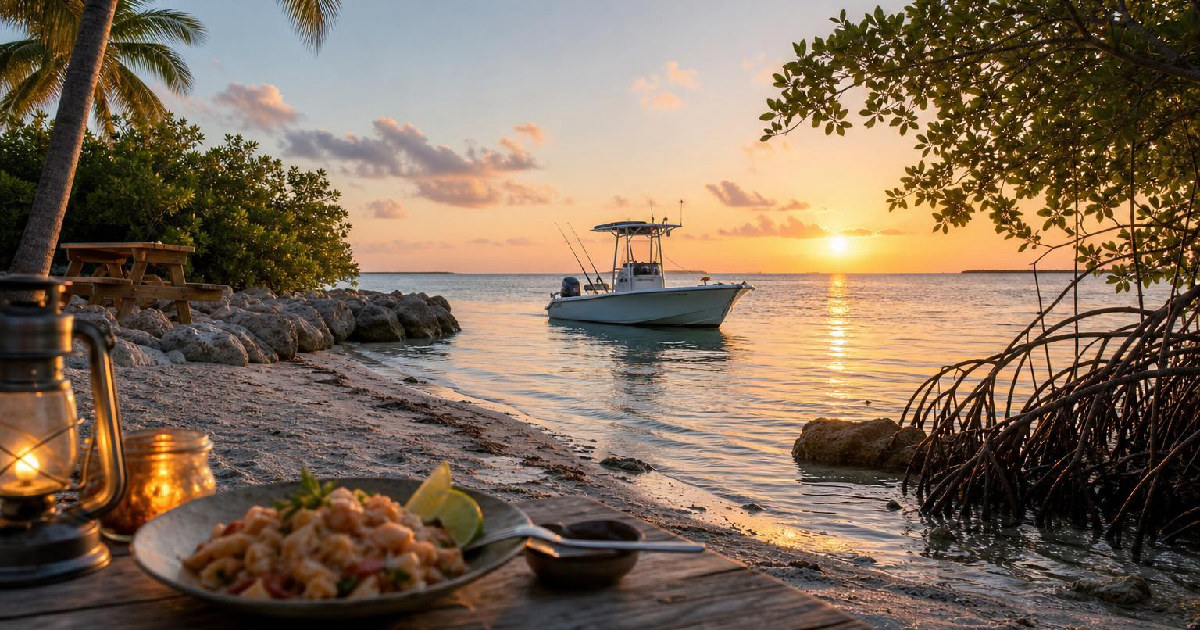
A 50th birthday built around the water
The plain answer is that Robert Arrington’s 50th birthday in the Florida Keys is a full catch-clean-cook celebration built around the water. The crew heads south, gets the boats in place, dives for lobster, spearfishes, snorkels, fishes, and finishes the day with a meal that feels like the natural payoff for everything that came before it. That is the basic shape of the video, and it is also why it works as a companion feature: the trip is not treated like a special occasion that interrupts the normal DeerMeatForDinner routine. It is the routine, just with more people, more gratitude, and a bigger reason to slow down and enjoy it.
What gives the video its energy is how quickly it settles into a shared mission. Robert is not presenting the day as a solo birthday flex. He keeps coming back to the same idea: the people around him matter, the life they get to live matters, and the Keys give them a place to do what they already love. That combination makes the birthday feel less like a milestone being observed from a distance and more like a day actively lived.
Why the Keys day felt like the point, not just the setting
A lot of outdoor videos use the destination as backdrop. Here, the Florida Keys are the story’s working surface. The bridges, the calm water, the shallow reef areas, the boat traffic, the heat, and the current all shape how the crew moves through the day. Robert mentions growing up diving and fishing there, which helps explain why the place carries so much weight in the video. This is familiar water, not a random stop.
That familiarity matters because the trip is built on repetition done well: launch, spot, dive, measure, sort, return, cook, eat. It is a simple sequence, but it is full of small decisions and habits that show how long Robert has been doing this. The video never tries to dress the day up as something it is not. It is a good Keys day with good people, clear purpose, and enough action to keep the whole thing moving.
The lobster dive basics Robert actually walks through
One of the most useful parts of the video is how Robert explains the basics of lobster diving without turning it into a lecture. He shows what he relies on in the water and why each piece matters in this setting. The focus is practical: if you cannot see, you cannot catch bugs, and if the current is moving, you need equipment that helps you work with the water instead of fighting it.
What the crew used in the water
Robert walks through the core gear he leans on for lobstering in the Keys. He talks about the mask and snorkel as the starting point, then the fins that help with movement in current, the gloves that protect against spines, the bag that keeps multiple lobsters from getting away, and the weight belt that helps offset buoyancy in salt water. He also mentions the gauge, which is part of the process from the moment a lobster is caught.
That breakdown is useful because it shows the day as a sequence of habits rather than a lucky grab. Robert also explains defogging the mask, describing his own routine and noting that a clean, clear mask is part of being able to work effectively underwater. The message is simple: all the excitement in the water depends on a lot of ordinary prep.
How they checked size and legality as they went
The video also gives a straightforward look at how they handle measurement. Robert shows the gauge, explains where to measure, and then has the crew double-check lobsters as they come up. That part of the day matters because it keeps the trip grounded. It is not just about pulling something out of a hole; it is about making sure the catch is handled correctly before it goes into the boat.
He also notes the bag count and the per-person limit discussed in the video. That detail adds structure to the outing. The crew is not wandering aimlessly; they are keeping count, checking size, and staying organized as they move through the dive sites.
Spearfishing, markers, and the pace of the afternoon
Alongside the lobster work, the trip includes spearfishing and a methodical search pattern in shallow water. Robert talks about using markers so the boat can stay on a productive spot while divers work below, and he emphasizes how much the current and visibility matter as the afternoon goes on. The day sounds calm from the surface, but the actual work is steady and physical.
He also describes several ways people catch lobsters, including the hand method, the tickle stick and net method, and a noose that he says others use more than he does. That comparison says a lot about how the video frames experience. Robert is not trying to claim one perfect technique. He is showing the way he knows best and acknowledging that different crews do it differently.
The spearfishing moments fit the same rhythm. They are not separated off as a different sport; they are part of the broader birthday mission. The crew is simply using the day well, switching between methods as the water and the target call for it.
Turning the catch into a birthday dinner
The second half of the video shifts from water to table without losing the same communal feel. The crew comes back, cleans up the boats, heads to the store for ingredients, and sets up a meal with lobster, steak, asparagus, corn, and sweet potatoes. That transition is the other reason the video works so well: nothing is wasted. The catch does not exist as a trophy to be admired for a minute and forgotten. It becomes dinner.
Robert spends time showing the cooking and the eating with the same easy, shared tone that carried the dive. The lobster is prepared straight from the day’s catch, and the steak is cooked alongside it. The result is less a formal birthday banquet than a big, happy house meal made by people who have spent the day together on the water.
That is where the emotional center lands. The birthday is not marked by one dramatic speech or a single grand reveal. It is marked by people sitting together, joking, singing, passing food around, and talking about the day they just had. That feels true to the video’s tone. The celebration is built out of time, effort, and company.
What makes the celebration feel bigger than one trip
Robert keeps returning to gratitude, and that gives the whole feature its real shape. He thanks the people who showed up, the friends who feel like family, and the audience that has been with him through the years. He also talks about moving into a new chapter, which helps explain why the 50th birthday carries a little extra weight. It is a marker, but it is not treated as an ending.
That may be the most lasting impression from the video: the trip is clearly about Robert’s birthday, but it is also about the life around the birthday. The boats, the diving, the food, the laughter, the family-style chaos, and the Keys themselves all point to a way of living that values doing things together and then sitting down to enjoy what came from the effort.
For anyone watching the embedded video, that is the real appeal. It is not just a fishing trip with birthday decorations on it. It is a reminder of how Robert and his crew make a day feel full: start early, work the water, keep it legal, cook what you catch, and share it with the people who made the trip worth taking.
Watch the original video: https://www.youtube.com/watch?v=gzc1_SG1o9g
RECOMMENDATIONS
All About The Life designs from Texas Thread Theory, inspired by the places you go and the stories you bring back.

Life Happens Out There
An outdoor-focused AATL design celebrating mountains, forests, hiking, camping, road trips, and the simple idea that life happens when you get out there and explore.