Why three rooftop ACs became the next big RV project
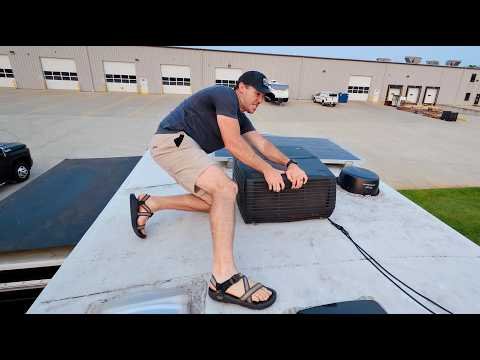
The simplest answer to what is happening in this video is this: Less Junk, More Journey are replacing all three RV air conditioner units on their rig because they want something quieter, lower-profile, and easier to live with. But the video quickly becomes about more than a hardware swap. It turns into a practical look at what it means to change out major equipment on a full-time RV, how much the old units were actually doing, and why the repair path itself matters just as much as the equipment choice.
That matters because this is not a cosmetic tweak. The creators are talking about a system that affects sleep, filming, schoolwork, meetings, and everyday comfort inside the RV. When one piece of gear touches that many parts of life, the replacement stops being a simple upgrade and starts looking like a quality-of-life decision.
The before-and-after numbers that mattered
Before the old units came off the roof, the creators did something smart: they measured what they already had. That gave the video a clear baseline instead of relying on a vague sense that the old setup was “loud” or “inefficient.” Using a sound level meter app, they captured a reading on the existing Coleman units and then compared those numbers with the new ones after installation.
The old ACs were not presented as terrible by any means. In fact, the creators pointed out that the Coleman units were still fairly efficient for what they were. But noise was the real issue. Once the new system was in place, the difference was obvious enough that it changed how the RV felt. The creators describe the new units as dramatically quieter, and that impression shows up in the way the family can actually use the space: school happening with the AC on, movie watching without a constant fight against background noise, and work calls that do not require as much shutdown-and-startup management.
The other side of the comparison is power use. The video includes amps readings and a live check of the compressor kicking in, which gives the replacement a real-world utility beyond sound. The new units are discussed as drawing less power and behaving well in a 30-amp campground setup, which is a meaningful detail for anyone who has had to think carefully about what can run at once.
A service-center drop-off that says a lot about RV repairs now
The installation itself was not something they wanted to tackle alone, and the video makes a point of saying so. Instead of trying to do the work themselves, they took the rig to a service center. That decision is not framed as surrender; it is framed as common sense. Three rooftop air conditioners are a big job, and the creators are clear that letting professionals handle it was the right call.
The setting also matters. Dropping off a home on wheels is never casual, but the service-center environment shown here is designed to make the process less disruptive. The crew parks, stays on site, and treats the visit less like a wrenching inconvenience and more like a workable stopover. That experience feeds into one of the video’s bigger points: RV repair is not as narrow a system as it used to be.
The creators connect the current project to an older repair nightmare from years earlier, when a fifth wheel spent months in service and even got damaged again while being moved. That story is not included for drama alone. It shows why they are so interested in better repair paths now. The old assumption was simple: something breaks, you go through the dealer. This video argues that life on the road has become more flexible than that.
Why the low-profile choice mattered more than the white-vs-black debate
One of the most interesting parts of the video is that the creators do not treat appearance and function as separate problems. They clearly care about how the new units look on the roof, especially because the rig itself has a dark paint scheme and the new AC covers are white. That creates a tension between the clean visual line they wanted and the lower-profile shape they ultimately preferred.
In the end, the low-profile design wins out because it solves more real problems. The creators mention underpasses and general clearance concerns, but the broader issue is that a lower rooftop profile fits better with how they use the rig. It is easier to live with, and it is easier to tolerate if the payoff is less noise and less hassle.
What is helpful here is the honesty. They do not pretend the white housings are their first choice aesthetically. They also do not let that annoyance outweigh the practical benefits. By the end of the test, the new units look less intrusive than expected, and that changed the emotional tone of the install. Something they were nervous about became something they could actually live with.
What changed after the install: sound, power, and daily livability
Once the ACs are in place, the video shifts into the part that RV owners usually care about most: does the thing actually improve daily life?
The answer, based on the creators’ own testing, is yes. They check each unit and report that the system is cold and quiet. More importantly, the sound is no longer dominating the room the way the old setup did. That is not just a comfort point. It changes how the RV functions as a home and workspace. The creators talk about being able to keep the AC running during a movie, during school, and even during meetings without constantly managing noise.
The power testing reinforces that this is not just a “feels quieter” story. They check amp draw and compare the units in use, noting lower consumption and a setup that behaves well even when multiple units are in operation. For a family that lives, works, and travels in the same vehicle, that flexibility is a big deal.
The video also shows the practical side of the upgrade. They are not pretending that one new appliance solves every RV inconvenience. There are still remotes to manage, panels to keep, and the usual moving parts that come with life on the road. But the overall effect is clearer, calmer, and more adaptable.
The bigger lesson for RV owners looking for the right repair path
This is where the video broadens out from a single upgrade into a useful RV repair conversation. The creators make the case that the dealer is no longer the only default answer. Depending on the problem, the best route might be a manufacturer service center, a private repair shop, an on-site technician, or even a specialty shop that handles a specific kind of issue.
They do not present that idea as a rigid system. In fact, part of the point is that the right answer depends on the problem, the rig, and the location. But the larger takeaway is clear: RV owners have more options than they may realize, and assuming everything must flow through the dealer can slow you down or narrow your thinking unnecessarily.
That insight gives the video its real value. The AC replacement is the visible project, but the deeper story is about how full-time RVers build a more workable repair strategy over time. They learn which jobs are worth outsourcing, which facilities make sense, and which assumptions no longer hold up after years on the road.
For anyone wondering whether RV air conditioner replacement is worth the trouble, this video offers a grounded answer. In this case, the new units are quieter, lower-profile, and easier to live with. Just as importantly, the process around them reflects a more flexible approach to RV ownership itself.
Watch the original video: https://www.youtube.com/watch?v=OnG9rOjs498
RECOMMENDATIONS
All About The Life designs from Texas Thread Theory, inspired by the places you go and the stories you bring back.

More Trips. Better Stories.
A travel-inspired design built around a simple formula: “More Trips. Better Stories.” With vintage travel-stamp, airplane, compass, luggage, and mountain details, it’s perfect for frequent travelers, weekend wanderers, and anyone already thinking about where they want to go next.