The decision that changes the shape of the trip
The plain answer is that this episode is about RV travel in Michigan, but it is just as much about a hard pivot. The team closes the loop on the Daydream Depot and shares that they are not moving forward with the project. The property is now for sale. That is the emotional center of the video, and it explains why everything that follows feels a little looser, a little more open, and a little more dependent on reading the road as it comes.
They do not pretend the choice is easy. The disappointment is real, and so is the sense that the decision was made after getting far enough into the process to understand what the project would actually require. That matters. This is not a casual change of mind. It is a reluctant shift made after confronting the unknowns head-on. The video frames it as a moment where intention means being willing to change course, even after telling everyone the dream out loud.
What keeps the episode from becoming only about that setback is the way the road north keeps offering a different kind of reward. The trip still has shape. It just no longer has the shape everyone expected.
Why the canoe becomes the real conversation starter
One of the best running ideas in the video is that the canoe does not just travel with them; it changes the kind of trip they are having. The Old Town canoe becomes a social magnet. People notice it. They talk about it. They give advice because of it. Gary, the camp host, sees the canoe and immediately turns that into a conversation about places to paddle next.
That is a small detail, but it gives the episode its texture. The canoe is not treated like a prop or a pretty accessory. It is a social signal. It opens doors to local knowledge and creates a different pace for the journey. Instead of simply moving through Northern Michigan with an itinerary, they keep collecting recommendations, stories, and route ideas from people who know the water.
That conversation turns out to matter more than it first appears. The episode keeps circling back to the idea that a canoe can “lasso” people into the story. That is exactly what happens here. The trip becomes more communal because the canoe is visible, old, and interesting enough to invite people in.
Frankenmuth: a planned stop that only partly delivers
Frankenmuth is the kind of stop that comes in with a lot of expectation attached. The route sounds easy enough, and the town sounds like a straightforward weekend detour. They head there after the plan changes, and it immediately reads as the kind of place people either lean into or move through quickly.
The video does both. They take in the town, walk around, look for the Bavarian pretzel, and absorb the atmosphere. They meet people along the way, including Dawn and Ray, which is one of those road-trip moments that would not exist without a willingness to stop and wander. Even when they do not find exactly what they were looking for, the stop still gives them something better: a sense of the town’s personality and a chance to notice how much fun a place can be when it is busy, kitschy, and fully committed to its own identity.
The Christmas-store angle is part of that. Frankenmuth is presented as a place that is unabashedly into its theme, and the family’s reaction is less about irony than curiosity. They are amused by it, but they are also willing to let it be what it is. That openness is a useful thread in the whole episode.
How the Au Sable River reroutes the whole weekend
The biggest shift in the trip comes when the Au Sable River enters the story. They did not even know they were going there until they met Gary, which makes the detour feel especially honest. It is not a preplanned highlight. It is a recommendation taken seriously because the trip still has room for surprise.
That decision changes the weekend in a good way. The river is described as fantastic, with dams and portages, and the whole setup turns the outing from a simple drive north into something that feels earned. Later, they arrive at the river area, rent a kayak, and work around the timing of the last pickup. There is a little pressure in the logistics, but not the kind that ruins the mood. If anything, it gives the day momentum.
What stands out is how naturally they adapt. The canoe and kayak choices are not treated as separate “activities” so much as part of the same flexible rhythm. They adjust lunch, parking, timing, and transportation around the river rather than forcing the river to fit a rigid schedule. That is the sort of thing RV travel does well when it is working: it lets the day bend.
The practical side of moving with an Airstream in Michigan
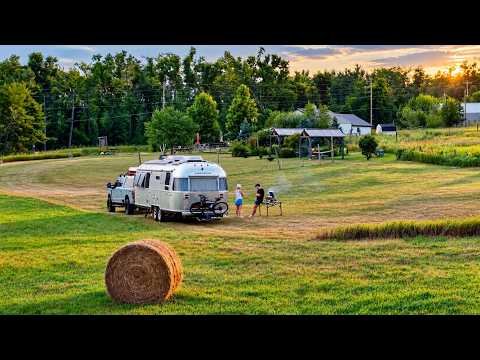
For viewers who like the travel details as much as the scenery, this episode has plenty of them. They talk about leveling blocks, tire clearance, amp limits at the pedestal, fresh water, dump stations, and the difference between a site that needs a little finesse and one that is easy to settle into. Nothing here is presented as a tutorial, but the practical information is woven into the trip in a way that feels useful.
The same is true at the state park and campground stops. Patski State Park comes up as a place they have stayed before and wanted to return to, even if they could not get in this time. The nonresident pass gets mentioned in a plain, matter-of-fact way, which is the right tone for this kind of feature. It is not glamorous, but it is part of what makes the trip possible.
The Harvest Hosts stop in Paskki adds another layer. They check in, work through the arrangement, and end up with another night that fits the larger pattern of the trip: practical, flexible, and shaped by who is willing to say yes.
What this episode says about keeping a daydream alive
The title of the episode suggests surprise, and the video delivers that in a quiet, mature way. The surprise is not a plot twist. It is the realization that a dream can change without the whole trip falling apart. The Depot project ends. The property goes up for sale. That is a real loss. But the family does not stop being themselves because one plan stops working.
Instead, they keep moving north. They keep meeting people. They keep taking advice from strangers who become temporary guides. They keep finding useful, funny, or beautiful moments in places that were either expected to shine or barely expected at all. That is what makes the companion story worth telling. It is not that the route was perfect. It is that the trip stayed alive after the plan changed.
Watch the original video: https://www.youtube.com/watch?v=8cBhLJNzjLo
RECOMMENDATIONS
All About The Life designs from Texas Thread Theory, inspired by the places you go and the stories you bring back.

All About The Life Adventure RV Badge
A vintage All About The Life RV adventure badge featuring mountains, pine forests, lake scenery, a glowing sunset, and classic compass details. It’s made for RV travelers, campers, road trippers, and anyone who believes home can be wherever you park for the night.