Why the trip starts with restraint, not heroics
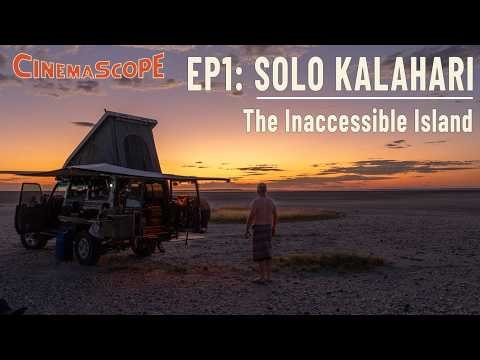
The clearest way to read this video is simple: it is a solo overlanding story about judgment. Andrew St Pierre White is not trying to prove that one vehicle and one driver can do anything. He is trying to read a difficult landscape well enough to know when to press on and when to stop. That matters because the route into Botswana is presented less as a conquest than as a sequence of decisions shaped by time, fatigue, weather, and the surface under the tyres.
The trip begins with a long northbound drive out of Cape Town, after days of preparing the vehicle and compressing too much into too little time. That tension carries through the whole opening stretch. He is on schedule, but just barely. He is tired, he is driving alone, and he is already thinking ahead to what the next border, the next overnight, and the next uncertain section of road might demand.
The long road north: time, fatigue, and the first practical decisions
One reason this episode works is that it never pretends the first part of the journey is glamorous. It is a long haul through familiar places, including Kimberley, Hopetown, and the road toward Gaborone. These are not shown as postcard stops. They are practical waypoints in a trip where the clock matters as much as the map.
That practical reality shows up in small decisions. He stops for a proper break when fatigue starts to bite. He chooses a B&B rather than camping when that makes more sense. He books a lodge in advance when arriving late would be risky. These choices may seem ordinary, but they are exactly what make a solo expedition believable. When there is no second vehicle and no one else to hand over the driving to, sleepiness is not a minor inconvenience. It is part of the terrain.
The same is true of navigation. Botswana becomes a place where cell service is unreliable for his setup, where finding a lodge can depend on old tracks, memory, and a bit of guesswork. That creates a feeling the video keeps returning to: the idea that self-reliance is not a slogan. It is a collection of tiny, careful acts.
When Botswana changes the terms
Once the route reaches Botswana, the tone shifts. The country is not treated as a backdrop. It is the active force in the story. He is welcomed, recognized by people who know the channel, and repeatedly reminded that overlanding in this part of the world is as social as it is solitary. But the landscape remains the real authority.
At Khama Rhino Sanctuary, the trip gains breathing room. He finds a quiet campsite, a place to regroup, and, crucially, a pause that allows him to assess the next stage rather than rush into it. That is where the video becomes especially interesting. It does not frame the sanctuary as a destination in itself. It frames it as the place where he can finally ask the hard question: if the pans are wet, what exactly am I risking?
That question is not theoretical. The rain has changed the situation. He keeps returning to the fact that the season has been unusually wet, that the pans are holding water, and that what should have been a drier, more predictable route is now uncertain. The trip begins to narrow around one basic fact: if the surface softens, the pan can stop being a route and become a trap.
Why the pans are the real obstacle
The Makgadikgadi is the heart of the story because it is where the expedition stops being about distance and becomes about surface conditions. On a map, the crossings look straightforward. In the video, they are anything but. The problem is not only water. It is the combination of water, thinly marked track, and the possibility that a vehicle can sink until the chassis meets the ground.
That is why Andrew keeps refusing to “just give it a go.” The video makes a strong case for caution without ever sounding mechanical about it. He is not describing a theoretical hazard. He is describing a place where a small deviation from the line can end the trip. That is especially true on a solo run, because the margin for recovery is much smaller when there is no support vehicle nearby.
The tension is strongest when he approaches crossings toward South Island and later Kukonje Island. South Island is effectively ruled out by water. Kukonje remains uncertain until he sees the track, the depth, and the recent tyre marks. This is where the episode becomes more than a story about scenery. It becomes a study in reading evidence: tyre prints, damp soil, the reflectiveness of the pan, the way the vehicle behaves under load, and the simple visual truth that a surface can look firm and still fail under weight.
Kukonje, memory, and the value of turning back
Kukonje Island carries the emotional weight of the video because it is the destination he keeps trying to reach. It also gives the trip its best sense of perspective. This is not his first attempt, and the film does not hide that. The earlier failures, the earlier crossings, the earlier moments of getting stuck or turning around, all sit behind the present decision-making. The place is bigger than the day’s plan.
That history matters because it explains why restraint is such an important part of the story. Andrew is not crossing these pans casually. He knows what a soft patch can do. He knows what it means to bellied out in mud so that even recovery becomes a major operation. He also knows what happens when optimism outruns conditions. In that sense, the video quietly argues that experience is not about becoming fearless. It is about becoming harder to fool.
The memory of the 1997 Kukonje attempt, the story of running short on water, using poles under the vehicle, and getting out only after careful improvisation, adds a deeper layer to the present trip. The current journey is not repeating that scene, but it is clearly shaped by it. The past is doing useful work here: it is preventing a bad decision.
What this solo leg says about overlanding
The most interesting thing about the episode is that it treats solo travel as both liberating and narrowing. On one hand, there is solitude, silence, and the satisfaction of making every call yourself. On the other, there is less room for error, less room for vanity, and no one to outvote a bad idea. That is why the video feels so grounded. It keeps returning to the discipline required to keep a solo expedition functioning.
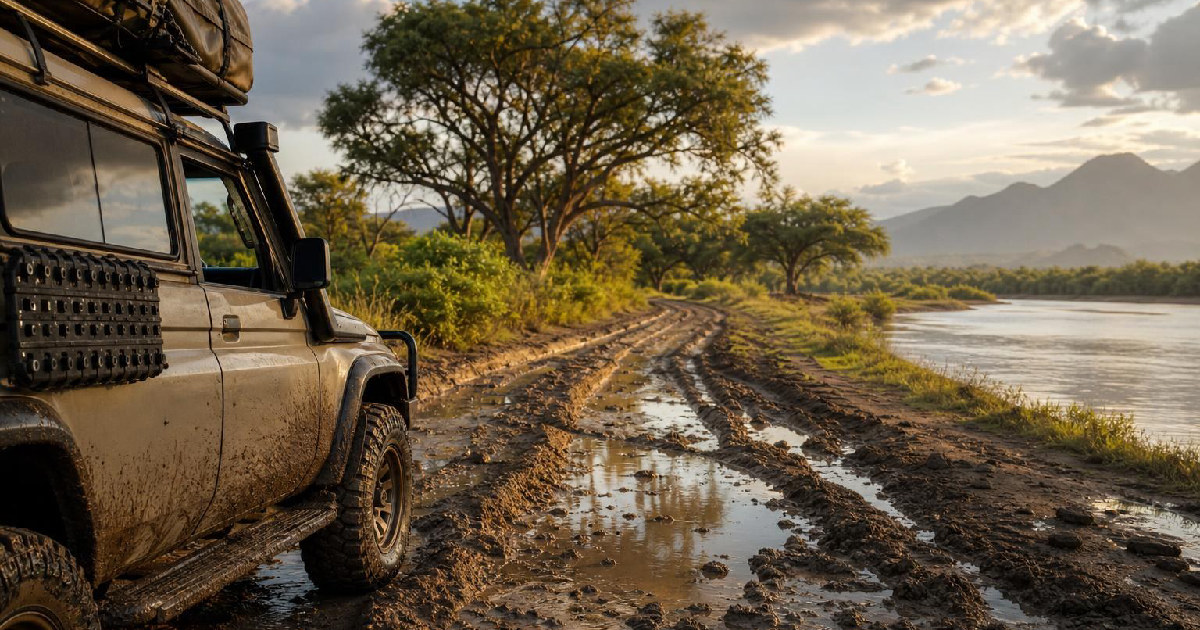
It also shows how overlanding becomes a different kind of travel when weather shifts the ground under you. The route is no longer just a route. It is a negotiation with rain, depth, heat, dust, and the simple physical fact of weight on a surface. Those conditions shape every choice, from where to sleep to whether to cross at all.
There is a quiet satisfaction in that. Not the satisfaction of reaching every intended point, but the satisfaction of understanding the country enough to respect it. The journey north is full of movement, but its most important moments are the pauses: the overnight in a run-down town, the safe decision to wait, the careful look at the pan, the refusal to rush a crossing that would be foolish to force.
Watch the original video: https://www.youtube.com/watch?v=E3dqjTSk_lE
That is what gives this solo Kalahari expedition its shape. It is not a story about winning against the desert. It is a story about listening closely enough to let the desert keep its say.
RECOMMENDATIONS
All About The Life designs from Texas Thread Theory, inspired by the places you go and the stories you bring back.
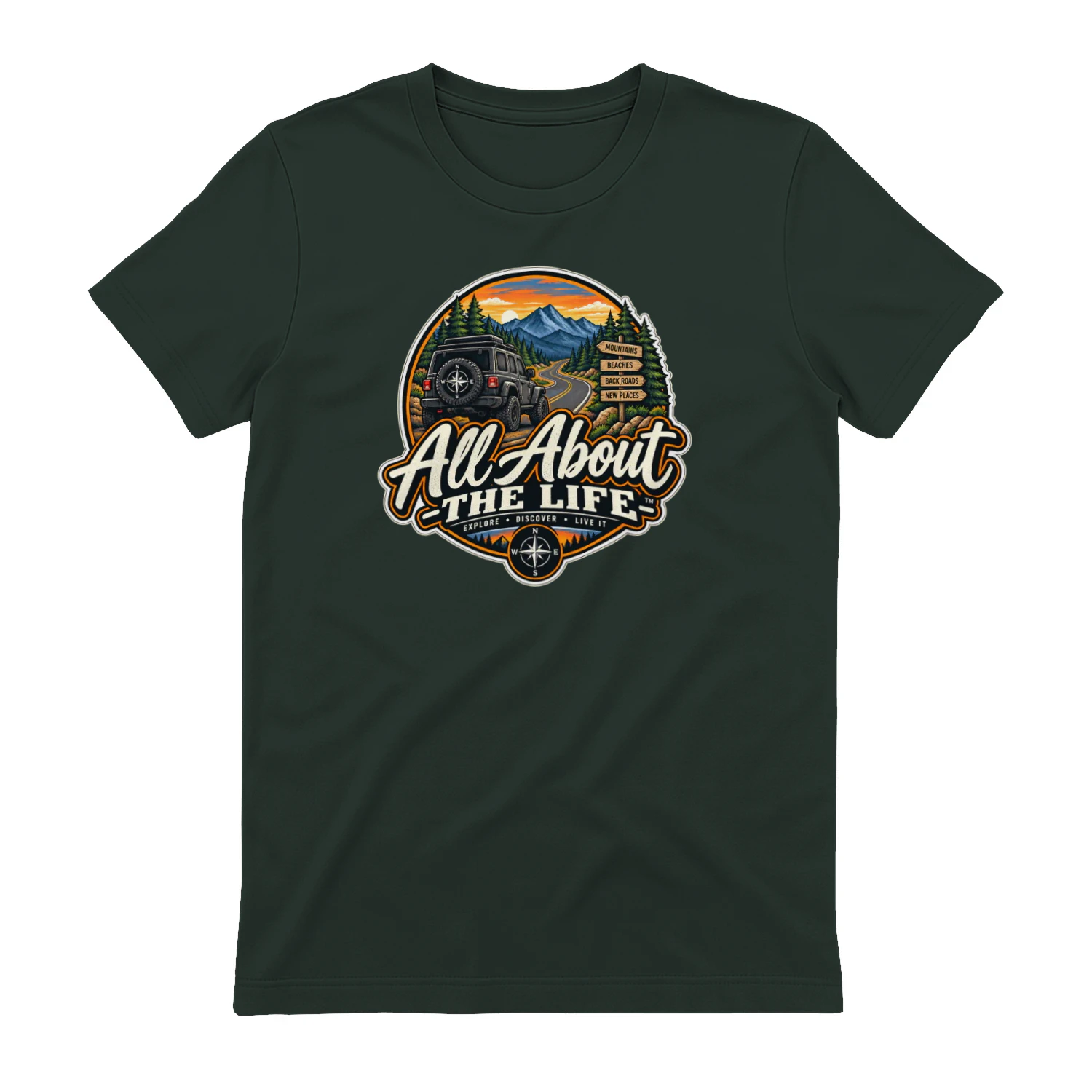
All About The Life Road Trip SUV Badge
A retro All About The Life road-trip badge featuring a rugged SUV, mountain roads, directional signs, and classic compass details. It’s the perfect design for back-road explorers, overlanders, weekend travelers, and anyone who likes their adventures with a full tank and no strict itinerary.