A solo camp that turns into a recovery problem
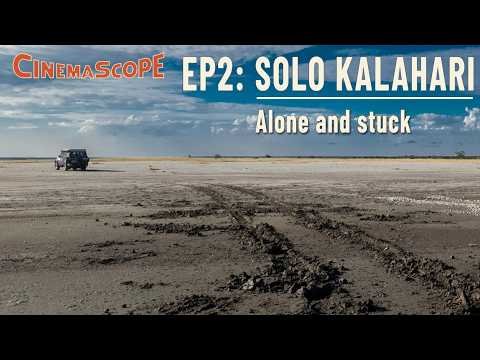
The clearest way to read this video is as a solo overlanding episode where the environment quietly takes over the plan. Andrew St Pierre White begins in one of his favorite places on earth, camped alone on the Makgadikgadi Salt Pans in Botswana, but the mood shifts as rain, soft ground, and a failed line across the pan turn the day into a self-recovery exercise. If you want the direct answer, it is this: the Land Cruiser gets stuck in deep mud, and the rest of the episode follows the slow, improvised work of getting free and deciding whether to stay, move, or camp somewhere else.
That simple plot is only part of what makes the video work. The real tension comes from how quickly a landscape of beauty becomes a landscape of judgment. The pans look open and inviting, but the ground changes in small ways that matter a lot. Darker patches, softer stretches, and the wet edge near the pan all become signals that have to be read correctly the first time.
Why the pans punish small mistakes
This episode keeps returning to one idea: on the pans, a short bad decision can become a long problem. The footage does not treat the mud as a dramatic surprise so much as a consequence of crossing the wrong ground and trusting it too much. That is why the recovery feels so grounded. There is no magic fix waiting in the background. There is only observation, hesitation, and then a series of practical moves made with whatever is on hand.
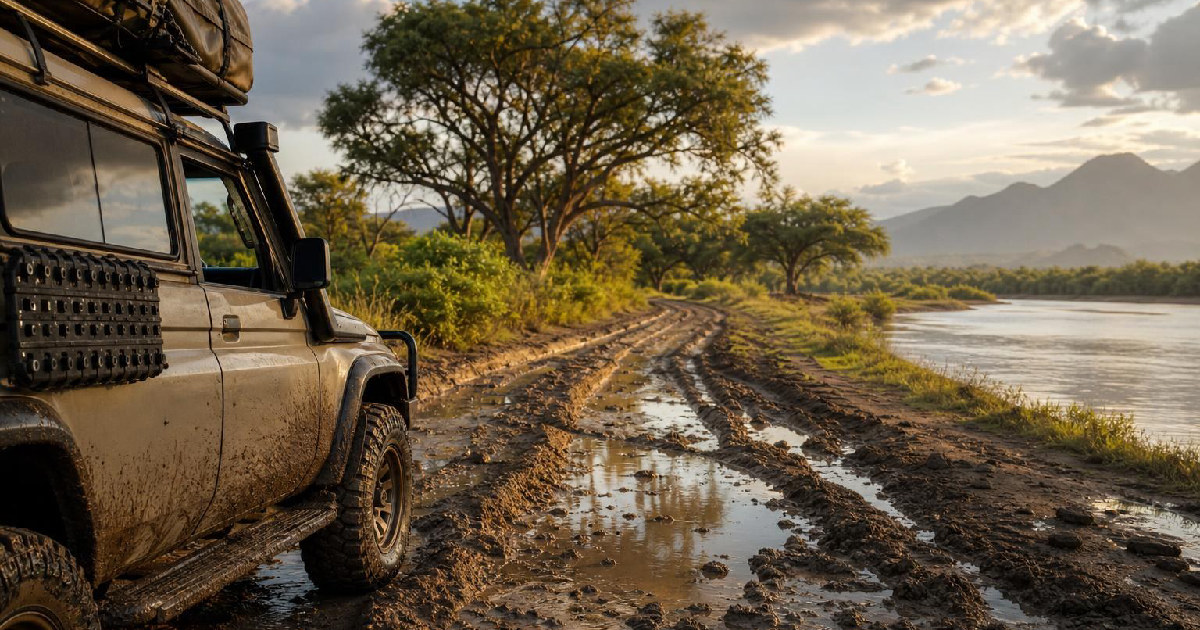
The video also makes clear how quickly conditions changed. The narrator describes a place that had been dry a year earlier and is now carrying far more water. That shift matters because it changes not just the look of the landscape but the behavior of the mud, the traction under the tires, and the ability to move without making the situation worse. The episode does not wander into theory; it stays with the lived experience of driving where wet ground can still look usable until it is not.
There is also a quiet lesson here about solo travel. When you are alone, there is no second vehicle, no quick tow, and no spare pair of hands unless someone happens to pass by. That is why the visit from Botswana Defence Force personnel lands as more than a social moment. It is a reminder that someone has at least seen the tracks and checked in. In a place this remote, even a brief interruption can matter.
Working the problem: traction, tire pressure, and patience
The recovery itself is built from familiar overland tools and an uncommon amount of patience. The Land Cruiser is backed up by MaxTrax, the tires are deflated further, and the surrounding mud is cleared by hand so the boards can actually bite. But the video is honest about what happens when conditions are too slick: even a useful recovery tool can fail if the mud coats the tires and the surface beneath them refuses to hold.
That is the part of the story that feels most useful to a viewer. It is not just that MaxTrax were used. It is that the episode shows how quickly they can stop working when mud changes the texture of the contact point. The vehicle is heavy at the rear, the back wheels stay stubborn, and the recovery becomes a sequence of small adjustments rather than one decisive pull.
A few practical details stand out without the video ever turning into a checklist:
- the rear bias of the Land Cruiser matters in the mud;
- the line of travel matters just as much as the gear;
- tire pressure is not a side note;
- and once the mud becomes slick enough, even the best-looking fix can lose grip.
The result is a recovery that feels earned. The car does move, but only after repeated attempts and a lot of attention to the state of the ground in front of the wheels. There is a real sense that the next inch matters.
What the silence changes when you are alone
One of the strongest parts of the episode has nothing to do with wheels or mud. It is the way the silence shapes the whole camp. The pans are so quiet that ordinary sounds become conspicuous: a plate, a glass, a small movement, even the camera’s own noise. The narrator describes a kind of sensory sharpening that comes from being alone in a place with very little ambient sound.
That atmosphere is important because it explains why this landscape matters to him. He does not camp there because camping itself is the point. He camps there because the place itself is the reward. The episode makes that distinction plainly. Comfort matters, and the rig is set up to support it, but comfort is only the means. The real goal is being in a place with scale, emptiness, and silence.
That is also why the video feels more reflective than adrenaline-driven. The hawk moths, the sunset, the self-timer photos, the low evening light, and even the shower all fit into a routine that is about making solitude livable rather than romanticizing hardship. He is not pretending the isolation is nothing. He is learning how to occupy it.
Leaving the pan and deciding what comes next
Once the mud recovery is over, the episode becomes a second story about movement and decision-making. There is no sense of a triumphant exit. Instead, there is the practical question of where to sleep, whether to push on to a lodge or sanctuary, and how far to go before dark. The choice to camp in the bush rather than keep pressing for a late arrival feels consistent with the whole episode: when conditions are uncertain, the safer and saner option is often to stop.
That choice also fits the larger journey. The solo leg is ending, the route is heading northeast toward Zimbabwe, and family and friends are arriving from different directions. The video uses those updates to open the trip outward again, but it never loses the feeling that this stretch of Botswana asked something specific of the driver: judgment under pressure.
That is what makes the feature worth watching even if you already know the broad outcome. This is not a story about heroic recovery in the abstract. It is a story about reading dark mud as dark mud, backing off when the ground is wrong, and accepting that a beautiful place can also be an unforgiving one.
Watch the original video: https://www.youtube.com/watch?v=aToOPqVKDo4
RECOMMENDATIONS
All About The Life designs from Texas Thread Theory, inspired by the places you go and the stories you bring back.

Go Somewhere. Do Something.
A high-energy adventure design built around the message “Go Somewhere. Do Something.” With travel-inspired route and destination details, it’s made for anyone who is always looking for the next road trip, day trip, weekend escape, or excuse to get out and experience something new.