Why this Maine trip feels harder than a normal fishing day
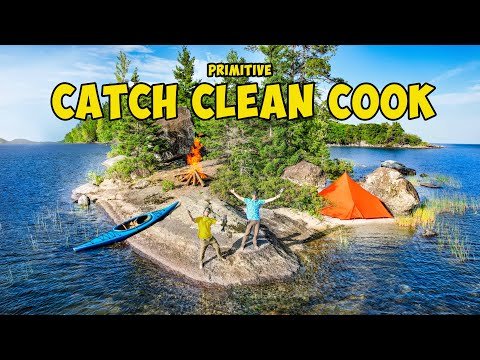
The plain answer is that this primitive catch and cook in Maine is about getting deep into the backwoods, finding water that feels untouched, and trying to turn whatever they catch into a meal. The more useful answer is that the video works because every part of the outing asks for a little more effort than a standard fishing session. They are not rolling up to a paved launch, hopping in a big boat, and checking off spots on a comfortable route. They are hiking, hauling a canoe, guessing their way around the woods, and trying to make camp in a place that feels deliberately remote.
That matters because it changes the meaning of the catch and the cook. A fish is not just a fish here. It is lunch, dinner, and proof that the day is working. The goal is simple enough to follow: reach the lake, catch something edible, build a fire, and eat. But the setting keeps complicating that plan in small ways. The woods are beautiful, sure, but they are also the reason the day feels earned.
The hike in and the canoe launch set the tone
Before there is any fishing, there is the long walk. The crew talks about a roughly two-mile stretch, and the canoe is part of the problem and part of the solution. It is the vessel that makes the rest of the trip possible, but getting it there is no joke. The first impression is not calm water or a perfect campsite. It is forearms burning, awkward footing, and the kind of carry that makes every step feel more expensive than the one before it.
That opening stretch also frames the mood of the whole video. They are working from a waypoint, talking through the route, and still not fully sure what waits at the end. Even once they reach the water, the launch feels less like a clean start and more like a transition from one challenge to another. The canoe itself becomes part of the tension. It is narrow, loaded with gear, and handled carefully enough that nobody wants to make a wrong move.
The point is not that the crew is struggling for its own sake. It is that the trip has a physical cost, and the video lets that cost be visible. By the time they are actually floating, the audience understands why a single fish can feel like a win.
Fishing the island: why the smallmouth mattered
Once they are on the lake and around the island, the trip finally starts behaving like a fishing video. The crew works different presentations, and the first solid bites come from smallmouth bass. That species becomes the backbone of the day because it fits the setting so well: rocky edges, island structure, and deeper water that seems to hold fish worth pursuing.
One of the most interesting parts of the video is how quickly the fishing becomes both practical and playful. The group is not pretending every fish is a trophy. In fact, the language keeps coming back to the same point: they need something for the pan. That gives every bite a dual purpose. It is fun to catch a fish, but it is also useful. The first fish provides momentum, the next one suggests the water is holding, and a bigger one confirms that the spot can deliver more than a token catch.
The fish also shape the day in a very direct way. One smallmouth is enough to get the cook started, and another bigger one becomes a bonus rather than the centerpiece. That matters because the video does not need a giant catch to succeed. It only needs a few convincing fish from a place that feels wild and a little hard to reach.
Building a primitive camp while the bites keep coming
While one person keeps fishing, the other shifts into camp mode. That split is a smart part of the story because it turns the video into two parallel tasks: one person is trying to make dinner happen on the water, and the other is trying to make a place to cook it.
The camp setup is straightforward, but that simplicity is the point. They gather rocks for a fire ring, use the landscape to block the wind, and start sorting out the classic fire pieces: tinder, kindling, and fuel. Nothing here is flashy, and nothing needs to be. The video spends time on the basics because the basics are what make the meal possible.
There is also a nice sense of improvisation in the gear talk. A piece of paracord doubles as a stringer. The island itself becomes the kitchen. The fuel comes from what they can collect nearby, and the whole setup feels like a reminder that outdoor cooking often looks better when it is stripped down to the essentials.
That restraint gives the camp scenes their appeal. They are not trying to recreate a full campsite with every comfort. They are building just enough structure to make a fire, hold fish, and stay grounded on a rocky island in the middle of Maine.
From fish to foil: how the meal came together
The cooking sequence is where the whole outing clicks into place. The fish are cleaned, seasoned, wrapped, and placed near the fire to cook in foil. The method is simple, but the video treats that simplicity as the point rather than a limitation. No one is pretending a primitive island cook needs to be fancy.
What makes it work is the sequence of effort that came before it. The fish were caught after a hike and a canoe carry. The fire came from gathered tinder and kindling. The meal was assembled in a setting that offered very little in the way of convenience. By the time the foil packets come off the coals, the food has already been earned.
The reaction at the table is calm rather than theatrical. That fits the whole tone. They taste the fish, talk about the texture, compare the smaller and larger pieces, and settle into the simple fact that fresh catch cooked over a fire tastes like the day it came from. No elaborate recipe is needed to make that feel true.
Why the finished dinner landed as the real payoff
The strongest thing about the video is that it never loses sight of the bigger reward. Yes, it is a fishing trip. Yes, it is a backwoods challenge. But what makes the outing memorable is the chain of work that leads to eating a fish they pulled from the water themselves.
That is why the video feels satisfying even without a dramatic ending. The success is cumulative. They found the lake, got the canoe launched, caught enough fish to justify the cook, built the fire, and sat down to eat. The meal is not separate from the adventure; it is the proof that the adventure held together.
There is also a quiet honesty in the way the video handles the result. The fish are good, the setting is beautiful, and the camp is basic. Nothing is overproduced. Nothing needs to be. The appeal is in the working-for-it nature of the day. A remote lake, a tight canoe, a few smallmouth, and a fire on an island are enough to make the story complete.
For viewers, that is probably the real draw of the whole thing: not just watching a catch and cook, but watching one come together in a place where every part of it has to be earned.
Watch the original video: https://www.youtube.com/watch?v=kUZHGcr6_PE
RECOMMENDATIONS
All About The Life designs from Texas Thread Theory, inspired by the places you go and the stories you bring back.

All About The Life Adventure RV Badge
A vintage All About The Life RV adventure badge featuring mountains, pine forests, lake scenery, a glowing sunset, and classic compass details. It’s made for RV travelers, campers, road trippers, and anyone who believes home can be wherever you park for the night.