A guide story where the country matters as much as the moose
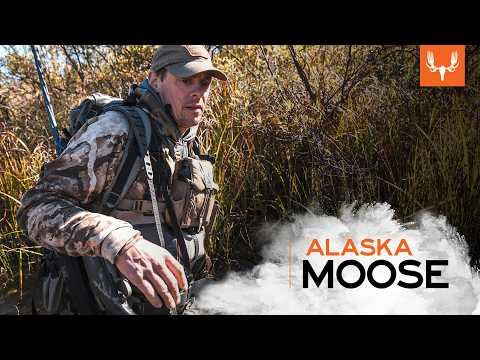
The plain answer is that this Alaska moose guide life story is less about a kill than about the kind of person who can live for years in rough country and still talk about it with humility. Steve Rinella heads into Western Alaska with Mike “Buck” Bowden for a 10-day float, hoping to learn from a guide whose life has been built around the river, the seasons, and the work of putting hunters in the right place at the right time. The moose are the reason for the trip, but the video keeps circling back to Buck himself: how he reads country, how he thinks about hunting, and how he carries a lifetime of experience without turning it into a performance.
That gives the episode its shape. Instead of treating the hunt like a simple success-or-failure report, it becomes a study in how a guide understands Alaska. Buck’s knowledge is practical, but the way he talks about it makes clear that the guide life is also a mindset. He remembers old maps, old seasons, and old ways of doing things. He is not trying to make Alaska sound easy. If anything, the point is that it never is.
Buck Bowden’s Alaska: from homestead life to guiding by instinct
Buck’s story is one of the video’s most striking threads because it explains why Steve sees him as more than a hunting partner. As a kid in Illinois, Buck was a restless, outdoors-driven troublemaker. A juvenile-court judge sent him out of town, and his family arranged for him to go to Alaska to live with godparents. That move changed everything. Once he got north, he ended up in the outdoors in a way that sounds almost unimaginable now: hunting, living off the land, and absorbing a life that was far removed from where he started.
Later, Buck built a homestead in the mountains of Alaska, put up a log cabin by hand, learned to fly a bush plane, and worked as a fur trapper and hunting guide. The episode doesn’t treat that history as a legend to be polished. It presents it as a lived-in fact pattern, something that explains his calm and his competence.
Even the map scene says a lot about him. Buck is still using a map he made in the 1970s, marked with old notes and moose spots. That detail matters because it shows how deeply his guiding style is tied to memory and repetition. He is not improvising from scratch. He is returning to places that have worked before and trusting patterns that have earned his confidence over decades.
What the hunt teaches about timing, calling, and patience
If you want the practical heart of the episode, it is here: Buck’s approach to moose season is built on timing. He breaks September into phases. Early in the season, the hunt is mostly spot-and-stalk because the moose are not especially responsive to calling. Then, as the month progresses, bulls begin to move more, especially when they are still looking for cows. Later, other bulls become more likely to respond after bigger bulls have already gathered cows.
That simple explanation gives the hunt a rhythm. It also shows why good moose hunting is not about random effort. It depends on knowing how animals are likely to behave at different points in the season. Buck does not present this as a theory. He speaks from years of seeing the same general pattern play out.
Calling follows the same logic. Buck says one of the worst things a hunter can do is call too much. His version starts with just a couple of soft bleats, then a more mournful call, then a long pause. The point is not to flood the woods with noise. It is to suggest a presence and then let the country answer back. He also explains how he gets the sound he wants: pinching the top of his nose, adding a groan, and using pressure under the tongue to change the shape of the call. Steve is clearly curious about the mechanics, but what comes through most strongly is that Buck’s calling style is personal. He has refined it over time because it has worked for him.
That is one of the better lessons in the video. Knowledge in the bush is rarely abstract. It lives in habits, body position, timing, and repetition.
The hard parts: bears, disappointment, and the work behind a good day
The episode is honest about the risks and frustrations that sit alongside the romance of the float. Buck talks about three bear close calls, including one incident involving a brown bear off a moose carcass and another bear that burst out of nearby alders at close range. The story is vivid without being sensationalized. What stands out is not just the danger, but the aftershock: the shaking, the realization of how narrow the escape was, and the sense that luck had a say in the outcome.
That same realism shows up in Buck’s view of hunting itself. He says a good hunter is someone who stays positive, enjoys the day, and does not get wrapped up in stress over whether the animal will show up. That is a useful counterpoint to the modern habit of treating every hunt like an efficiency test. In Buck’s world, the right attitude is part of the skill.
The episode also spends time on food and field life, which helps make the float feel lived-in rather than staged. Buck cooks Arctic grayling with butter, talks about how much of his summer diet once came from that fish, and jokes through the details of old camp food habits. It is a small section, but it does a lot of work. It shows that survival and comfort were always close together in his version of Alaska.
And then there is disappointment. After nine days on the river, Steve and Buck never see a bull moose. They float, call, fish, and keep moving, but the hunt ends without the animal they came for. The video does not pretend that is a satisfying result in the narrow sense. Steve admits he wanted a big moose, and he wanted it with Buck beside him. But he also resists turning the miss into a failure story. The absence of a bull becomes part of the point.
Why the empty river still leaves something worth keeping
The most interesting thing about the video is how it keeps widening its idea of success. The hunt itself ends without a moose, but the trip still gives Steve something durable: a better sense of what Buck Bowden represents. Not just skill, though he clearly has that. Not just grit, though he has plenty of that too. It is the combination of steadiness, modesty, and affection for the country that makes him memorable.
Even the final night’s bear-wrecked cabin lands as part of that larger idea. The place has been picked over, the mattresses shredded, the food gone. It is ugly and funny and a little sad all at once. But in the way Steve describes it, the cabin becomes a metaphor for expectation itself: sometimes the thing you hoped for has already been taken, and all you can do is sleep there, wake up, and keep moving.
That is why this episode lingers. It is not a victory lap. It is a reminder that a hard hunt can still be a good one when it puts you in the company of someone who understands the land without trying to dominate it. Buck Bowden comes across as exactly that kind of guide: patient, plainspoken, and tough in the old sense of the word.
If you came looking for a trophy story, this is not quite that. If you came looking for a clearer picture of what makes an Alaska guide worth following, it is.
Watch the original video: https://www.youtube.com/watch?v=_sOEmvkLZMs
RECOMMENDATIONS
All About The Life designs from Texas Thread Theory, inspired by the places you go and the stories you bring back.
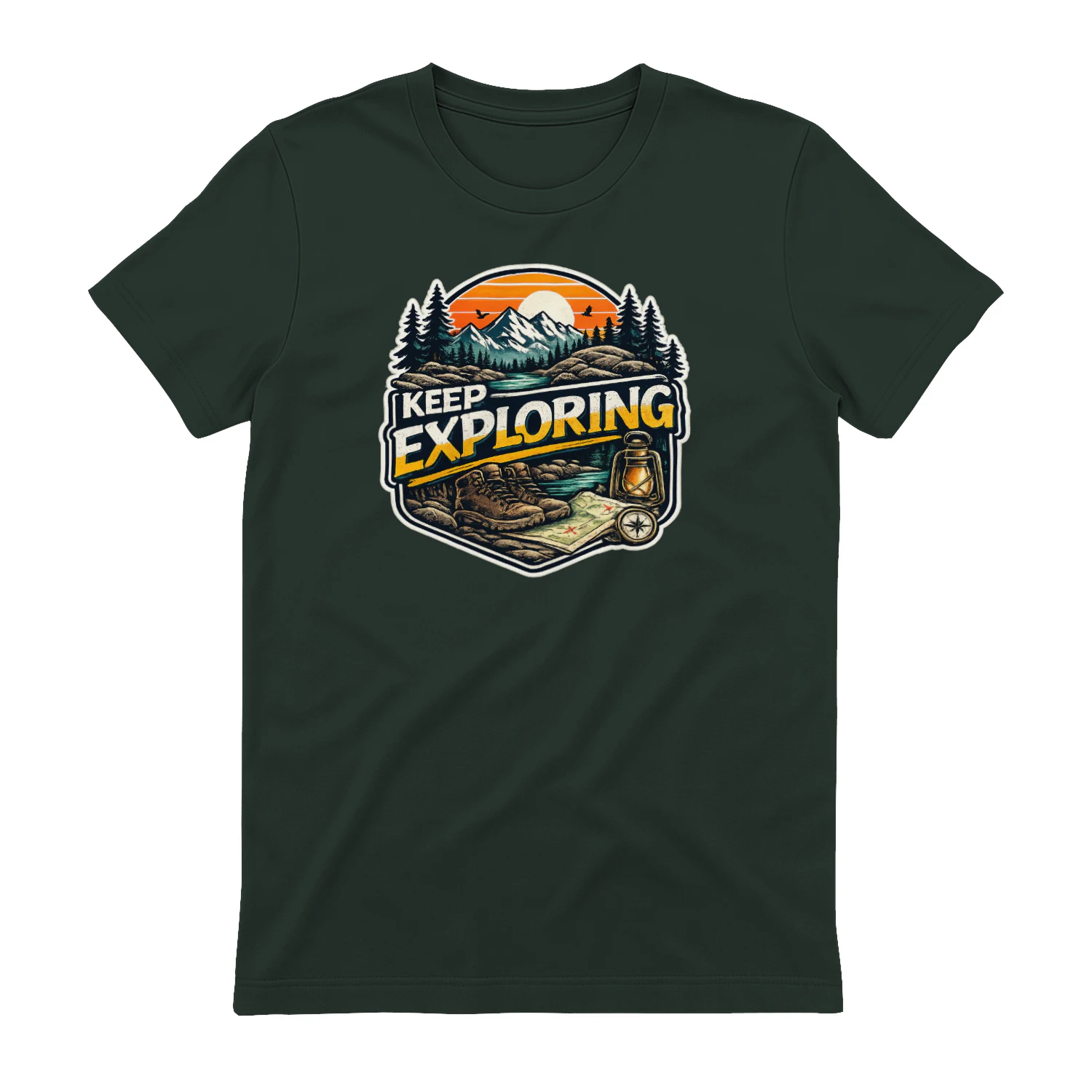
Keep Exploring Badge
A vintage outdoor badge centered on one simple message: “Keep Exploring.” With mountains, evergreens, a river, hiking boots, lantern, map, and compass details, it’s made for hikers, campers, travelers, and anyone who is always curious about what’s around the next bend.