A river hunt that starts like a search and ends like a cleanup
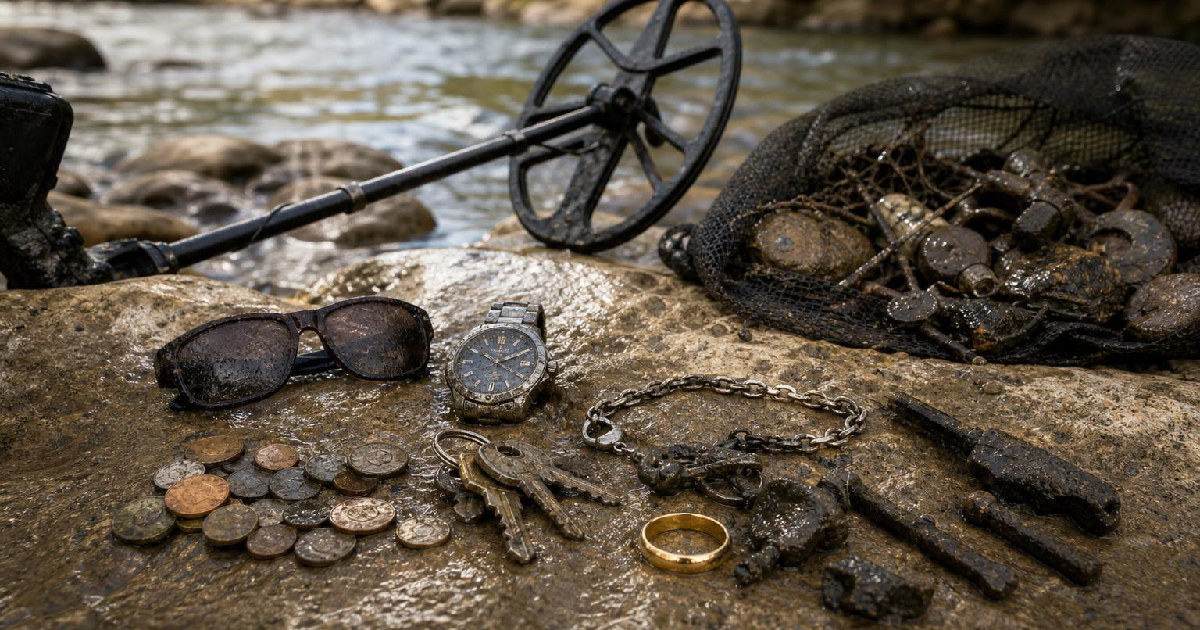
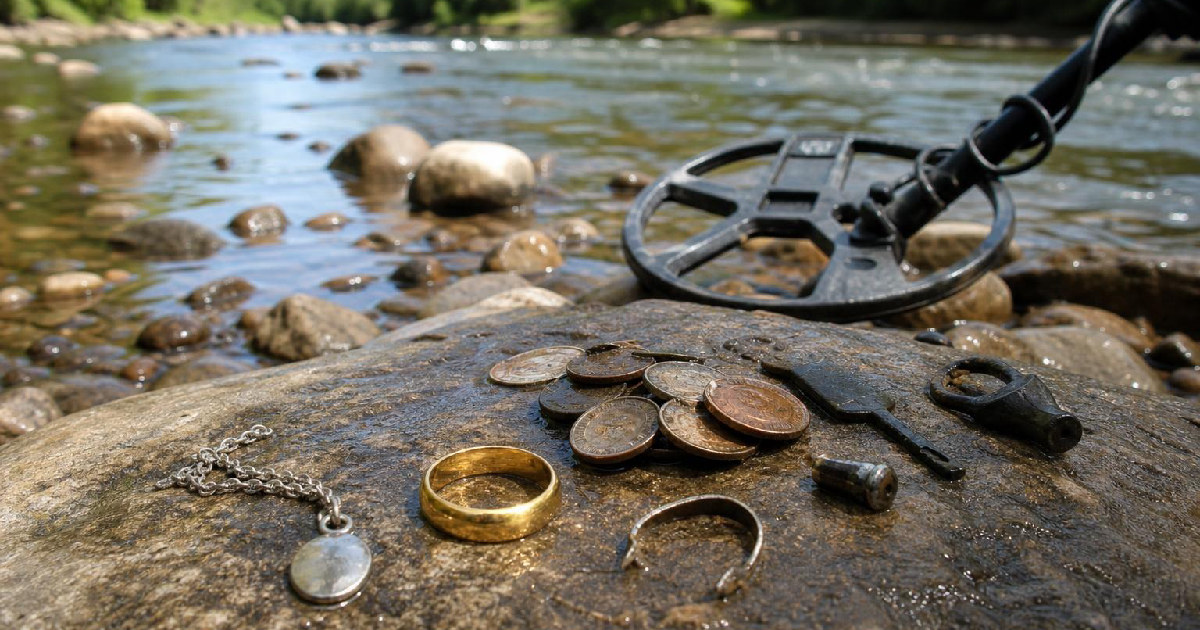
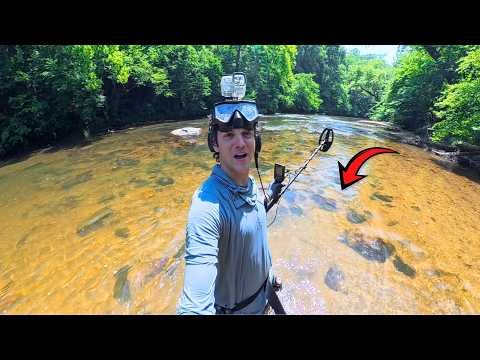
The direct answer to what happens in this video is simple: Nugget Noggin heads into the river to metal detect for lost items and comes back with a haul that mixes valuables, practical gear, and plain trash. The standout pieces are a gold ring and a bracelet, but the day is really defined by volume. Phones, keys, sunglasses, knives, vapes, coins, and other odds and ends keep coming up, which turns the hunt into something larger than treasure recovery alone. It feels like a snapshot of everything people leave behind in moving water.
That is what gives this river metal detecting session its shape. The detector is not just chasing one perfect target. It is sorting through the kind of signals that tell a more complicated story: some are junk, some are useful, and some are the sort of finds somebody is definitely hoping to get back.
The signal mix: why the detector kept turning up everyday losses
A big part of the video’s rhythm comes from the way the detector reacts before the item is even visible. Some signals lead to obvious trash, like a pull tab or a can, but others pull up the kinds of objects that make river detecting feel more like recovery work. A multi-tool shows up gritty but still usable. A quarter comes up as the first coin. A razor blade or box cutter appears in the sand. Then a car key surfaces, followed by more sunglasses and more keys later in the day.
That mix matters because it shows how much of a river bottom becomes a holding place for ordinary life. A river does not sort things by value. It keeps whatever gets dropped, lost, or swept away. The detector simply makes that hidden layer visible again.
For viewers, that is part of the appeal of river metal detecting finds: the signals are never just “good” or “bad.” They are clues. A low reading can hide a bracelet. A stronger one can still turn out to be a knife, a coin, or a phone. The day keeps reminding you that the water does not care what you meant to keep.
Phones, keys, and knives: the practical side of river metal detecting
If the gold ring is the headline, the phones and keys are the evidence. This hunt produces multiple cell phones, including one that is found deep in the river and described as waterlogged, plus another larger phone in a heavy case that takes a long time to reach. By the end of the day, there are four phones left in the haul after one has already been returned.
The key finds are just as telling. There is a Toyota key with moss on it, and later an older car key marked “24R.” Those are the kinds of objects that make the river feel active in a different way. A key is not only metal. It is access, memory, and the suggestion that somebody once walked away without it and probably noticed the absence immediately.
The knives bring a different kind of surprise. One is identified as a razor blade or box cutter. Another is a big DeWalt box cutter knife. There is also a pocket knife with horses on the handle and another knife with an eagle motif. The video does not turn these into a moral aside; it just shows how often tools and pocket carry items end up in the water. That practical layer keeps the hunt grounded. This is not only treasure hunting. It is also a record of what people carry, drop, or discard without realizing it.
The best finds in the pouch: rings, bracelet, and standout objects
The finds that really change the tone of the day are the ones that feel personal. One of the first better items is a bracelet with writing on it, later identified as carrying the Lord’s Prayer. It appears to be stainless steel and comes up in a low signal range, which is a useful reminder that not every good find announces itself loudly.
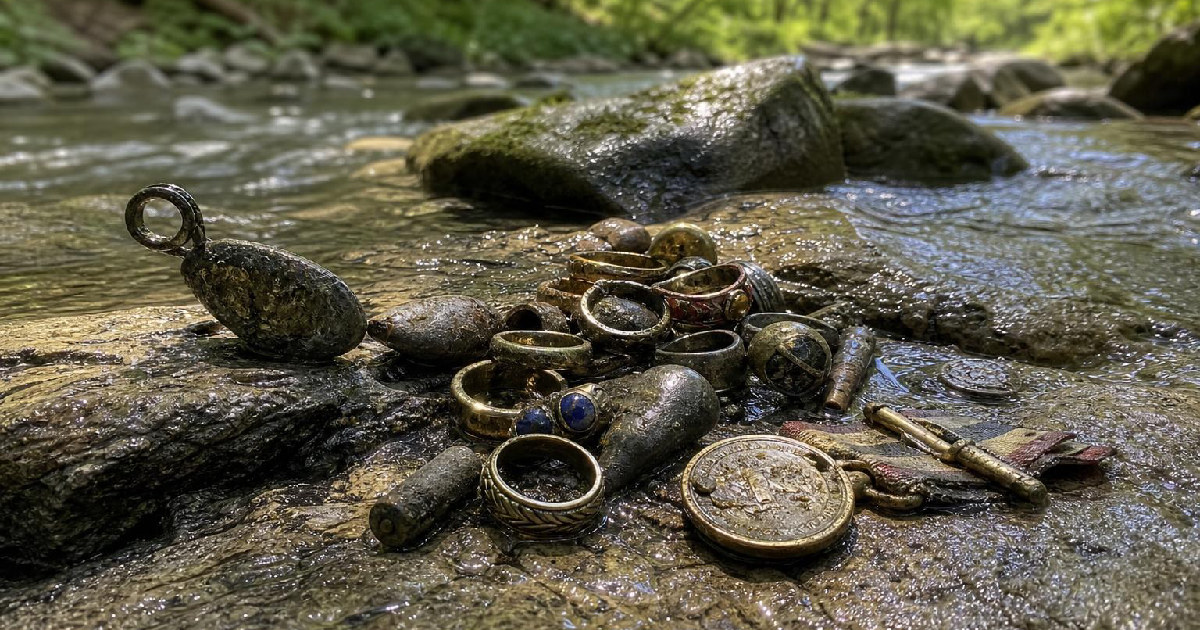
Then come the rings. One ring has a sun, moon, and stars design and functions like a fidget ring, turning on itself. Another ring is described as gold and visibly tarnished from being down there for a while. The gold ring is the most clearly valuable item in the bunch, but the other ring has its own charm because of the design and the way it survived the river with enough character to still catch the eye.
There are also a few finds that stand out simply because they look good in the hand: the cool lighter case, the tungsten ring with red stones, and the sunglasses that are added to the growing collection. Those objects help explain why this kind of video works. It is not only about value. It is about the moment an ordinary object returns from under rocks and sand with a story attached.
What this haul says about a good day in the water
By the end of the session, the haul has a clear shape: a pile of trash on one side, a pile of usable or returnable items in the middle, and a small group of genuinely satisfying finds at the top. There are coins, four phones left after one return, several knives, a bracelet, sunglasses, keys, a multi-tool, and a gold ring. That is a strong day by any measure within the video’s own frame.
The interesting part is how the creator treats all of it as part of the same job. Cleaning the river and finding valuables are not separate missions here. They are happening at the same time. That is why the closing haul feels satisfying without needing any exaggeration. The river gave up enough to make the outing feel worthwhile, and it did so in a way that tells you what kind of place this is: busy, changeable, and full of things that never make it back to shore on their own.
If you came looking for river metal detecting finds, the video delivers exactly that. If you stayed for the bigger picture, it also shows how a single stretch of water can hold a phone, a ring, a key, a knife, and a bracelet all at once—and still leave room for more.
Watch the original video: https://www.youtube.com/watch?v=EnAa11ES474
RECOMMENDATIONS
All About The Life designs from Texas Thread Theory, inspired by the places you go and the stories you bring back.
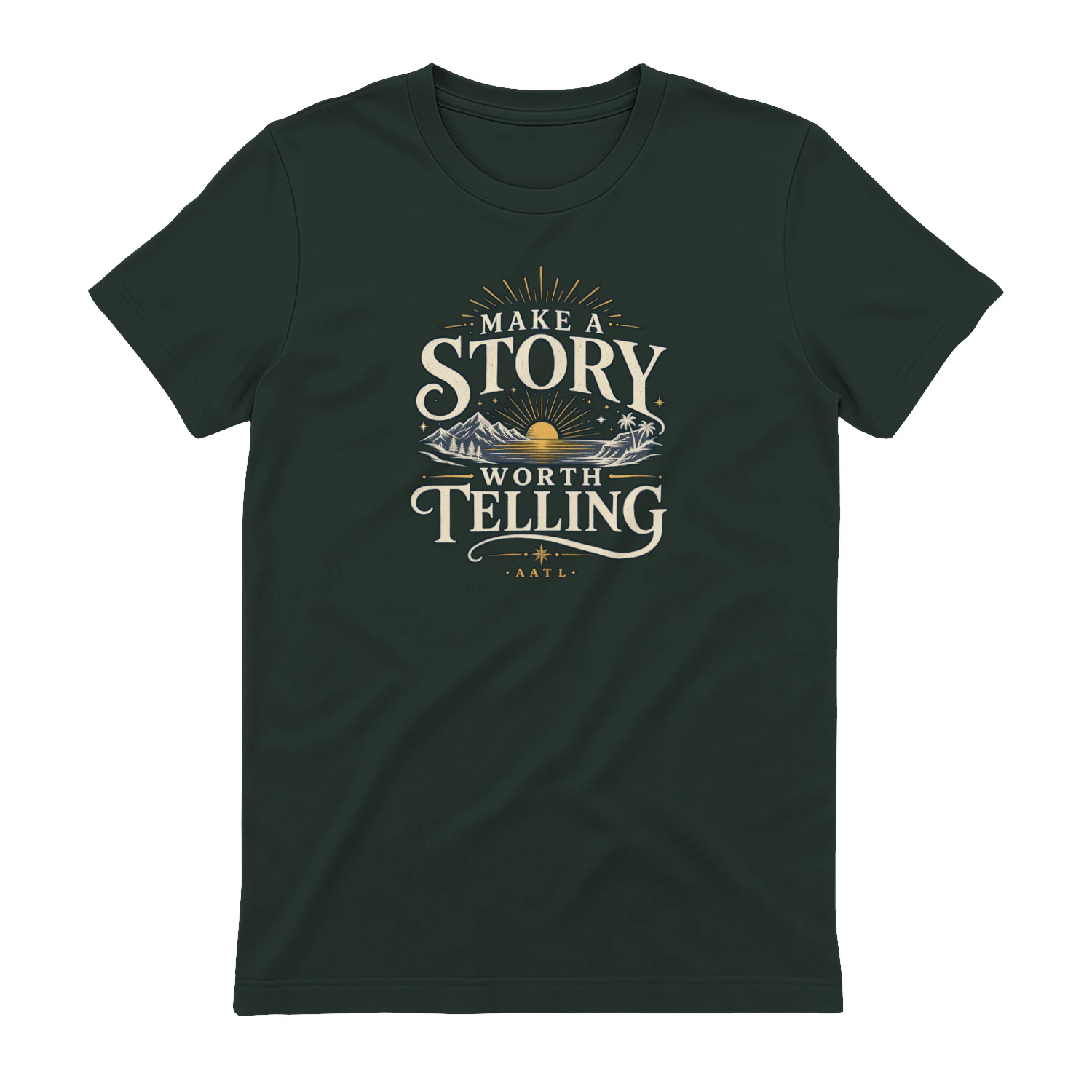
Make A Story Worth Telling
A scenic vintage-inspired design that encourages you to “Make A Story Worth Telling.” Mountains, water, sunset, and tropical details give it an adventurous feel that’s perfect for travelers, explorers, and anyone who wants a life filled with moments worth remembering.