A river bedrock pocket that kept giving
The short answer is that this underwater metal detecting dive is really about one unusually productive spot in the river. Nuggetnoggin heads in with scuba gear and a metal detector, starts working the bottom, and almost immediately finds the kind of river clutter detectors know well: bullets, fishing weights, and a military shell casing. But the video changes shape once the search gets into a bedrock crack. That is where the finds stop feeling incidental and start feeling like a concentrated cache of lost objects.
The important thing here is not just that the detector hit on metal. It is that the same pocket kept producing one item after another. Once the search moved into that crack, the haul turned from routine river debris into a pile of jewelry, medallions, rings, and other personal items that clearly had some history to them.
The finds that mattered most
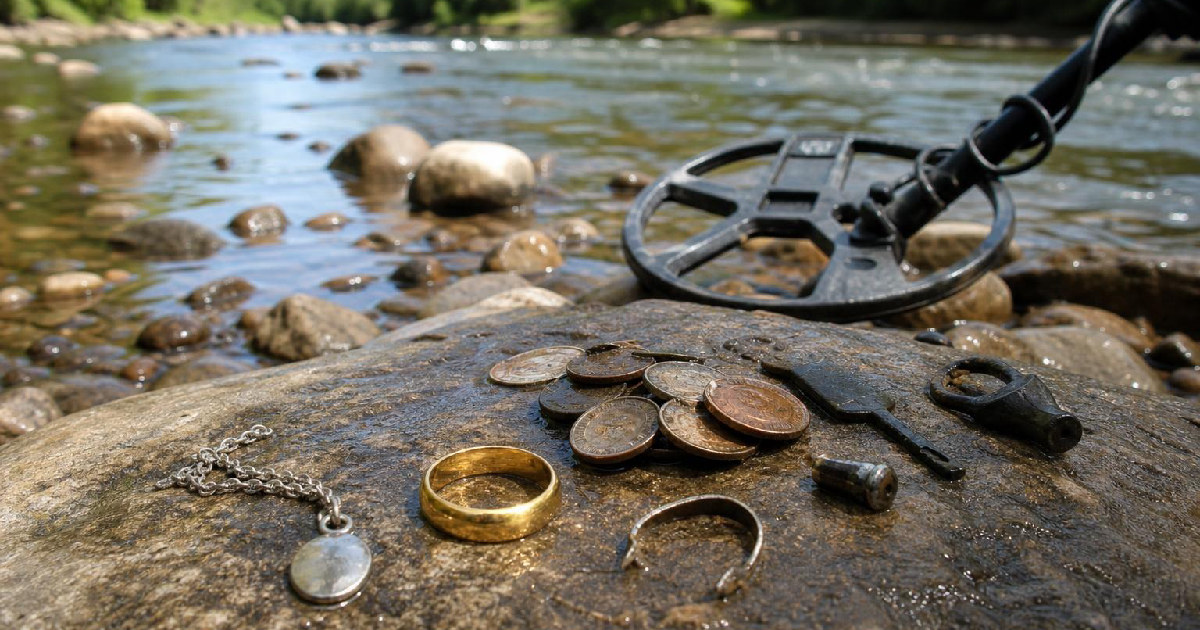
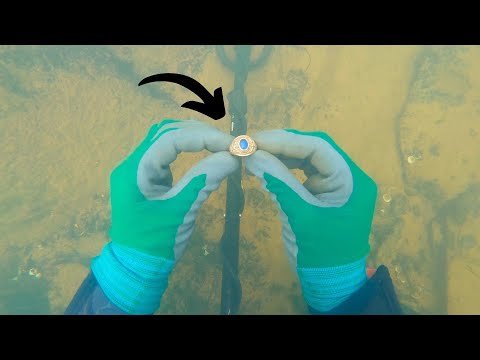
The most striking discoveries are the rings. Nuggetnoggin identifies two class rings as gold, and the video also points to a third ring that appears to be gold as well. One of the standout pieces is a 1964 class ring from Shamblay High School, with initials visible inside. Another is a ring marked 12K, and a third class ring is identified as Furman University, class of 1962.
Those pieces matter because they are not just metallic value sitting in the sand. They are personal markers. A class ring carries a year, a school, and usually a story about who wore it and when. That is part of why the finds land so strongly in the video: the objects are not generic treasure. They look like things someone once cared about enough to wear, keep, or carry.
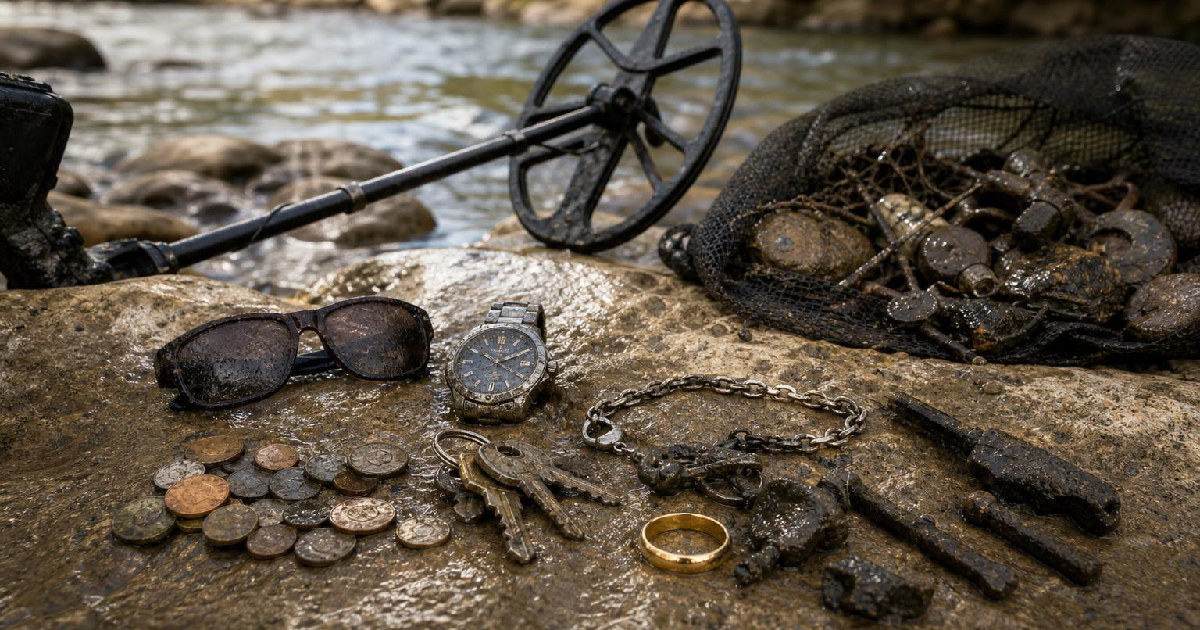
The search also turns up a silver bracelet and a string of smaller items that deepen the sense of a lost collection. There is a costume-jewelry seahorse, some pearls that looked real at first glance, and a mix of medallions, badges, and tokens. Nuggetnoggin also shows a key, a Canada-marked piece, and other small relics that make the pile feel less like one type of loss and more like a long accumulation.
Why the mix of objects is so unusual
What makes the haul stand out is the variety. This is not just a jewelry recovery and not just a relic hunt. It is both at once. The same river bedrock pocket produces modern-ish odds and ends, old medals, school rings, a shell casing, lead fishing tackle, and small tokens that suggest different eras and uses.
The medallions give the pile a second layer of history. One is dated 1955, and others reference sports and school-style achievement, including relay and swimming events. Nuggetnoggin notes that several of the medals appear to be brass, copper, or plated pieces, while some are silver. That mix makes the spot feel like a place where personal items and small awards ended up together over time.
There is also a practical mystery running through the whole video: how did so much end up here? Nuggetnoggin does not pretend to know for sure. He offers a few possibilities, including the idea that the items may have been in a bag or moved downstream. That uncertainty actually helps the story. Instead of forcing a neat explanation, the video stays with the evidence in front of it: a dense cluster of lost things in one river location.
Sorting the pile after the dive
Back at the truck, the full spread becomes easier to read. The river-only chaos of the dive turns into categories: lead and fishing gear, bullets, coins, tokens, medallions, jewelry, and rings. That sorting is one of the most satisfying parts of the feature because it shows how quickly a muddy bottom can turn into a meaningful inventory once everything is laid out.
A few pieces deserve extra attention. One token comes from the Chandler Lumber Company and is described as a 5-cent trade piece. Another appears to be a foreign coin, and there is a vendor token dated 1966 that Nuggetnoggin believes may be from the Bahamas. Those details matter because they widen the frame of the find pile beyond rings and medals. This was a mixed recovery, the kind that hints at multiple stories overlapping in one stretch of water.
The biggest human note in the video is the possibility of return. Nuggetnoggin says he is still trying to match some of the rings to owners, and that gives the video a different feel than a simple treasure haul. The best pieces are valuable, sure, but they are also identifiable. Initials, school names, graduation years, and institution markings all make the recovery feel actionable rather than anonymous.
What the video leaves open
The dive does not close with a mystery solved. It ends with the sense that there is probably more still down there. That unfinished quality is part of what makes the feature work. The bedrock crack was rich enough to produce a memorable haul on one tank of air, but not rich enough to suggest the pocket is empty.
For viewers, the appeal is easy to understand. This is river treasure hunting at its most concentrated: a working dive, a detector signal in bedrock, and then a steady stream of objects that force the eye to keep adjusting. First the river gives up lead and a shell casing. Then it starts handing over school rings, a bracelet, medallions, and enough personal items to suggest a much larger story behind the spot.
If you are interested in underwater detecting, this is the kind of video that shows why the discipline can be so compelling. The finds are not arranged neatly. They come out mixed together, half-hidden, and partly legible only after the dive. That makes the final pile feel earned.
Watch the original video: https://www.youtube.com/watch?v=lqYehFfuVts
RECOMMENDATIONS
All About The Life designs from Texas Thread Theory, inspired by the places you go and the stories you bring back.
Keep Exploring Badge
A vintage outdoor badge centered on one simple message: “Keep Exploring.” With mountains, evergreens, a river, hiking boots, lantern, map, and compass details, it’s made for hikers, campers, travelers, and anyone who is always curious about what’s around the next bend.