Why this river hunt turned into a valuables recovery day
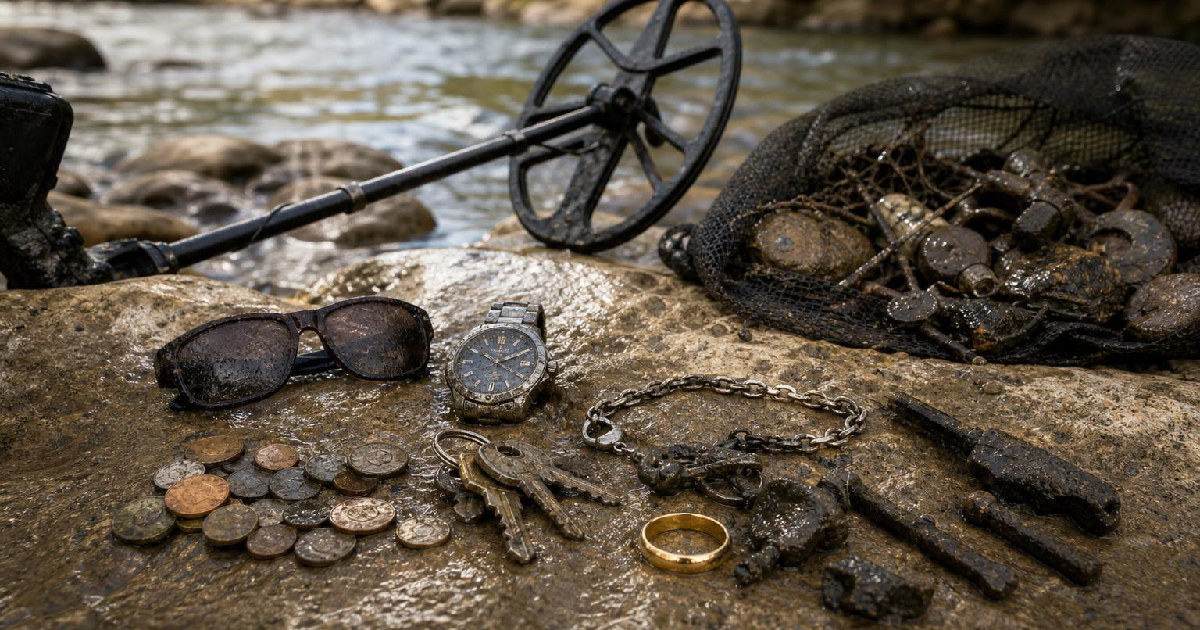
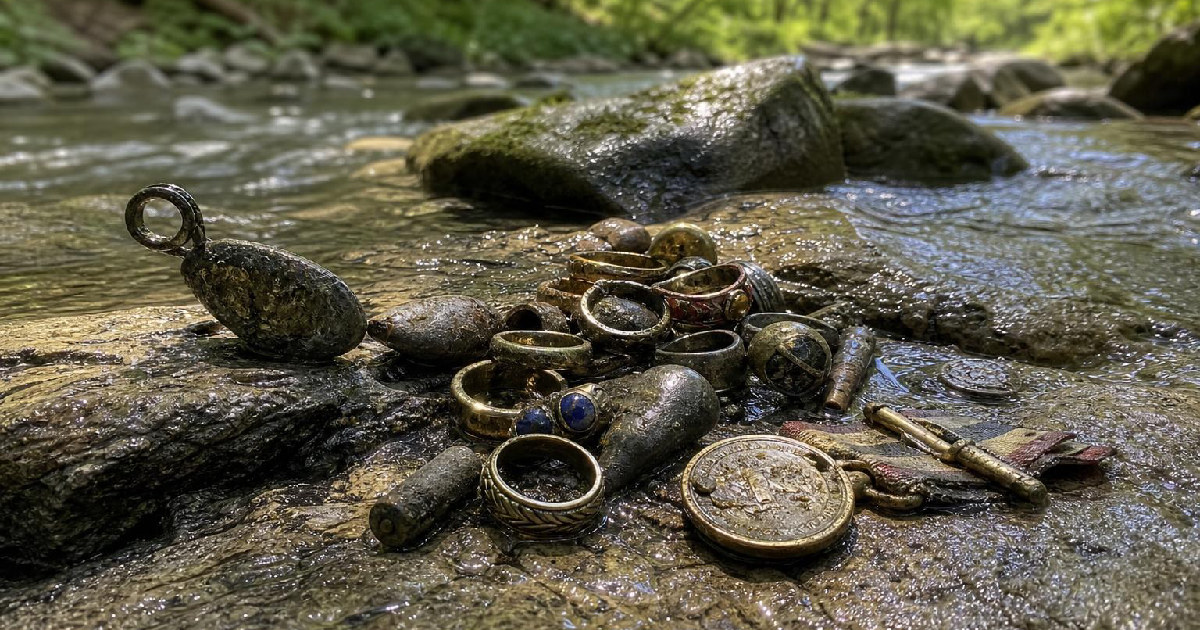
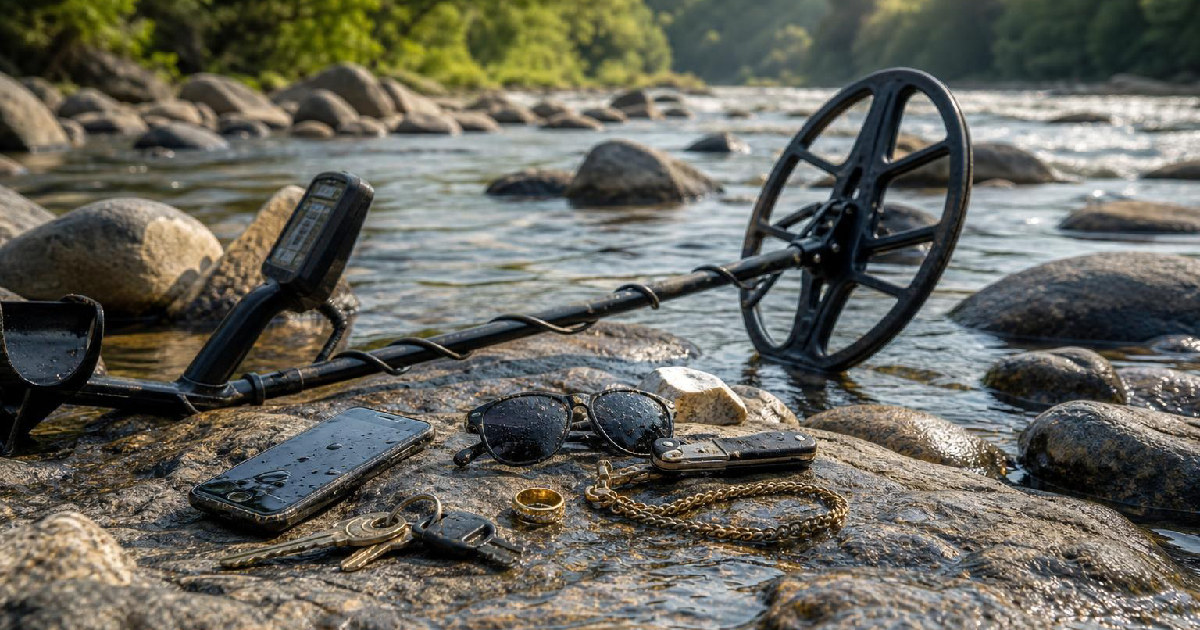
The direct answer to what happens here is straightforward: Nugget Noggin heads back into the river for a metal detecting session and ends up with a haul that looks part treasure hunt, part lost-and-found, and part cleanup job. The standout is the gold ring found almost immediately, but the day does not stop there. Over roughly three hours in the water, he pulls up phones, keys, a wallet, cash, sunglasses, coins, fishing gear, vapes, and other odds and ends that tell the story of how much disappears into a river bottom and how often it stays there until someone goes looking.
That mix is what gives the video its shape. This is not just about a shiny object coming out of the mud. It is about the rhythm of detecting in a river where one strong signal can be a valuable personal item, a random bit of trash, or something in between. The video keeps moving between those categories, which makes the finds feel practical as well as exciting.
A gold ring on the second signal changes the pace
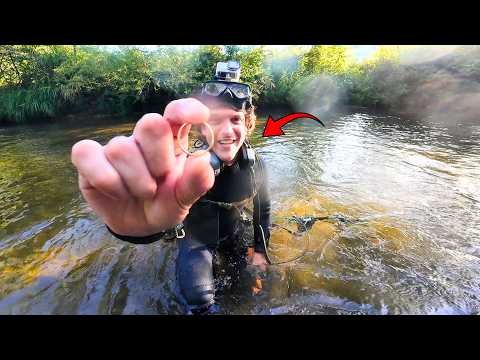
The moment that sets the tone comes early. After only a couple of minutes and on the second signal of the day, he uncovers a gold ring. It shows up in the 60s, the kind of reading that could easily be mistaken for a pull tab, which is part of the appeal of the whole hunt: the best finds can hide behind ordinary numbers. Once cleaned off, the ring is described as 14 karat and carries the initials A L E, along with a date from September 7, 2018.
That detail matters because it turns the object into more than a find. It suggests a specific person, a specific moment, and a specific loss. The ring is valuable, yes, but it is also personal. In a video packed with scattered small items, that one piece stands apart because it feels tied to a memory somebody may still care about.
What else surfaced: phones, keys, cash, glasses, and junk that counts as treasure
After the ring, the rest of the day settles into the kind of steady variety river detecting often produces. A dollar bill shows up first, then a set of keys, then another piece of the puzzle when he notices a GMC in the parking lot and tests the keys against it. That leads to one of the more useful moments in the video: the keys work, and what starts as an anonymous find becomes something that can actually be handed back.
From there, the pouch fills out with a broad spread of items. Three cell phones come up from the river bottom, though only one is working when he finds it. He is able to contact the owner of that one, and it turns out to be a business phone. A wallet turns up too, along with debit and credit cards, more keys with a Kroger card on the ring, several pairs of sunglasses, modern coins, a speaker, a flip-flop, fishing lures, a GoPro battery, a paintbrush, a dog leash, beads, pull tabs, and a cluster of vapes and cans among the trash.
The haul is messy in the way real river hunting usually is. There are moments of “that’s treasure” and moments of “that’s just debris,” sometimes only inches apart. That range is part of the appeal. The river is not handing over a chest of gold bars; it is giving up the everyday things people drop, forget, lose, and never come back for.
Why the return trips matter as much as the finds
The video is at its best when the recovering side of the hunt comes into focus. Finding valuables is one thing. Getting them back to the right person is another. Here, that means returning the working phone to its owner and arranging to mail it out later that day. It also means a set of keys can be matched and returned, which gives the search a cleaner ending than a simple count of the pouch would suggest.
That matters because river detecting can look flashy from the outside, but the most grounded part of it is often the restoration work. A phone that still works, a key ring with a useful tag, a wallet without cash but with cards still inside: those are the finds that make the hunt useful in a way that goes beyond display. The video makes room for that without turning it into a sermon. It just shows the practical payoff.
The small details make the haul feel real
Some of the most memorable pieces are not the headline items. The horse-shaped keychain piece stands out because it is unusual enough to catch the eye. The toy ring, which initially looks promising before being revealed as a bubble-gum-machine style fake, gives the day a bit of false hope. The pink sunglasses, the cooler-looking glasses, and the golf pin all add texture. So does the note that some items were left because the hunt had to end early, even though the feeling was that more was still waiting below.
That unfinished quality helps the video. It keeps the hunt from feeling wrapped up too neatly. The river still has more to give, and the creator knows it. That is part of why these videos work: every outing feels like a sample, not a final inventory.
The video also hints at a second story under the surface
Near the end, the video shifts briefly from river detecting to diving, and the tone changes with it. That teaser points toward a different kind of underwater treasure hunting, one focused less on lost modern items and more on fossils and older material. Shark’s teeth, including megalodon and angustidens examples, whale vertebrae, Native American pottery, and other finds appear as a kind of preview of dives already completed or still waiting to be posted in full.
Even there, the video keeps the same basic idea: the water hides a lot, and a good day is often a mix of luck, patience, and enough time spent down there to notice what most people would miss. The fossil section does not replace the river hunt; it widens the frame and shows that the same curiosity drives both kinds of searching.
Why this kind of video keeps people watching
A river detecting video can succeed for several reasons at once. It has the thrill of the first good signal, the satisfaction of a recoverable item, the fun of sorting unknown objects after the hunt, and the quiet payoff of giving something back. This one has all of that. The gold ring is the headline, but the phone return, the keys, and the mixed pouch are what make the episode feel lived-in.
If you are watching for the treasure, the ring delivers. If you are watching for the process, the range of finds shows how broad the search can be. And if you are watching for the human side, the return of lost property is what lingers.
Watch the original video: https://www.youtube.com/watch?v=h9ApVi89O8I
RECOMMENDATIONS
All About The Life designs from Texas Thread Theory, inspired by the places you go and the stories you bring back.

Keep Exploring Badge
A vintage outdoor badge centered on one simple message: “Keep Exploring.” With mountains, evergreens, a river, hiking boots, lantern, map, and compass details, it’s made for hikers, campers, travelers, and anyone who is always curious about what’s around the next bend.