Why this log jam mattered before the first dive
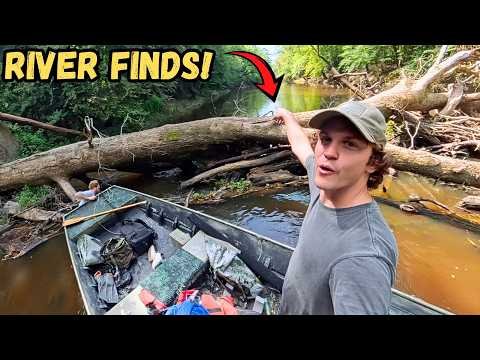
The clearest way to read this video is simple: the log jam is not just an obstacle, it is the reason the hunt works. The direct answer is that nuggetnoggin goes scuba diving under a massive river log jam and finds a concentration of old bottles, marbles, fossils, hardware, and other relics that the current has been collecting for a long time. That is the story the footage keeps returning to. The water is muddy, the boat ride is tricky, and the pile of fallen trees looks like a headache from the surface, but underwater it becomes a kind of catch basin for anything the river has moved along.
That idea gives the whole outing its shape. This is not a casual wade with a detector. It is a careful, gear-heavy search through a place where the river has done the sorting for them. The crew is already talking about bottles before they even get to the main dive, and the scene at the jam makes it clear why. Fallen trees, a shifting channel, and bank erosion have all combined to create a spot where old material can get trapped instead of washed away.
What the river bottom and bank dump were already giving up
Before the real diving even gets rolling, the shoreline starts telling the story. Broken Coca-Cola glass, a Christmas Coke bottle dated December 25, 1923, a Chero-Cola, bricks, old metal, and what looks like a long-buried farm dump all show up as part of the setting. That matters because it explains the kind of finds the river is likely to keep releasing. If the bank has been shedding material for years, then the water below it is basically the downstream archive.
The video keeps circling back to this idea of things washing out of the bank and settling in the river. The crew sees multiple old cars stacked into the hillside, along with heavy junk and metal coming out of the bank. Later, they point out another dump area where bottles, pots, and assorted trash are sliding into the water. This is one of the strongest parts of the feature story: the finds are not random. They are tied to a place where people used to dump things and where erosion has been handing that history back piece by piece.
The muddy water adds to the challenge, but it also makes the hunt feel more earned. Visibility is poor, the current is moving, and the divers are working by feel as much as by sight. That makes every solid object on the bottom a small payoff. It is the kind of setup where a spoon, a bottle neck, or a marble can matter just as much as a bigger showpiece.
The best finds: bottles, marbles, and the odd relic
The first dive is the one that really sets the tone. It is described as a jackpot, and the finds back that up. A White House vinegar jar with patented 1909 on the bottom stands out immediately because it is complete and unusual enough to hold attention. So does the milk glass jar with vines or grapes on it, which the video treats as one of the prettier pieces of the day. Those two alone would make the dive feel worthwhile, but they are only part of what comes up.
Marbles are a recurring thread throughout the hunt, and the video treats them the way treasure hunters often do: as small but satisfying proof that the bottom has been holding onto childhood odds and ends for a long time. There is a red, white, and blue marble, a green one, and what is described as a large clay shooter, along with another old-style clay marble that gets compared to a Bennington-type piece. A marble may be small, but in this kind of hunt it says a lot about the dump layer and the age mix sitting under the mud.
The bottles span a range of shapes and conditions. There are broken Pepsi bottles, a Tru-Ade soda bottle later shown cleaned up, a milk of magnesia bottle, a cork-top bottle, and a cool blue bottle that adds variety to the table. One of the more distinctive pieces is a bottle embossed with Kemp’s Balsam for cough, which the video treats as a memorable, early machine-made example. Another standout is the White House vinegar jar, which still has the cork inside.
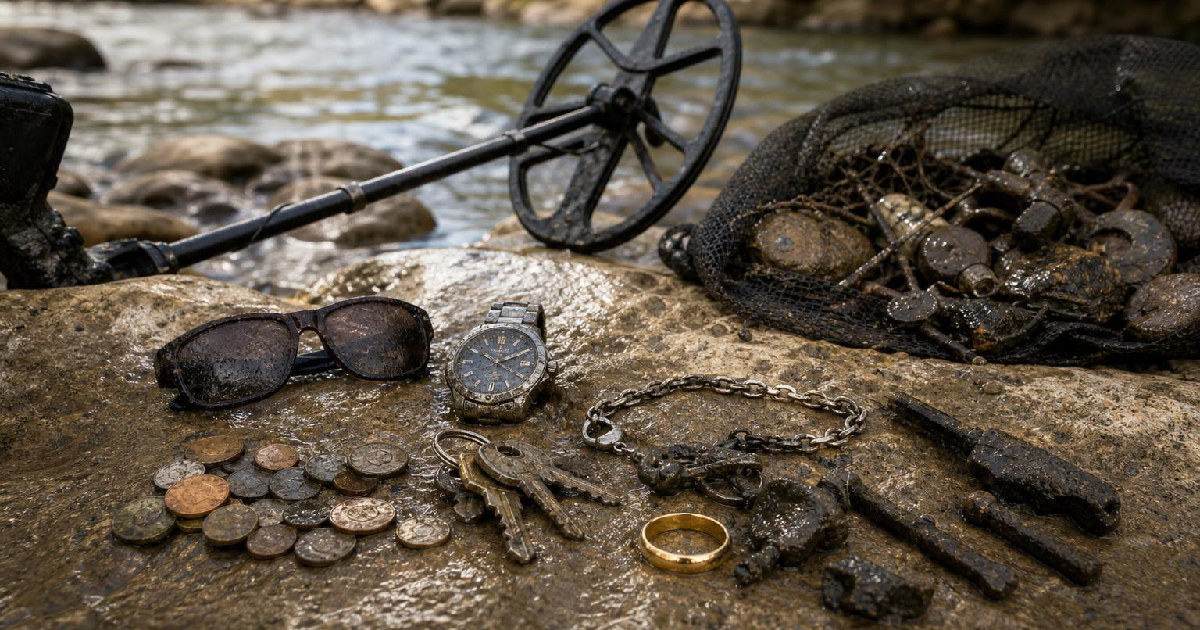
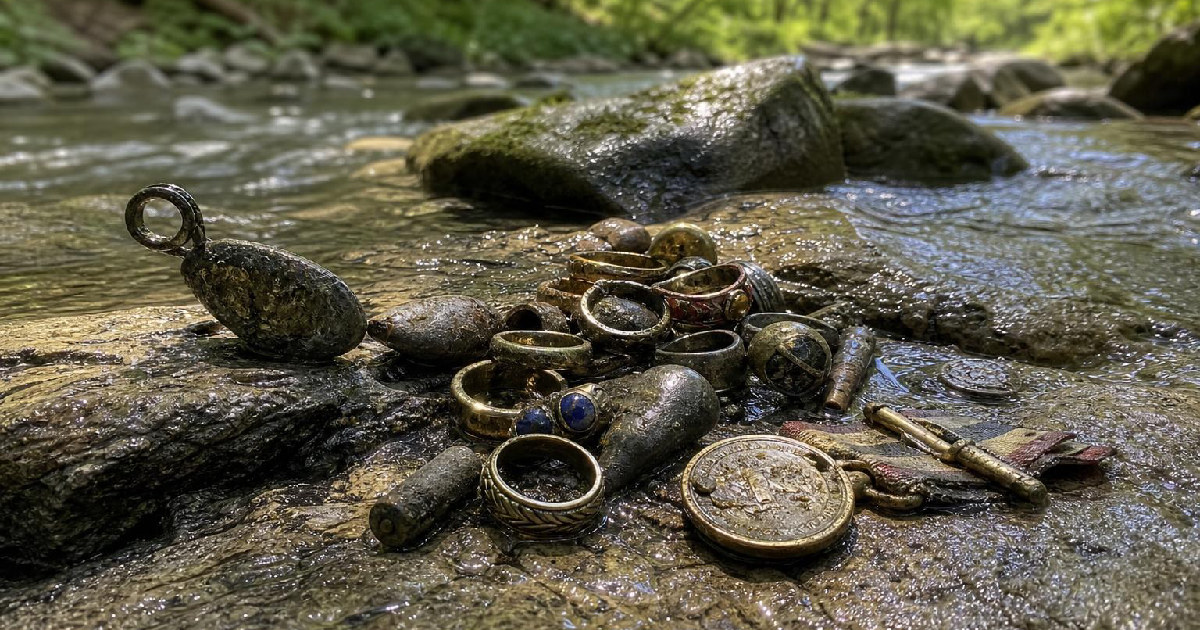
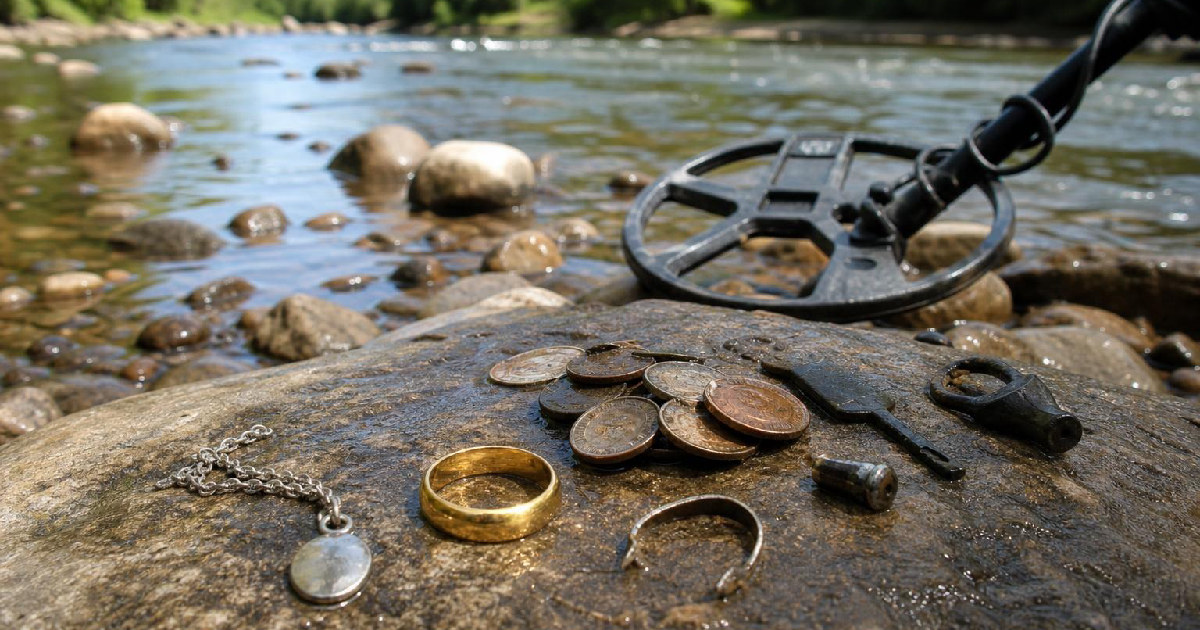
The hunt is not only about glass. It also turns up a Model T Ford valve stem cover piece, a ring with a stone and a brass band, brass locks, a handmade fishing sinker, a doorknob, and a spoon spotted coming out of the riverbank and another found with the detector underwater. Some of these pieces are decorative, some are purely functional, and some are just remnants of the old dump layers. Together they create the feeling that the river is not sorting by value so much as by weight, shape, and chance.
Why the cleanup table tells the real story
The wrap-up is one of the most useful parts of the video because it turns a pile of muddy finds into something easier to read. Once the dirt is washed off, the details stand out: the embossing on the bottles, the pattern on the nicest cold cream jar, the shape of the locks, the color in the marbles, and the embossing on the White House vinegar jar. That is where the hunt becomes more than a collection of objects. It becomes a record of how much the river had been holding in plain sight.
A few pieces draw special attention because of their condition or look. The decorative cold cream jar with vines and berries is called the most decorative one ever found. The White House vinegar jar looks surprisingly complete. The Old Glory lock gets singled out as a neat brass piece. Even the whale remains — a large ear bone, a spine fragment, and a big cookie-shaped fossil piece — add another layer to the day. They are not manmade relics, but they fit the same idea of objects collected, moved, and exposed by water.
That mix is what makes the table compelling. It is not one category of treasure. It is a spread of river history: discarded household glass, old advertising bottles, small personal items, mechanical parts, and fossil material all sitting together after a single outing.
What makes this kind of river hunt so compelling
Part of the appeal here is that the river does half the organizing. The divers still have to gear up, move through the log jam, and work in muddy water, but the setting is doing important hidden work. It is exposing bank dumps, concentrating metal, and trapping older material where it can be recovered. That makes each dive feel like a conversation with the river rather than a simple search.
Another part of the appeal is the variety. Some finds are plainly practical. Some are broken. Some are surprisingly clean. Some are a little mysterious. That range keeps the video from becoming just a bottle hunt or just a fossil hunt. It is a mix of things people lost, threw away, or never expected to see again.
The biggest takeaway is that a log jam can function like a collector’s shelf under water. It gathers bottles, marbles, hardware, bones, and scraps until someone with the right gear comes along and notices. That is why this mudlarking river treasure hunt works so well as a companion feature: it is not just about what was found, but about the way the river stored it.
Watch the original video: https://www.youtube.com/watch?v=hBqTFnocFL8
RECOMMENDATIONS
All About The Life designs from Texas Thread Theory, inspired by the places you go and the stories you bring back.
Keep Exploring Badge
A vintage outdoor badge centered on one simple message: “Keep Exploring.” With mountains, evergreens, a river, hiking boots, lantern, map, and compass details, it’s made for hikers, campers, travelers, and anyone who is always curious about what’s around the next bend.