What 20,000 km has changed about the Quartermaster
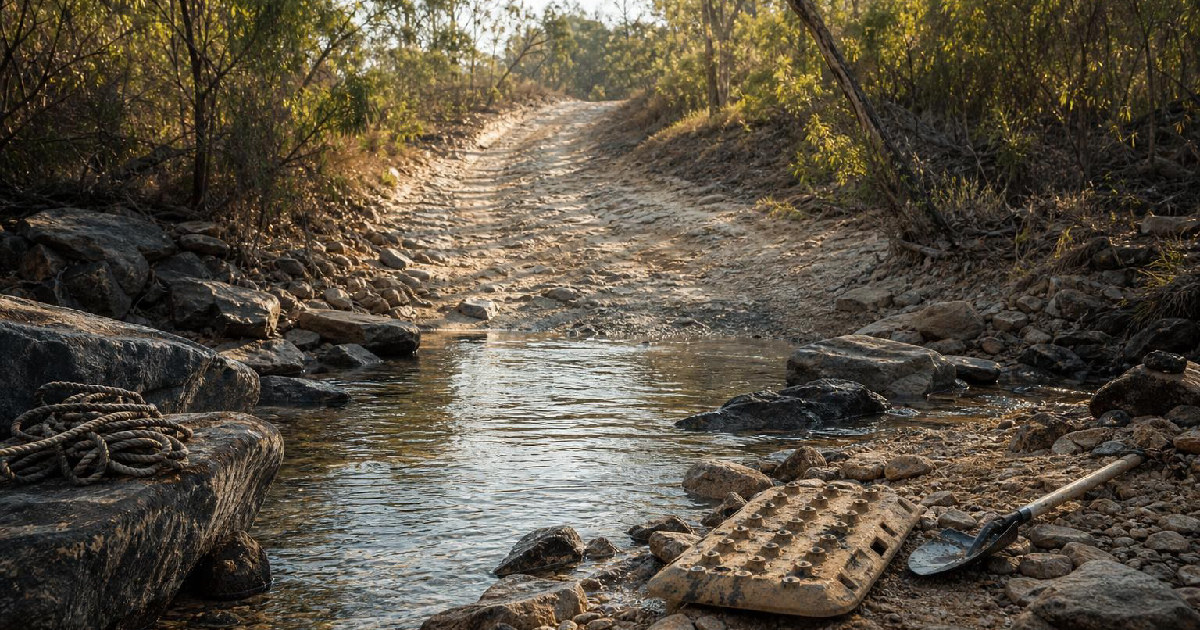
The useful way to read this video is not as a blow-by-blow trip diary, but as a long-term ownership check on a ute that has now been pushed well beyond the honeymoon phase. The Ineos Quartermaster is nearing 30,000 km, and this update lands after a Cape York run that put it through water crossings, rough tracks, ruts, recoveries, and the kind of remote travel that quickly separates a vehicle’s theory from its reality.
The short answer is this: the Quartermaster has shown it can handle more than a casual look would suggest. It has surprised its driver by making difficult off-road work feel less dramatic than expected, while still reminding him that its size, turning circle, and throttle feel take some adjustment. That balance — capable, but not effortless — is really the point of the update.
Why the half canopy matters more than the miles
The biggest change in the setup is not mileage at all. It is the move from a full canopy to a Norweld half canopy, and that one change alters almost everything about how the vehicle is used.
Ronny’s description makes the logic pretty clear: the full canopy made sense as a bush touring setup, but the half canopy suits a tougher, more weight-sensitive style of remote travel. In Cape York, especially on the Telegraph Track, the vehicle was carrying enough equipment to make weight and rear overhang a real concern. Reducing both gave the Quartermaster a better chance of getting through the trip without feeling overloaded or awkward in the worst spots.
That does not mean the half canopy is an automatic upgrade. It simply shifts the vehicle from “carry almost everything” to “pack with intent.” In practical terms, it gives up room and convenience in exchange for a more manageable rear end and a more balanced feel on rough ground.
The off-road traits that stood out in Cape York
Several things clearly impressed in the hard stuff.
First, the Quartermaster’s width became an advantage in places where wheel placement mattered. Ronny points to tight, uneven tracks and hole-ridden sections where the broader stance helped him place the vehicle with more confidence. That matters on difficult tracks because confidence is not just about courage — it affects how cleanly you line up the wheels and how much unnecessary movement you introduce.
Second, the coil setup and suspension package seem to have given the ute a smoother response than he expected. He specifically describes feeling more comfortable off-road than he has before, and notes that the vehicle handled the trip better than its weight might suggest. The J-Max Alpha electric suspension match and coil springs were part of that, with settings adjusted along the way for different track conditions.
Third, some sections that would normally produce a “brown pants” reaction in a 70 Series did not feel nearly as alarming in the Quartermaster. That does not mean the Ineos is magically easier everywhere. It does mean the vehicle’s behaviour through ruts, holes, and crossings gave the driver enough reassurance to keep moving with less drama than he expected.
Where the ute still asks for patience
The Quartermaster is not pretending to be small, and Cape York made that obvious.
Its width is one of the first things that demands attention. In tight tracks, especially where trees close in and lines become narrow, it needs care. The turning circle also becomes part of the equation repeatedly, because the vehicle’s footprint is simply more demanding than something like a 70 Series. Ronny’s own comparison makes that clear: the Quartermaster may be capable, but it is not nimble.
Throttle input is another point of adjustment. He notes that it is harder to feel exactly how much pedal is going through to the engine compared with a manual 70 Series, which gives a more direct sense of input. That kind of comment matters because it is the sort of thing owners only discover after enough time behind the wheel. It is not a flaw in the dramatic sense; it is a habit the driver has to learn.
And then there are the noises and quirks that come with hard use. The clunks he mentions when the coils recede, along with the moments when the vehicle is being pushed through awkward terrain, are part of getting used to the platform. The video does not suggest something is wrong so much as it shows a vehicle with a character of its own.
Packing a remote trip with less room and more intention
If the canopy swap changes how the ute drives, it changes how the trip works even more.
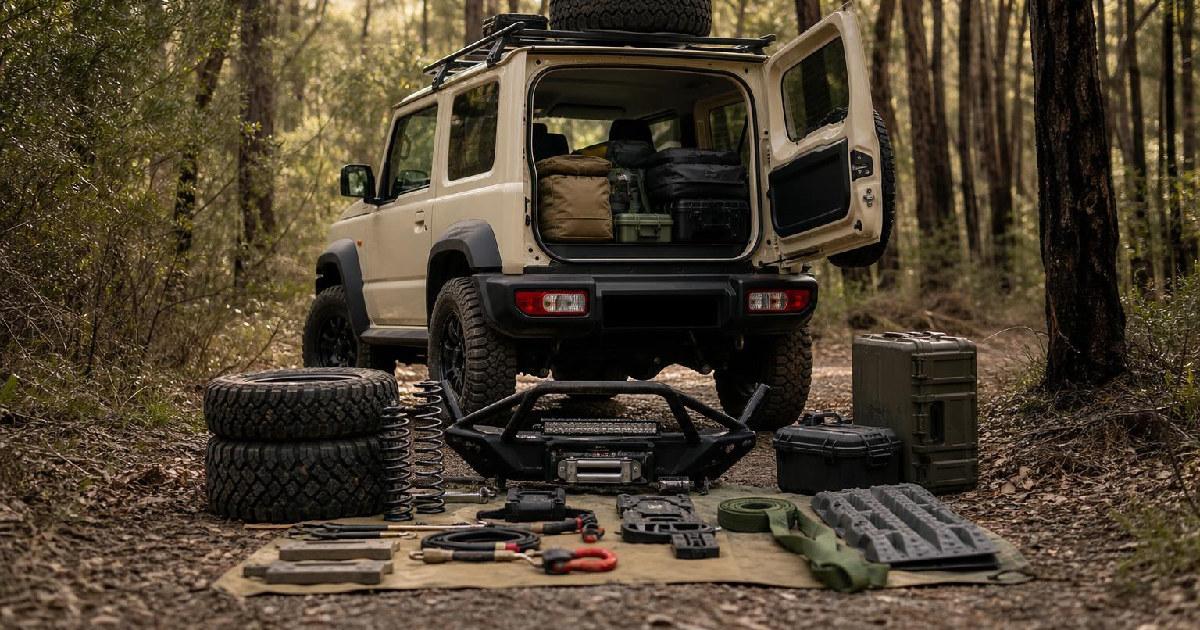
The half canopy cuts cargo space down to half, which sounds simple until you try to build a remote-trip packing system around it. Ronny shows that the loadout now has to be arranged with much more discipline. Tools live low, spare parts sit above them, pantry items are split across the remaining space, and chairs have simply been left out because there is no room.
That is the reality of a half-canopy setup: you do not just store less, you also store differently.
The trip itself makes the challenge even sharper because Cape York gear is not the same as desert gear. Recovery equipment, winching gear, wet items, food, camera equipment, and sleeping gear all compete for space. In this case, the camera gear alone takes over the back seat area, which means the vehicle is doing double duty as a film support rig and a travel rig.
That is where the half canopy’s strengths show up again. Without a long rear overhang, getting gear in and out becomes easier. With the roof rack arrangement and awning fitted, the setup still covers the kitchen and supports camp life, but it does so with a more compact rear profile.
The power and storage compromises are real
The canopy swap also changes the electrical side of the setup.
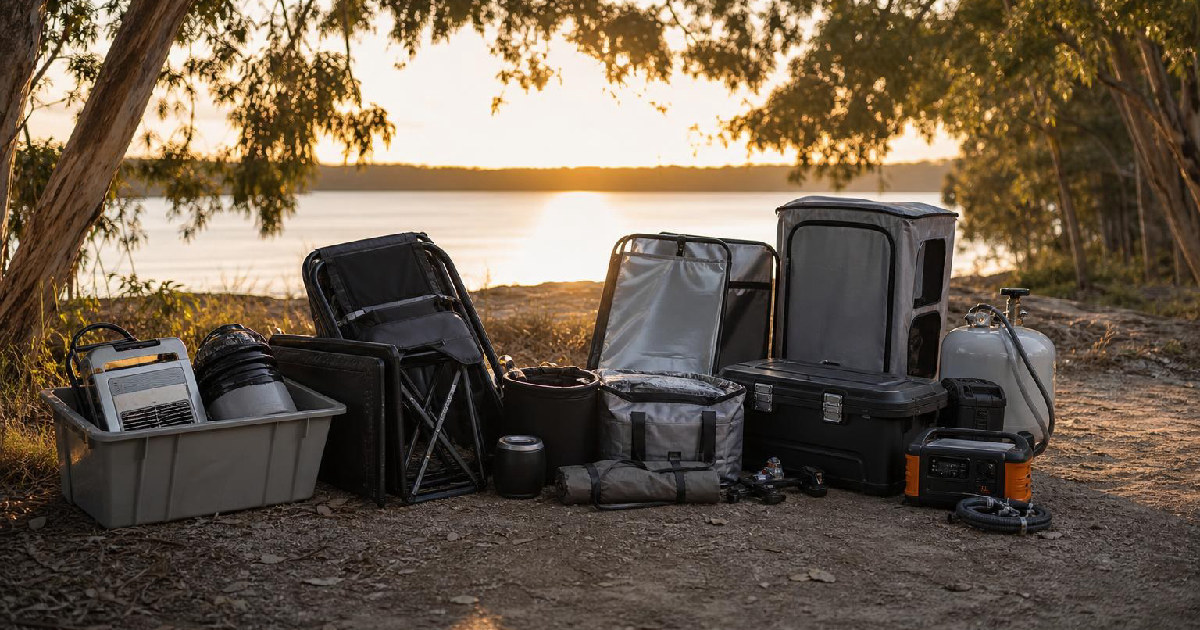
The previous full canopy carried 400 amp hours, which Ronny says was more than he needed in that format. The half canopy, by contrast, made 200 amp hours feel insufficient for the way this trip was being run, especially with camera gear and other demands in the system. That difference is important because it shows the swap was not just about storage volume. It changed the whole power budget.
The video suggests the solution involved being more deliberate with how the system is managed, rather than assuming the old setup would simply transfer across unchanged. That is one of the clearest lessons here: canopy choice is not isolated. It affects loading, access, energy use, and even how the vehicle functions as a work platform.
Who the half canopy suits
This is probably the most useful takeaway for anyone watching with their own build in mind.
Ronny’s conclusion is not that the half canopy is better for everyone. It is that the right answer depends on the individual and what they are actually trying to do. If someone wants to carry a huge amount of gear, the smaller canopy becomes a puzzle with fewer spare pieces. If someone is careful about what comes along, and is happy to pack tightly and keep only what earns its place, the half canopy starts to make a lot more sense.
His own rule is blunt and practical: you have to be good at Tetris. Every available space matters. Overpacking will make the whole system harder to live with, because things get in the way and access becomes the real problem.
That is also why the video ends with a lingering question rather than a neat verdict. He wants more time with the setup, including a trailer in the mix, before calling the canopy choice final. The current arrangement has clearly worked for this Cape York run, but it has also shown that the Quartermaster is still in the middle of its own long-term setup story.
Watch the original video
https://www.youtube.com/watch?v=nFNe8ppfVos
RECOMMENDATIONS
All About The Life designs from Texas Thread Theory, inspired by the places you go and the stories you bring back.
Take The Scenic Route
A scenic-route AATL design built for road trips, mountain drives, sunsets, back roads, and travelers who know the long way can be the best way.