Why this stretch changes the OTT story
The clearest takeaway from this part of the Old Telegraph Track is simple: the track is not defined only by its famous obstacles. Ronny Dahl’s run north through Cape York shows a section shaped just as much by creek crossings, recovery work, camp choices, and the land itself. If you came looking only for Gunshot-style drama, this stretch keeps pulling the focus somewhere else.
That is what makes the episode work as a companion to the video. The big names are still there, but they are surrounded by a lot of the real OTT experience: getting through a crossing, washing recovery gear, checking vehicle condition, deciding whether a line is really viable, and stopping long enough to notice what is actually in the water beside the track.
The direct answer is that this part of the OTT is the side most people do not see in obstacle-only clips. It is not a smooth drive, but it is also not a nonstop series of stunts. It is a moving mix of problem-solving and unexpected calm.
The crossings that demand patience, not just momentum
The video opens with the aftermath of Gunshot Creek, and that matters. Before the next section even has a chance to introduce itself, the crew is already dealing with recovery gear, wash-down, and the kind of post-obstacle fatigue that makes every next decision feel slower. That mood carries into the following crossings.
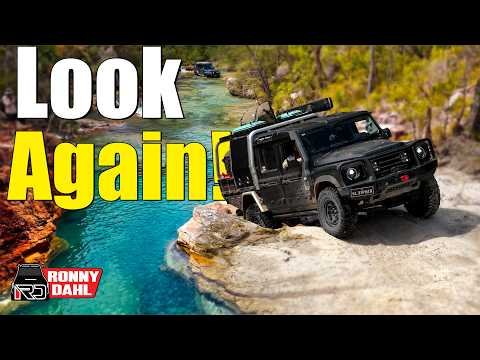
Cockatoo Creek is a good example of what the OTT can look like when it stops being about bravado and starts being about line choice. The water, the rocks, the narrow approach, and the need to trust the better-looking path all turn the crossing into a judgment call. Ronny and Raph do not treat it like a simple drive-through. They walk it, talk it through, and compare what they can see from different angles before committing.
That pattern repeats at Katu Creek. The crossing sounds routine until the track, current, rocks, and angle all start stacking up. It is not only about depth or flow; it is about reading how the vehicle will sit, where the rock edges will catch, and whether a line that looks possible from one side still makes sense once you are on foot. The video keeps returning to that very old 4WD truth: if you cannot walk it, you probably should not drive it.
Mist Creek adds another reminder that the track does not hand out easy days just because the major headline obstacle is behind you. Even when the crossing itself ends up manageable, the route in and around it can still be awkward enough to test patience. The OTT never really becomes a relaxed road; it just changes the kind of attention it asks for.
When the day stops being about the obstacle and starts being about the camp
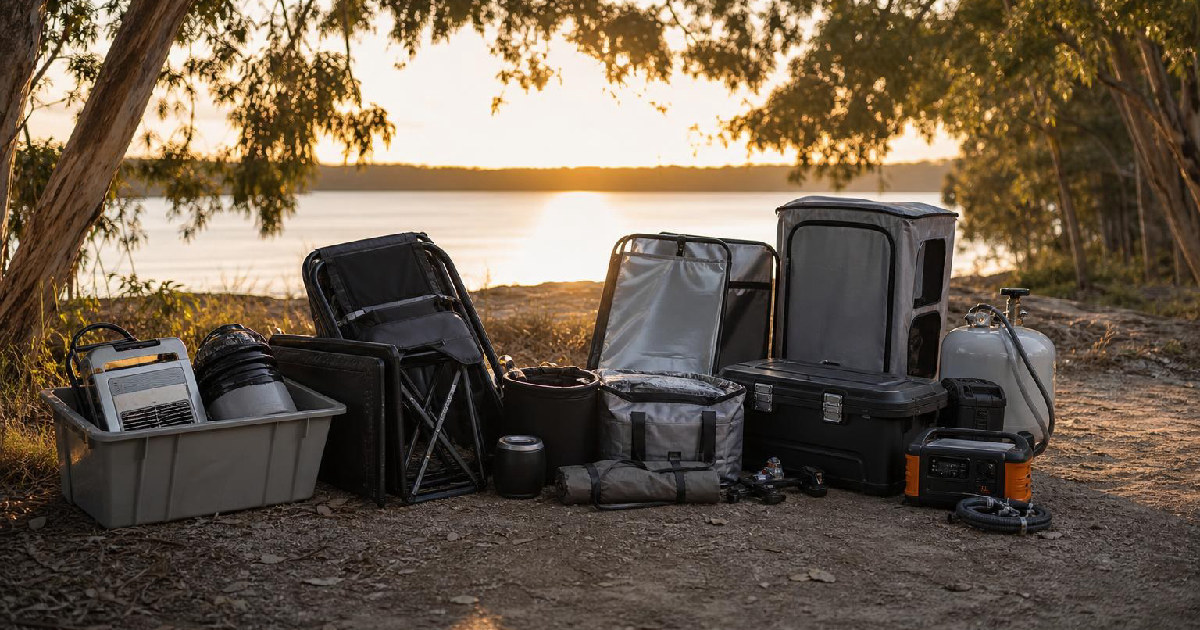
One of the more interesting things in this stretch is how often the video shifts away from the crossing itself and toward where the crew can stop, eat, wash, or rest. That gives the episode its shape. The OTT is not just a route to drive; it is a place you have to live in for a while.
That is why the camps and waterholes stand out so strongly. After the pressure of the crossings, the clear water and good camping spots feel almost surprising. Canal Creek especially reads as a reset point. It is described through the water, the atmosphere, and the way it contrasts with the rougher parts of the track. It is the sort of place that reminds you Cape York is not just a proving ground for vehicles. It is also a landscape with a completely different rhythm if you stop long enough to notice it.
The same is true when the crew reaches the camping area after the more demanding sections. There is a visible shift from problem-solving to settling in: swags laid out, the day finally slowing down, and the relief of being somewhere that actually feels worth stopping. The video does not overplay this. It just lets the campsites speak for themselves. They are not filler between obstacles; they are part of the story.
A track that keeps testing the vehicles
The most honest part of the episode may be the vehicle issues. They are not treated as dramatic plot twists so much as part of what the OTT can do to a rig over time. One vehicle gets badly stuck just 50 metres from camp, which is the kind of detail that makes the track feel both absurd and believable. The problem is close enough to camp to be frustrating, but still serious enough to require proper recovery work.
Later, Raph’s vehicle starts showing signs that something is not right. The crew does not guess at a miracle fix; they work through the likely causes, keep the car moving when they can, and then find the dirty filter that seems to explain the loss of power. That moment fits the whole episode. The OTT is not only a test of driving skill. It is a test of maintenance, observation, and knowing when a rough-sounding vehicle deserves immediate attention.
There is also a broader point here about how two-car travel changes the pace of the trip. When one vehicle has trouble, the other can help, but it also means every recovery, every pause, and every mechanical issue gets shared. The trip becomes slower, but also more watchful. That seems to be part of the reality this video wants to show.
The quieter payoff: clear water, turtles, and Sam’s Creek
If the obstacle sections show the OTT’s difficulty, the quieter moments show why people keep coming back. The water is the obvious example. There are sections where the water is described as crystal clear, where the crew notices turtles surfacing, and where the whole mood changes because the place is simply beautiful in a way the famous obstacle reels rarely make room for.
Sam’s Creek is the best version of that surprise. The video frames it as a place that exceeded expectations, not because it was the hardest or loudest part of the route, but because it was unexpectedly striking. Water appears to seep and drip through the rocks and ground, turning the area into something that feels active and alive. It is the kind of stop that rebalances the story of the track. The OTT is still challenging, but it is also full of places that feel almost unreal when you finally reach them.
That is the larger value of this episode. It does not argue that Gunshot does not matter. It argues that Gunshot is only one piece of a much bigger Cape York experience. The crossing, the campsite, the creek, the recovery, the wildlife, the afternoon light, the dirty filter, the washed gear, and the feeling of being tired but still curious — all of it belongs to the same route.
Watch the original video: https://www.youtube.com/watch?v=5oYeqWBjoKY
Why this side of the OTT sticks with you
What lingers after this stretch is not a single obstacle but the way the route keeps changing its mood. One minute it is a technical crossing. The next it is a clear-water stop. Then it is a camp. Then it is a vehicle issue. Then it is a creek that looks easy until you see the line up close.
That variety is what gives the Old Telegraph Track its character in this video. It is not just a place to conquer. It is a place to read, adapt to, and occasionally stop being surprised by. Ronny Dahl’s footage makes that clear without overexplaining it. The track feels bigger than its reputation, and that is exactly what makes this section worth watching closely.
RECOMMENDATIONS
All About The Life designs from Texas Thread Theory, inspired by the places you go and the stories you bring back.

All About The Life Adventure RV Badge
A vintage All About The Life RV adventure badge featuring mountains, pine forests, lake scenery, a glowing sunset, and classic compass details. It’s made for RV travelers, campers, road trippers, and anyone who believes home can be wherever you park for the night.