Why Ronny Dahl trims the camp list
The plain answer is that Ronny Dahl’s video is about the camping gear he does not bring. But the more useful reading is that he is making a case for a certain kind of camp life: one where every item has to justify its place by doing real work, fitting neatly, or solving more than one problem at once.
That is the thread running through the whole list. He is not rejecting comfort for the sake of being difficult. He is cutting away the gear that, in his view, takes up too much room, adds too much hassle, or solves a problem he already has covered in another way. His choices are shaped by how he actually camps, not by the default checklist other people seem to follow.
Table, bench, chair: what earns space and what doesn’t
The most obvious example is the table. Ronny does not carry a big camping table anymore, mainly because he sees it as bulky gear that eats space without really matching how camp life works around his vehicle.
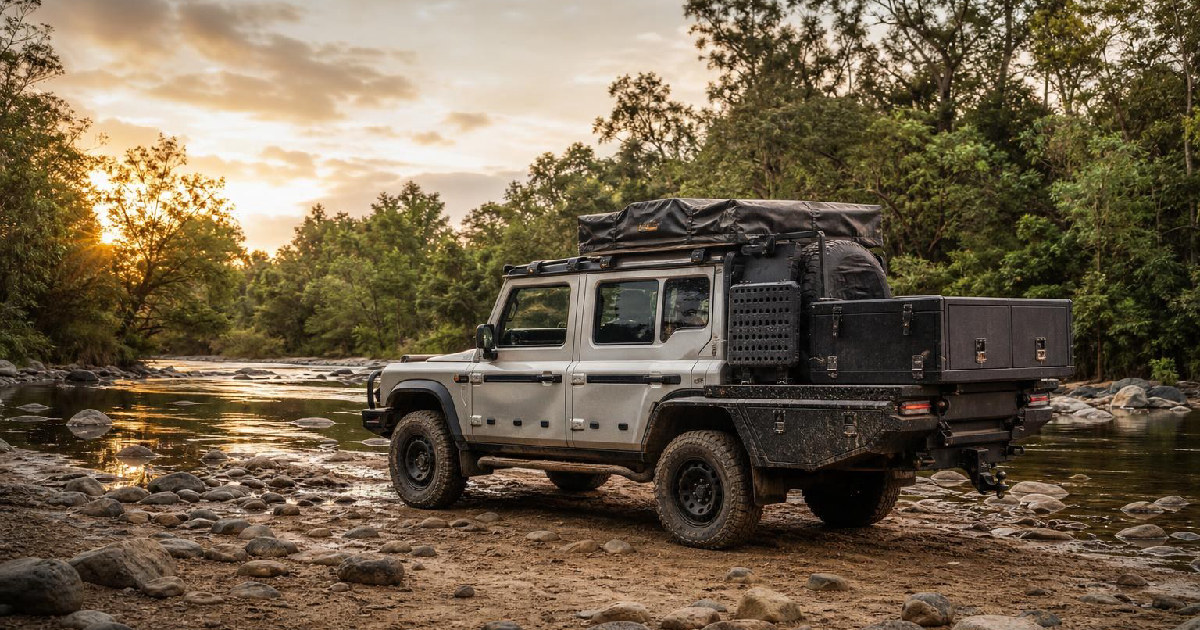
Instead, he leans on what he calls a bench. In his setup, there is already some form of surface available through the vehicle itself, whether that is a tray, tailgate, canopy space, or a door-mounted bench. So bringing another flat table starts to feel unnecessary. The bench does the same job in a tighter package, and it sits at a height that works better beside a fire or when he is seated on a stool.
The same logic applies to chairs. Ronny is not saying he never uses one, but he clearly separates the kind of chair that is made for lounging from the kind of seat that makes sense when you are moving around camp. His preference is the stool. It is smaller, easier to pack, and more flexible when he needs to tuck it into a wheel bag, canopy space, or a tight gap under other gear.
That is where the practical side of his thinking becomes obvious. He is not choosing the stool because it is the most luxurious option. He is choosing it because he ends up using it more often than the chair, especially in situations where a chair would feel awkward or take up too much room. In his view, the chair is for relaxing. The stool is for actually being in camp.
Lighting without turning camp into a stadium
Ronny’s view of camp lighting follows the same pattern. He is not against light. He is against overdoing it.
He pushes back on the idea of mounting bright exterior lights all over a vehicle just to light up camp. In his experience, that kind of setup can be too harsh, too hard to adjust, and too fixed to the vehicle to feel useful in a relaxed campsite. He also points out the practical annoyance of things rattling loose over corrugations or becoming a maintenance problem later.
His preferred answer is portable magnetic lighting. The value here is not just that the lights are detachable. It is that they are easier to aim where you actually need them, they do not require drilling into the vehicle, and they avoid the harsh, all-over brightness he associates with permanent camp lights.
He also makes an interesting point about where the light should go. Under-vehicle lighting, in his view, can illuminate the ground without flattening the atmosphere of camp or destroying night vision. That fits his larger argument: camp light should help you function, not wash out the whole scene.
Power, charging, and the case against oversized inverters
Ronny’s thoughts on power are just as selective. He does not see the point of installing a large inverter for the kind of camping he does.
He explains that in his own experience, he has not needed more than a modest inverter for years. The bigger the inverter, the more wiring and setup it tends to demand, and the less sense it makes if all he is really doing is charging devices. That is the key distinction in his argument: he is not trying to run household appliances in the bush. He is trying to power the gear he actually uses.
His answer is to stay closer to the source. If a device can be charged through a DC setup, he prefers to use a DC charger instead of converting power to AC and then back again. In his telling, that means replacing household-style charging with the appropriate 12-volt version where possible, which simplifies the whole system and avoids carrying the extra burden of a larger inverter.
This section of the video is less about technical showmanship than about self-awareness. Ronny is basically asking a simple question: what are you really trying to do out there? If the answer is camera charging, radio charging, or similar low-demand tasks, then a massive inverter looks like overkill.
Bugs, billy cans, and the reliability test
The bug spray section is one of the more blunt parts of the video. Ronny says he does not use it, and he clearly does not put much faith in insect repellent as a solution to the realities of camping.
That does not mean he ignores insects altogether. It means he thinks most people chase the wrong fix. His approach is clothing-based: long sleeves and long pants, even when the temperature changes. In his view, that is the practical barrier that actually makes a difference against mozzies.
He gives the same kind of treatment to billy cans. He does use them, but not the kind that he thinks can be easily damaged or made unreliable through heat. His preference has shifted toward titanium because, in his account, it is lighter and less prone to the problems he associates with aluminium. Again, the pattern is familiar: he favors gear that takes abuse well, stores easily, and does not create avoidable problems later.
When a compact shower is the wrong kind of compact
Ronny is especially hard on compact 12-volt camp showers. His issue is not that they look bad on paper. It is that they seem to fail when they get wet, packed away, and stored in real camping conditions.
That is why he says he built his own shower setup instead. Rather than buying a small all-in-one unit and hoping it lasts, he prefers to assemble something from hoses, a shower head, and a caravan water pump. The attraction is reliability. If he is going to bother carrying a shower at all, he wants one that works when he needs it.
At the same time, he gives a more modest fallback for most people: a simple shower bag without a pump. That fits with the rest of his thinking. If you want compact, keep it genuinely simple. If you want a pumped setup, build one that you can trust. What he rejects is the middle ground where a neat, tidy product fails at the worst possible moment.
What this list says about his travel style
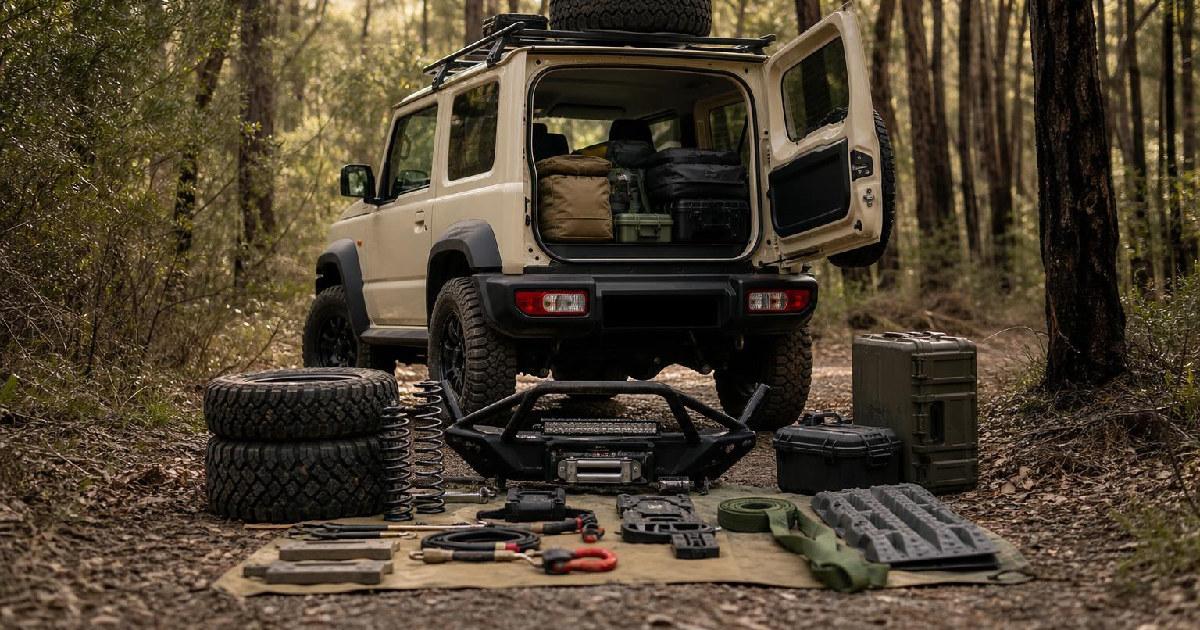
Taken together, Ronny Dahl’s list is less a random set of complaints than a camp philosophy. He is camping in a way that values movement, efficiency, and a low-maintenance setup over the usual idea of bringing everything just in case.
That helps explain why the stool makes sense to him, why the bench beats the table, why magnetic lights beat fixed ones, and why he would rather simplify power than build a sprawling electrical system. The same logic runs through the rest of the list, from insect control to shower setups to cookware.
The broader lesson is not that every camper should copy his kit. Ronny says as much himself: his travel style is different, and he expects some people to disagree, especially on the chair. But that is also why the video works. It pushes viewers to ask a better question than “what should everyone bring?” The better question is “what do I actually use, and what am I carrying out of habit?”
For anyone planning a tighter camp setup, that is the useful part of the video. It is not about removing gear for the sake of minimalism. It is about making room for the pieces that earn their place every time the trip starts.
Watch the original video: https://www.youtube.com/watch?v=pdVA1DfMu3w
RECOMMENDATIONS
All About The Life designs from Texas Thread Theory, inspired by the places you go and the stories you bring back.

Life Happens Out There
An outdoor-focused AATL design celebrating mountains, forests, hiking, camping, road trips, and the simple idea that life happens when you get out there and explore.