The short answer from the dunes
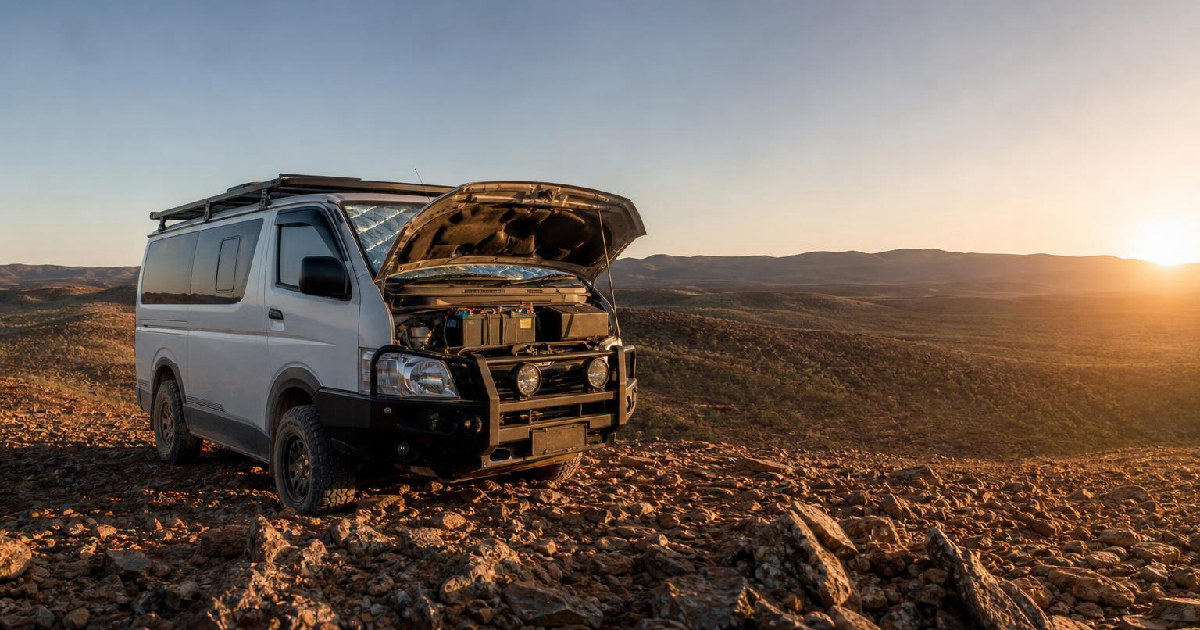
The direct answer from this video is simple: the HiAce 4x4 does the job off-road, including in sand, and it does it with enough confidence to make the platform feel serious rather than experimental. Andrew St Pierre White’s conclusion is not cautious marketing language; it is the result of watching the van in dunes, on corrugations, and in a setup that also includes a full camper interior and Egon’s 48V DC architecture.
That matters because the question here is bigger than “can it drive on the beach?” Plenty of vehicles can do a bit of that. The real issue is whether a compact van can keep its off-road credibility once it is turned into a livable touring rig. This video makes the case that it can.
What the Wedge Island run actually tested
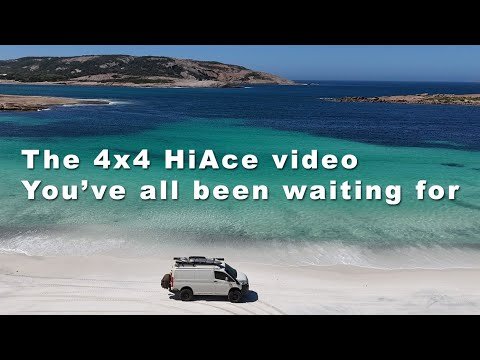
The setting helps explain why the answer feels earned. The group heads toward Wedge Island in Western Australia on a windy midsummer day, with heat, sand, and beach driving all stacked together. Andrew is in the Egon HiAce, Ollie is in another HiAce, and other vehicles in the group provide support. The point is not just to show them driving; it is to see how the vans behave when the sand becomes soft, the wind starts throwing it around, and the lines get less forgiving.
Andrew is clear that the two vans were not simply taking the easiest paths while the Hilux and Troopy did the work. The video frames the harder attempts as deliberate. That’s useful context, because it gives the stuck moments a different meaning. They are not failures in the usual sense; they are part of pushing the vans to see what happens when the driver chooses a more committed line.
And yes, both HiAces do get stuck. But in this video, that does not read like a verdict against the platform. It reads like sand doing what sand does, especially in wind, with drivers trying to be more ambitious than the surface allows. The recovery is quick, the mood stays light, and the larger takeaway survives the embarrassment.
Why the 48V system matters inside a compact van
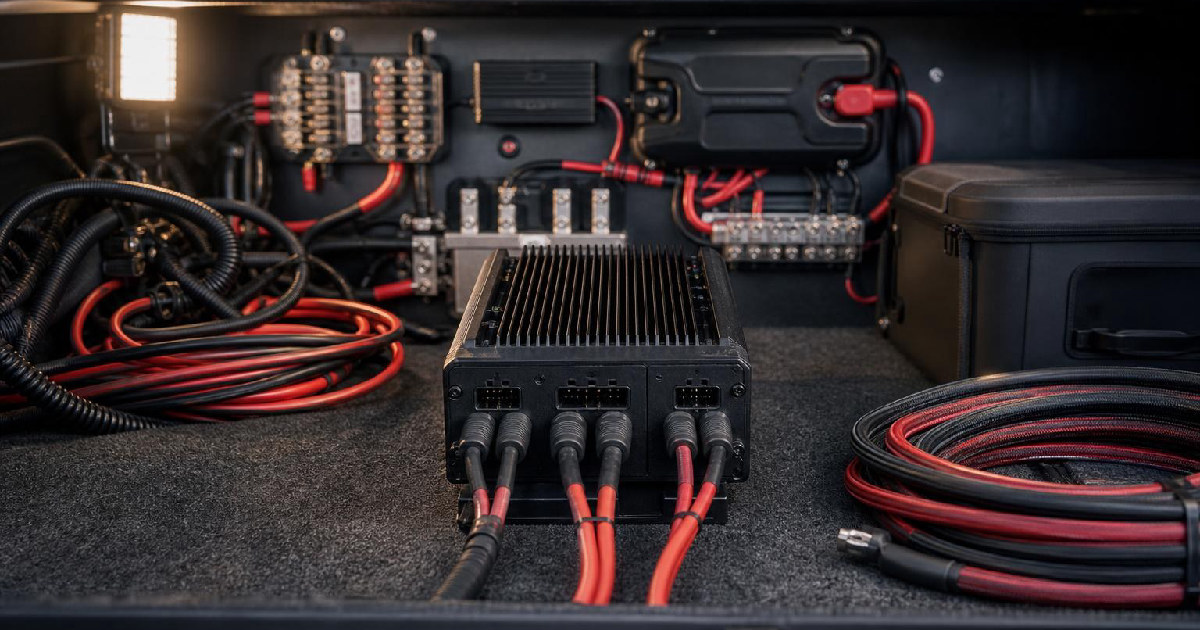
The other half of the story is electrical, and it is central rather than decorative. This van carries a full 48V system, and Andrew uses the test to ask a practical question: what does that change in a real camper? The answer comes through most clearly when the van’s air conditioning is switched on and the power draw is discussed. The system is not being described as theoretical or aspirational. It is running real loads in a real vehicle.
What stands out in the conversation is the way the 48V architecture changes the whole logic of the build. Instead of treating high-demand appliances as compromises, the setup lets the van behave more like a small, self-contained living space. Air conditioning, hot water, induction cooking, battery storage, charging speed, and alternator output are all part of the same picture. That is the point the video keeps returning to: the electrical system is not just supporting the camper. It is defining how usable the camper is.
Andrew also hears strong feedback from a builder on the practical side of this shift. The core idea is that a similar-cost 48V system can charge faster than a high-end 12V setup and support more use at once. In plain language, that means less waiting, more usable energy, and fewer compromises when the vehicle is being asked to live like a house on wheels.
Living space, layout, and why the interior changes the story
The interior walk-through is where the van stops being an interesting off-road test rig and starts looking like a credible touring solution. This particular build, done by Unwind Designs of Victoria, uses its space differently from the layout Andrew and Hina have in their own van. That difference is one of the most useful parts of the feature, because it shows that there is not just one way to make a HiAce liveable.
The list of features is not presented as a brag sheet so much as evidence of how much function can be packed into a compact footprint: retractable reels for water and air, a slide-out kitchen, induction cooking, storage, a sink with hot and cold water, a large fridge-freezer, a shower, a slide-out bed, worktop space, and air conditioning with heating. The important part is not the number of items. It is the way they turn the van into something you can actually spend time in.
Andrew and Ollie both come back to that idea from different angles. Ollie talks about how the van feels like it has more usable room than you expect, and Andrew notes how the layout lets someone sit and work while the bed is arranged in a way that would be cramped in a troop carrier. That is the key distinction: this is not just a sleeping shell. It is an enclosed living environment with enough structure to support work, cooking, cooling, and sleeping without constantly rearranging the entire vehicle.
Where the HiAce fits in the overland lineup
The video never tries to pretend the HiAce is a perfect replacement for everything else. Andrew says directly that solid axles still matter and that extreme off-roaders are probably already in that world. But for most people who want to travel rough routes without turning their vehicle into a pure crawler, the HiAce 4x4 starts to look like a very strong middle ground.
That is the most useful conclusion here. The van is not being judged against an abstract ideal. It is being measured against the kind of travel Andrew actually likes to do: beaches, corrugations, remote camping, and the ability to keep going without feeling forced into the limits of a more conventional camper setup. On that basis, he says the HiAce is equal to anything he is likely to throw at it, and in some respects even better than a troop carrier because of the way the weight is distributed and how it handles rough surfaces.
The result is a clear, grounded endorsement of the platform. Not because it won every comparison, and not because it avoided getting stuck, but because it kept proving that compact size does not have to mean fragile capability.
The bigger question this video answers
If you are wondering whether a HiAce 4x4 can really do off-road touring, the answer from this video is yes. If you are wondering whether it can do that while carrying a serious camper fitout and a high-output electrical system, the answer is also yes. And if your next question is whether that changes what a compact overland vehicle can be, the answer is where the video becomes most interesting.
It suggests a future where the limits of small camper vans are less about mobility and more about imagination. Once the electrical system can support real comfort, and once the layout makes day-to-day use practical, the vehicle stops feeling like a compromise package. It becomes a viable way to travel hard ground without giving up the things that make long trips pleasant.
The dunes at Wedge Island are only the proof point. The real story is that this HiAce 4x4 comes away from them looking like a vehicle that can handle the journey and the living that follows it.
Watch the original video: https://www.youtube.com/watch?v=3seJEdQZ0ko
RECOMMENDATIONS
All About The Life designs from Texas Thread Theory, inspired by the places you go and the stories you bring back.

All About The Life Road Trip SUV Badge
A retro All About The Life road-trip badge featuring a rugged SUV, mountain roads, directional signs, and classic compass details. It’s the perfect design for back-road explorers, overlanders, weekend travelers, and anyone who likes their adventures with a full tank and no strict itinerary.