Why this opening day felt bigger than a simple dove hunt
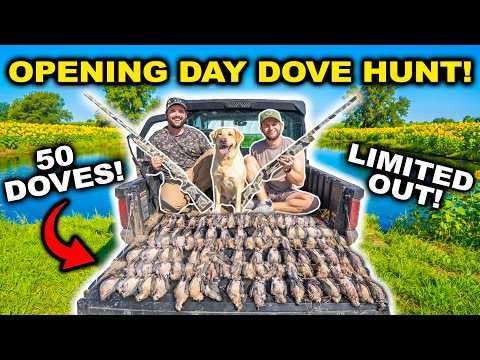
The plain answer is that this opening day dove hunt was never just about filling bags. The video is built around a familiar hunting-season formula—new guests, early-morning pressure, a hot field, and a cookout at the end—but what makes it work is how much it changes shape along the way. The hunt starts as a planned opener with a giveaway twist and ends as a full day of bird work, dog work, and kitchen improvisation that feels earned rather than staged.
FLAIR frames the whole day around the opener itself, but the real hook is the mix of people and payoff. Two visitors travel in from South Dakota, having driven through the night to be there. One has dove hunted before, the other has never bird hunted at all. That alone gives the hunt a little more weight than a routine outing. It is not just a crew chasing birds; it is a first-time experience being handed to somebody at the exact moment dove season opens.
The morning hunt: new faces, hot weather, and a slow start that still paid off
The day begins before sunrise with the crew loading up, joking around, and trying to get everyone ready for a field that is already expected to be punishingly hot. The transcript makes the weather feel like part of the story, not just a background detail. The group knows they are trying to beat the heat by getting on the birds early, and that shapes the whole morning. There is breakfast-by-way-of chocolate milk, a little pre-hunt chaos, and the usual field gear getting sorted before anyone even starts shooting.
That early stretch is less about clean action than about setting the tone. The guest hunters are introduced, their nicknames get worked out, and the crew settles into the kind of joking rhythm that usually means they expect things to get lively. The promise is simple: if dove hunting goes right, it should feel easy. If it goes wrong, it tends to expose that right away.
The first few birds do not exactly pour in, but once the shooting starts, the day begins to take shape. Red gets hot almost immediately. Pity, meanwhile, has a rougher start and has to move through a few different guns before he finally connects. That back-and-forth matters because it keeps the hunt from feeling neat or mechanical. It feels like a real opener: some guys are dialed, some are not, and the birds don’t care.
Dog work, shooting rhythm, and the chaos that made the day memorable
One of the more entertaining parts of the hunt is how much the dog, Panther, becomes part of the rhythm. She is not treated like scenery or a side note. She is in the middle of the whole thing, chasing, retrieving, breaking early at times, and eventually getting worn out enough that the crew takes her to the creek to cool off. That decision tells you a lot about the pace of the day. The hunt is hot enough, long enough, and productive enough that even the dog needs a reset.
The shooting itself follows the same pattern: some quick hits, some misses, some birds dropping into awkward spots, and a lot of running commentary as the crew tries to keep up. Red turns into the day’s most dependable shooter. Pity works through a running joke about needing the right gun, then eventually finds the one that clicks for him. FLAIR also gets his own share of birds, including a late-day stretch that finally helps push the total into serious territory.
What keeps the hunt from becoming a dry tally is the way the crew talks about every little adjustment. They swap guns. They change positions. They spread out across the field. They joke about limits, the dog, and who is actually helping. It is messy in a way that feels honest, and that honesty is a big part of why the video works as a feature-worthy hunt instead of just a raw montage.
From field to kitchen: why the crew abandoned a standard popper build
By the time the birds are cleaned and the group heads toward the food side of the day, the hunt has already done its job. But the video does not stop there, and that is where the companion feature becomes more interesting. Instead of sticking to a basic dove popper, the crew starts troubleshooting the cooking setup and talking through what will actually work best with the time, the ingredients, and the gear they have on hand.
The original idea is poppers. That part is familiar. But the crew’s kitchen logic quickly drifts toward something better suited to their setup: a dove quesadilla built from the same core ingredients as a popper. It is a practical improvisation, not a gimmick. They have bacon, dove meat, jalapeños, cream cheese, seasoning, and a panini press or griddle setup that can cook both sides without turning the dove into overcooked dry meat.
That matters because the whole day has been about adapting to conditions—heat, timing, bird movement, gun changes, dog fatigue—and the cookout keeps that same spirit. Nothing about the meal feels pre-scripted. They are making the food work for the hunt they actually had.
The dove quesadilla that outshined the classic popper
The strongest food takeaway from the video is simple: the crew thinks the quesadilla beats the standard popper. That is not said like a polished recipe claim; it is said like a genuine group verdict after tasting both. The popper still holds up. It is the classic. But once the ingredients are folded into a quesadilla, the group keeps coming back to the added creaminess, the easier assembly, and the way the flavors stay together better than in a more traditional popper build.
What makes that judgment feel believable is how hands-on the tasting is. The crew compares the two versions side by side, points out the texture differences, and keeps returning to the same practical problem: cream cheese can be hard to manage in a popper once things start cooking. In the quesadilla, though, it stays put. The bacon, jalapeño, dove, and cheese all get packed into a cleaner bite.
That leads to the video’s most useful food insight for anyone who hunts and cooks: you do not have to treat dove night like a single fixed recipe. The same ingredients can move into a different format if the gear and timing make that version better. In this case, the quesadilla is not just a novelty. It becomes the day’s best food idea.
Why the day ended as a success even before the final tally
The hunt finishes with a total that matters, but not for the reasons you might expect. The crew does not only care about the number because numbers are bragging rights; they care because the day sets up a bigger outdoor rhythm. Brennan gets his first dove. Red gets to the limit. Pity works through a few false starts and lands birds with the right gun in the end. Panther earns her keep. And FLAIR pushes the team close enough to its goal that the final run back into the field feels like the natural finish to the opener, not a rescue mission.
Then there is the late solo push that gives the video its last big flourish. FLAIR heads back out, spots a dense group of doves, and ends the day with a remarkable multi-bird shot that lifts the total to 51. That number is the headline result, but it is not the whole story. The more interesting part is how the day gets there: by building momentum the hard way, through heat, downtime, retried shots, and a long enough grind that the final burst feels earned.
If you want the simplest reading of the video, it is this: opening day was successful because it was real. The hunt had guests, pressure, humor, adjustment, and a food payoff that matched the mood of the field. It did not need to be tidy. It just needed enough birds, enough time, and one very good quesadilla.
Watch the original video: https://www.youtube.com/watch?v=v9f46FdDmeo
RECOMMENDATIONS
All About The Life designs from Texas Thread Theory, inspired by the places you go and the stories you bring back.

Reservations Are My Love Language
A polished date-night design for anyone whose favorite words might be “I made reservations.” Featuring elegant dining details and the playful phrase “Reservations Are My Love Language,” it’s a perfect pick for restaurant lovers, foodies, couples, and anyone who takes a great night out seriously.