Why this fish shack is built around work, not comfort
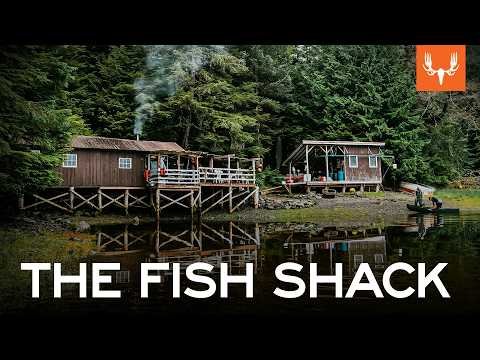
The plain answer is that Steve Rinella’s Alaska fish shack is a family base in Southeast Alaska that has to function in an off-grid setting where everything takes effort. The deeper answer is that the place only makes sense if you understand how much of life there is about fixing, storing, hauling, cleaning, and waiting for the tide to cooperate.
That is the defining idea running through the tour. The shack is not presented as a polished retreat or a finished dream cabin. It is a lived-in system. It holds gear, fish, tools, bunk space, water, fuel, repairs, and the daily mess that comes with using a place hard. It also holds memory. Rinella keeps circling back to what was there before, what had to be changed, and what still needs attention. That mix gives the video its shape.
What the island setting forces you to do differently
The location matters before anything else. Rinella describes the property as sitting on the southeast end of a large island with no road system, which means nothing useful arrives by driving in. Supplies come by water or air. If something is needed, you wait, improvise, or make it yourself.
The environment adds another layer of pressure. There is a huge tide swing, heavy rainfall, and constant wetness. Those conditions affect everything from access to storage to the way structures age. Even the simple fact of moving around the property is tied to the water level. A float that sits far out at low tide can be reachable in knee boots, while a high tide can reach places it has no business reaching.
That is why the shack feels less like a private hideout and more like a place that has to negotiate with the landscape every day. The island is not a backdrop. It is the operating system.
A place assembled from boats, scrap, and constant repairs
One of the strongest threads in the video is the way the property has been built, rebuilt, and repurposed over time. Rinella explains that the group bought it in the early 2000s, after a friendship with a neighboring landowner turned into regular visits and then a shared purchase. At the start, he says, it was basically a garbage dump. They spent years clearing out trash and reworking what was left.
That history still shows. The property has a communal feel now because nearby friends also bought adjoining spots, creating a little corner of familiar people and shared use. But the buildings and storage areas still carry the marks of a place that had to be assembled from whatever was available. Lumber came in by boat. Some things arrived by plane. A hardware store is not just down the road when something breaks.
So the shack becomes a study in practical improvisation. Old posts, patched spaces, repurposed sheds, leftover materials, and beach-combed objects all coexist. Some items are there because they are useful. Others stay because they might be useful later. That logic runs through the whole property.
The rooms that matter most when the fish come in
The fish shack is really a collection of working zones. There is the bunkhouse, the generator shed, the storage yard, the shop, the fish-cleaning area, the kitchen, and the sleeping space that can absorb a crowd in summer. None of these areas is fancy, but each one serves a clear purpose.
The shop, especially, captures the mood of the place. It is where generators get worked on, where tools live in various stages of corrosion, where fuel and outboard pieces are stored, and where a constant stream of small mechanical problems gets handled. Rinella is blunt about how much rust the salt air creates and how often equipment fails. There are multiple generators because there are always problems with them. There are freezer issues, outboard issues, fuel issues, and the usual frustration of maintaining a working place at the edge of the map.
That frustration is part of the story, not a side note. The place is useful because it keeps functioning, not because it is elegant.
The kitchen is where the whole setup proves itself
If the shop shows the labor, the kitchen shows the payoff. Rinella describes the indoor space as a place where old and new collide: a new orange detail sitting beside older hardware, a heater insert that has to keep going, a hot-water setup that has been nursed along, and the kind of mold and salt problems that come with sealing up a place too tightly.
The kitchen also carries emotional weight. The wall with the rockfish checklist, the painting tied to a lost friend, the old photo of the shack before additions were built on, and the shared meals all turn this from a utility space into a family record. He talks about regulars coming back every year, about 15 people around the table in late summer, and about kids sleeping wherever there is room. The property is not just used; it is inhabited collectively.
That is why the house feels fuller than the footprint suggests. The actual structure is small, but the life built around it is big.
Why the shack feels bigger than the building itself
Rinella keeps returning to the idea that this place has shaped his family. He calls it one of the best life decisions he ever made, and that makes sense in the context of the tour. The shack is not about comfort in the normal sense. It is about competence, repetition, and belonging.
His kids learn how to live with inconvenience. They learn that long boat days, wet sandwiches, and bucket bathrooms are part of doing things in a place like this. They also learn how much shared effort keeps a remote camp running. The adults fix things. The kids help or watch or just absorb the rhythm. Over time, that becomes its own kind of education.
There is also a memory-and-inheritance feeling built into the property. Some people who used to sit at the table are gone. New babies are entering the circle. Equipment has changed. Buildings have been patched. The place keeps moving forward, but it does so without losing the sense that it belongs to a long line of use.
That is probably the best way to understand the fish shack: not as a trophy property, and not as a finished off-grid fantasy, but as a hard-working family base where everything from tide swings to tool rust has a say in the day.
Watch the original video: https://www.youtube.com/watch?v=p0h8pPJ324s
RECOMMENDATIONS
All About The Life designs from Texas Thread Theory, inspired by the places you go and the stories you bring back.
Life Happens Out There
An outdoor-focused AATL design celebrating mountains, forests, hiking, camping, road trips, and the simple idea that life happens when you get out there and explore.