Why the canyon mattered before the first cast
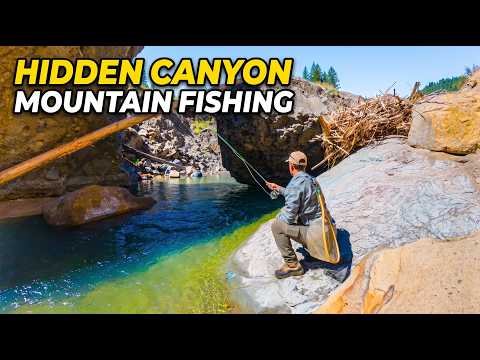
The clearest way to read this Colorado trout trip is that the setting was doing as much work as the fishing. LakeForkGuy wasn’t simply wandering a pretty stream and hoping for a bite. He was moving through a remote canyon, dealing with steep banks, low water, and a river system he had never fished before. That combination made every decision matter a little more.
The direct answer to what this video is about: it is a remote canyon trout fishing day built around adjustment. The fish were there, but the water was low, the access was awkward, and the day demanded a lot more reading, walking, and re-rigging than just making casts.
That is part of what gives the episode its shape. Instead of a straightforward sit-and-catch outing, the day becomes a backcountry problem to solve. The scenery is obvious from the start, but the more interesting thread is how the fishing changes once the stream begins to reveal its character.
How low water changed the whole plan
He opens by saying the river is lower than expected because there wasn’t much snow, and that single detail sets up everything else. Low water in a mountain stream changes the whole look of the place. Pools get more defined. Seams get tighter. Fish have fewer obvious places to hide, but the places they do use become much easier to overthink if you are not paying attention.
He also mentions the seasonal shift: this is his first summer trip up there, and the water is full of insects, bees, and signs of aquatic life on the rocks. That matters because the flies he chooses are not random. He starts with a dry fly, later leans on a Chubby Chernobyl style presentation, and eventually brings in a Euro nymphing setup when the fish seem to want something more precise.
In other words, the whole day is less about one perfect tactic and more about recognizing when one tool stops being enough.
What the trout were telling him about the stream
One of the most useful parts of the video is how often the fish seem to point him toward the next move. A fish rises to the dry. A seam proves too tight to fish comfortably from one angle. A tiny pool looks too small to matter, then produces a rainbow. Later, a deeper or faster lane responds better to the Euro rig.
That pattern tells you what kind of water this is: technical water where trout can hold in places that look almost too small, too shallow, or too exposed to be worth stopping for. He repeatedly reacts to those spots in real time, and the video makes a strong case that in this sort of fishing, the stream is the map.
The fish themselves are also part of the story. He lands rainbow trout, believes he has a cutthroat in hand at one point, later catches a brown, and notes the possibility of stalker fish based on clipped fins. Whether or not every fish fits a clean category on the first pass, the variety matters because it shows the stream is holding multiple kinds of trout in a surprisingly compact corridor.
Why the rig kept changing
This is where the episode gets especially useful for anyone who likes technical fly fishing. He doesn’t stay married to one setup. He starts with a dry fly, tries a dry-dropper style approach, then shifts to a Euro nymphing pole when he wants more control and a better shot at holding the fly in the seam.
That change is not just for variety. It reflects the way the stream behaves.
With the dry-dropper, he can cover water and provoke strikes in riffles and shallow spots. With the Euro setup, he can get the nymph exactly where he wants it, keep it in the zone, and avoid the drift issues that would come with a conventional floating line in awkward current. He explains that the rod’s sensitivity makes the bite feel almost like a bass jig bite, which is a pretty good summary of why that method clicked for him in these tight mountain lanes.
The important point is not the gear list itself. It is that the gear followed the water. That is what made the day feel more like reading and responding than just casting.
The small pools that produced the best action
One of the most memorable through lines in the video is how often tiny pockets of water turn into fishable spots. He gets help from another angler who points out that some of the small pools are worth fishing too, and that advice pays off.
That exchange matters because it reinforces a lesson the whole video keeps repeating: trout in this kind of stream are not always waiting in the obvious places. A little pocket, a seam near a rock, a quiet edge after fast water, a narrow run at the end of a hole — those are the spots that keep producing.
A lot of the action comes when he slows down enough to work those places rather than rushing past them. He even describes the experience in hunting terms, which makes sense here. He is not just casting into open water. He is trying to place the fly in a spot where he already expects a fish to be.
That kind of fishing rewards attention more than distance.
What this kind of fishing offers that bigger water does not
There is a reason the scenery keeps coming up alongside the fish. In a canyon like this, the setting and the fishing are tangled together. The cliffs, the pines, the clear water, the cold current, the steep access, the physical effort of hiking and wading — all of it becomes part of the catch.
He says it feels closer to hunting than to some other forms of fishing, and that is probably the right frame for it. You are not covering a huge reservoir or drifting a broad river. You are working short stretches, testing seams, making a few good casts, then moving again when the water tells you to.
There is also a practical side to that rhythm. He notes how refreshing it feels to stomp along the bank, read the current, and work small mountain fish in a place that is both beautiful and demanding. That combination is really the point of the feature: the outing is satisfying not because every cast lands perfectly, but because the environment forces him to fish with more intention.
By the end, he has a rainbow, a brown, and what he believes may be a cutthroat or a stocked fish among the day’s catches, plus a clear sense that the stream still has more to offer. It is the kind of backcountry day that leaves you with a better feel for the water than any single fish would have provided on its own.
Watch the original video: https://www.youtube.com/watch?v=OUJLm9Uf4Gk
RECOMMENDATIONS
All About The Life designs from Texas Thread Theory, inspired by the places you go and the stories you bring back.
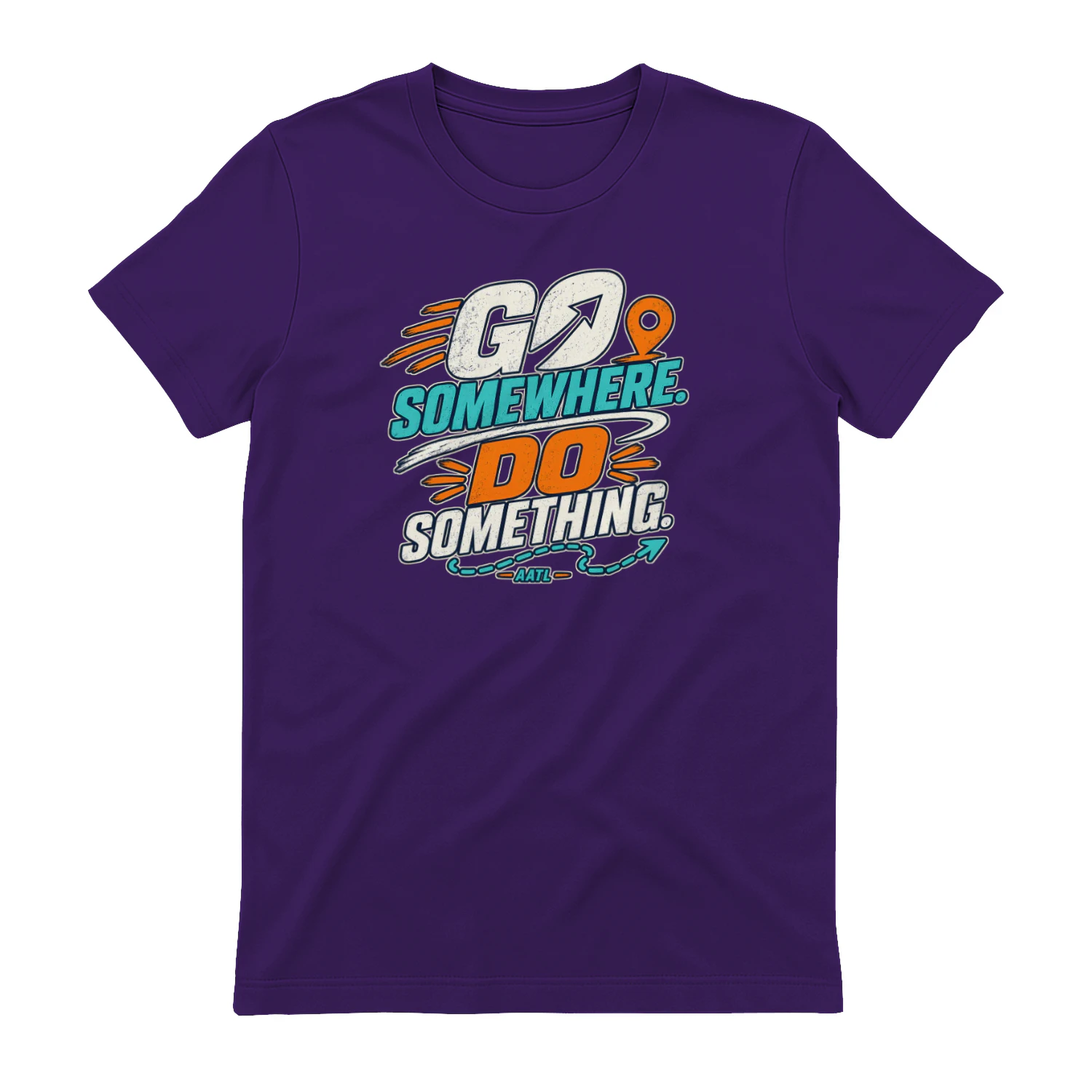
Go Somewhere. Do Something.
A high-energy adventure design built around the message “Go Somewhere. Do Something.” With travel-inspired route and destination details, it’s made for anyone who is always looking for the next road trip, day trip, weekend escape, or excuse to get out and experience something new.