Florida’s opening-day gator hunt, in plain English
A Florida opening day gator hunt starts long before anyone spots an alligator. The season has a fixed window, the paperwork matters, and opening weekend changes how people move on the water. In Florida, the statewide recreational alligator season runs from August 15 through November 1, and hunters need an alligator trapping license, a statewide harvest permit and two CITES hide-validation tags. That’s the rule set that turns a night on the water into a legal harvest instead of just an outing. For the official details, see the Florida Fish and Wildlife Conservation Commission’s guide on alligator licenses and permits and where and when to hunt.
The video puts that structure in motion without pretending it is simple. The crew is working around opening day, checking gear, scouting first, and staying aware that once the season opens, the water gets crowded fast. That combination of rules, timing and traffic is really the story here.
The legal basics: season dates, permits and CITES tags
Florida’s statewide recreational alligator hunting season runs from August 15 through November 1 each year. During that statewide harvest, hunters generally need an alligator trapping license, a harvest permit and two CITES hide-validation tags. Those tags are not a small detail; they are part of what makes the harvest lawful and traceable.
The video also shows a practical truth that gets overlooked in online hunting talk: opening day is not just a date on a calendar, it is a logistical checkpoint. Paperwork, tag access, boat readiness and the plan for the night all have to line up before anyone can think about the shot.
Why opening day changes the pace on the water
The creator treats opening day as a race against both time and other hunters. In the transcript, the crew scouts before the season fully kicks off, then heads back out once the clock turns. Later, when a gator is found, the water is already busy enough that they have to work around other boats and changing conditions. That is the opening-weekend difference: you are not just looking for alligators, you are navigating people, pressure and a lot of movement.
Florida’s statewide recreational hunt is also one of the few big public-facing hunts where night activity is baked into the culture. FWC notes that the statewide harvest is allowed 24 hours a day on most areas, with exceptions depending on the specific place. That helps explain why the video moves between dusk, midnight prep and early-morning glassing without feeling out of place.
How the hunt came together at Parramore’s Campground
The hunt doesn’t begin in a swamp in the abstract. It begins with a camper, a boat, family gear and a stop at Parramore’s Campground in Florida. That setting gives the whole video its shape. This is not a stripped-down, single-purpose hunt. It is a working outdoor trip where the truck, the toy hauler, the dog space, the kids’ stuff and the cooking all matter.
The campground matters because it gives the hunt a base. There is room to prep, regroup and reset between runs on the water. There is also a social layer to it. The owners welcome the crew, and the place feels less like a temporary parking spot and more like an old-Florida meeting point.
The campground setting and why it matters to the story
The video spends time on the surroundings because the surroundings are part of the experience. The property is right on the water, tucked away, and the crew repeatedly describes it as “old Florida.” That phrase usually gets thrown around casually, but here it fits: narrow roads, water access, a little history in the air, and a pace that suits both fishing and hunting families.
It also helps explain why this kind of trip works for a mixed group. Kids are swimming, meals are being cooked, and the adults are still getting back on the water. The hunt and the campground life are not separate chapters; they overlap.
Scouting, boat traffic and choosing a workable spot
The transcript shows a repeated pattern that matters to anyone planning an opening-day alligator hunt: scout first, mark what you see, then return with a plan. The crew uses OnX to mark crawls and slides, which is a smart way to keep track of where a gator was seen when conditions change after dark. The video also makes clear that the boat traffic can complicate everything, especially once other hunters and weekend users are on the water.
That’s where patience matters. The hunt isn’t rushed by the camera or by the crowd. They work through wind, logs, crab traps, bait placement and shifting visibility. The result feels less like a highlight reel and more like a real opening-weekend field note.
What the video shows about the hunt itself
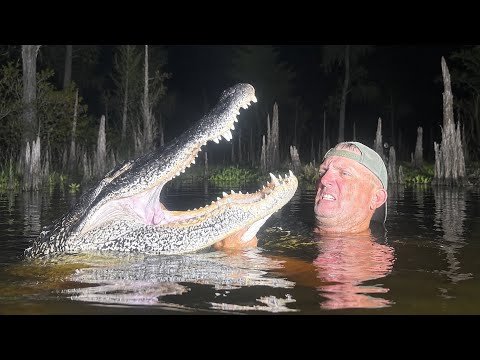
The hunt mechanics in the video are straightforward, but the tension comes from execution. The crew glasses for a workable gator, brings the boat in slowly, and keeps adjusting as the animal moves. There is constant attention to distance, drag, obstacles and whether the gator has truly taken the bait. That is the part casual viewers may miss: seeing a gator near bait is not the same as having a clean, controlled setup.
The other thing the transcript captures well is how much this kind of hunt relies on restraint. They slow down as they close the gap, watch the gator’s movement, and wait for the right moment instead of forcing the issue.
Reading bait, distance and gator movement
A big part of the hunt is reading behavior. The crew watches for whether a gator is holding bait, swimming with it or simply testing it. They also pay attention to where the animal wants to go, because water obstacles can make a clean recovery harder if the gator turns under logs or into heavy cover. In other words, the challenge is not just getting a bite. It is managing the space around the bite.
Why the harvest was kept focused and controlled
When the gator is finally worked in, the tone stays careful. The video emphasizes control, clear communication and keeping the boat and line organized. That discipline is what turns a dangerous encounter into a manageable harvest. It also reflects the presence of trained help, which the creator repeatedly acknowledges. In a hunt like this, that kind of experience is not optional background. It is part of the plan.
After the tag: meat, hide and camp cooking
Once the gator is tagged, the value of the harvest becomes visible in two directions at once. The creator mentions both hide and meat, and later the video follows through with cooking. That is one reason this kind of content lands differently than a simple trophy-hunt clip. The animal is not treated as a single moment; it becomes food, material and a practical part of the trip.
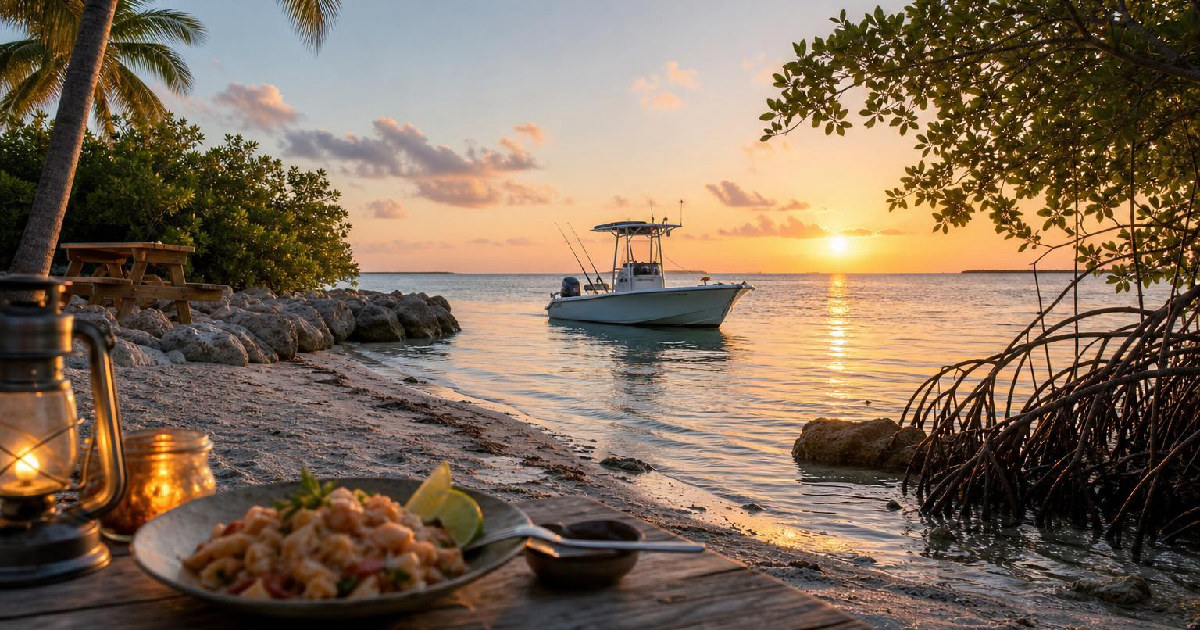
The follow-up meal is a good example. The gator tail is prepared as a coconut-crusted dish with a lemon-ginger sauce, cooked at camp and served to the group. It is a straightforward reminder that field-to-table doesn’t need to be fancy to feel meaningful.
From harvest to coconut-crusted gator tail
The cooking sequence is especially effective because it keeps the food rooted in the hunt. The tail is cut, dredged, coated and fried, then brought out to people who have been part of the weekend around the campground. There is no need to dress it up further. The meal speaks for itself.
Why the catch-clean-cook format works here
This format works because it matches the rhythm of the trip. Hunt, recover, tag, cook, share. The video never pretends that the kitchen is separate from the marsh. The whole weekend flows from the same source: a legal opening-day hunt, a working campground and a family-style setup that makes the harvest part of the larger outdoors life.
If you want to watch the original hunt and see how the weekend unfolds on camera, the video is here: https://www.youtube.com/watch?v=xEaaui9cT-c
RECOMMENDATIONS
All About The Life designs from Texas Thread Theory, inspired by the places you go and the stories you bring back.
Life Happens Out There
An outdoor-focused AATL design celebrating mountains, forests, hiking, camping, road trips, and the simple idea that life happens when you get out there and explore.