A flood can reset a creek bed in minutes
The direct answer to what happens in this video is simple: a flood reshapes the creek and exposes a scattered collection of finds, then the hunt continues into the river where the haul gets much bigger. What makes this video work, though, is not just the quantity. It is the way the day shows how a creek can suddenly become readable after heavy water moves through it. One pass on foot turns up glass, marbles, a possible worked stone, and bottles sitting where the current has just shifted things around. Later, the underwater search adds another layer, pulling up the kinds of objects that settle deeper and stay hidden until somebody is willing to go after them.
That two-part structure gives the hunt its shape. On land, the flood has already done the sorting. In the water, the search becomes more patient and more chaotic at the same time.
The surface finds tell the first story
The first part of the hunt is all about what had been freshly exposed. A marble shows up right away, followed by another, and then a broken bottle top and a worked-looking rock that the creator believes may have been being shaped into a spear point. That sequence matters because it sets the tone: the creek is not offering one category of find. It is mixing toy pieces, glass, and something that may carry much older human history.
A modern Coca-Cola bottle appears early too, along with broken glass and a complete bottle that looks to date from the 1930s or 1940s. A pottery fragment and an owl-marked milk bottle add variety to the surface scan. The milk bottle, marked J. M. Allen Burlington, New Jersey, is a good example of the kind of surprise these hunts can produce. It is not just old glass; it is old glass that has traveled far from where it started, ending up in a southern creek bed after who knows how long in the water.
There is also a nice bit of practical observation in the way the hunt is presented. The creator points out where bottles and other debris are likely to collect, which helps explain why some spots produce several finds in quick succession while other stretches stay quiet. The creek is not random, even if the results sometimes feel that way.
What the dive added once the hunt moved underwater
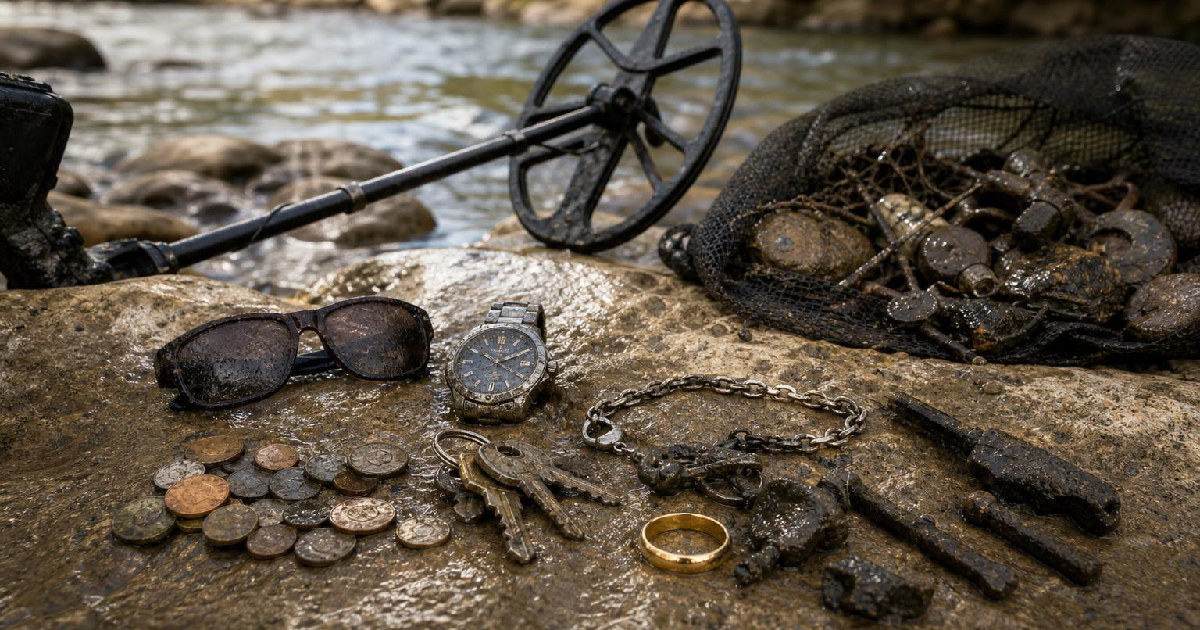
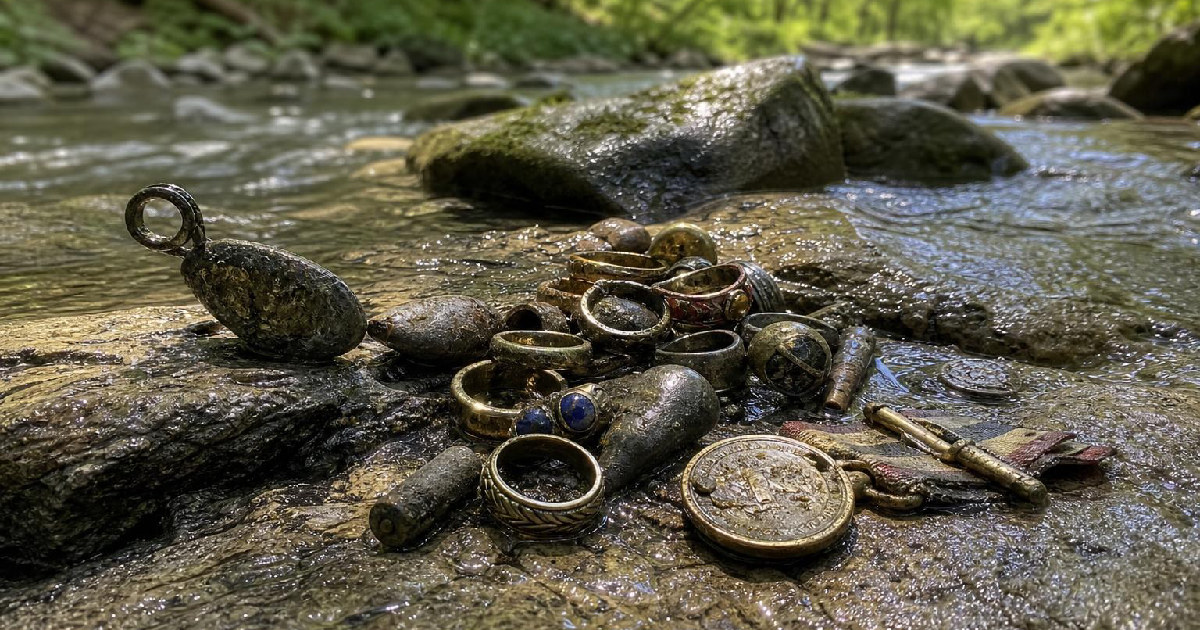
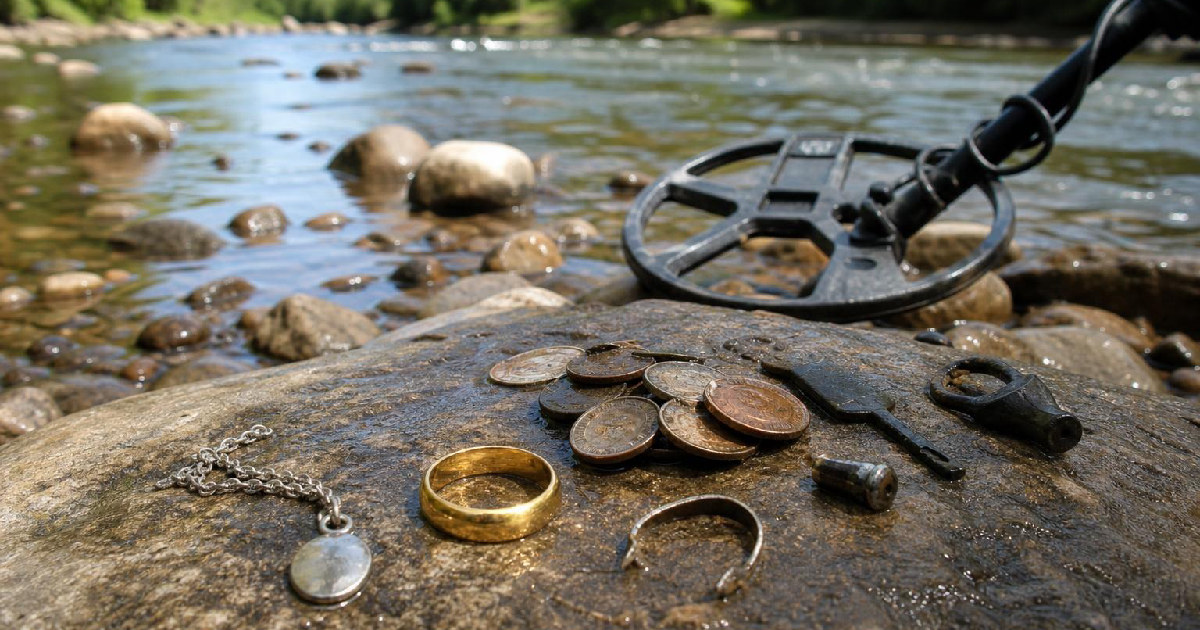
Once the video shifts to scuba diving, the day opens up. The finds become less about what was resting on top and more about what had been pinned into the river bottom. The creator comes back with a pile of lead, lots of fishing sinkers, a chain, spoons, coins, marbles, a pocket watch, a car key, a zodiac token, a wheat penny, a mailbox lock, a toy gun piece, a Glock magazine, a toy car, handcuffs, a very old pocketknife, a Chevrolet hubcap, a horseshoe, and a grappling hook used as an anchor.
That list sounds chaotic because it is. And that is part of the appeal. A river bed does not sort things into neat categories for the diver. It holds everything from lost gear to household debris to pieces that may have been in the water long enough to feel almost archaeological. The hunt becomes less about a single prize and more about assembling a picture of what the current has carried, buried, and preserved.
The mix of practical junk and pocketable history
A lot of the underwater haul is the kind of material that treasure hunters often expect: lead, weights, broken metal, and odds and ends tied to fishing or river use. That does not make it boring. If anything, it helps explain why the site can keep producing finds. Waterways collect the leftovers of all kinds of activity, and those leftovers become markers of how people used the place over time.
The creator also notes that one item is a magnet returned to its owner, which is a small but telling detail. Not every recovery has to become a display piece. Sometimes the most meaningful thing is simply getting someone’s lost tool back out of the river.
There is also a beat in the video where the underwater trip itself is described as punishingly cold. The creator says only two tanks were burned because he was freezing, which gives the viewer a realistic sense of how demanding the work was. Treasure hunting sounds romantic until the conditions start taking a real toll. This video leaves that in.
The finds that stood out most
A few pieces carry more weight than the rest. The pocketknife with a shield, even though it is missing a blade, gets singled out as possibly very old. The Chevy hubcap is another standout because of its age and shape, the kind of object that feels rooted in an earlier period of driving and repair. The grappling hook also stands apart because it is not just an accidental loss; it looks like something purposefully adapted into an anchor.
Then there are the bottles. A tall Coca-Cola bottle, a Christmas-dated Coke from 1923, and the New Jersey milk bottle all give the day a clear identity. This is a bottle hunt as much as anything else, even with the marbles and relics in the mix. The older Coke bottle in particular feels like the kind of item that makes a flood worth checking the same day. It was not waiting in a display case. It was just sitting where the water had uncovered it.
The arrowhead is another important piece, especially because the creator handles it as a likely worked point rather than trying to overstate it. That restraint matters. The video suggests age and human use without trying to pin down more than the hunt can support. That makes the find feel more credible and more interesting.
Why this kind of hunt keeps producing surprises
Flood conditions do something that steady water often does not: they rearrange the surface of the story. Objects move, settle, and reappear in clusters. That is why a single day can produce marbles, a worked stone, a bottle from New Jersey, and a pile of river scrap all in one sweep.
The other reason these hunts keep working is that the creator reads the water as a collection point rather than just a scenic place to search. The spots where debris gathers, the gravel beds, the deeper river bottom, and the banks all become different kinds of evidence. The video is full of that practical attention. It is less about luck alone and more about knowing where the creek is likely to reveal its secrets after a flood.
A day measured in small recoveries
By the end of the hunt, the story is not one huge discovery. It is the accumulation of small ones: two marbles on the surface, a likely worked stone, a Christmas Coke from 1923, a milk bottle from New Jersey, a handful of old and modern relics underwater, and enough fishing sinkers to remind you how much ordinary stuff a river quietly keeps.
That is what makes the feature worth watching. The creek never has to give up a single spectacular prize to make the day feel rich. It can offer a little bit of childhood, a little bit of industry, a little bit of travel, and a few pieces that may have been sitting in the same bed for decades.
Watch the original video: https://www.youtube.com/watch?v=9Yt43qwoDkE
RECOMMENDATIONS
All About The Life designs from Texas Thread Theory, inspired by the places you go and the stories you bring back.
Life Happens Out There
An outdoor-focused AATL design celebrating mountains, forests, hiking, camping, road trips, and the simple idea that life happens when you get out there and explore.