The trip is really a crash course, not just a fishing session
The clearest way to read this video is as a field lesson with a fishing trip attached. Kaspar comes up from Southern California to chase his first real California king salmon from a boat, and the day quickly turns into a guided test of how much a shore fisherman can absorb when the water, the tackle, and the stakes all change at once. The answer to what this video is about is simple: it is king salmon fishing from a boat, but the real draw is watching someone learn the rhythms of trolling, depth control, and boat handling in real time.
That learning curve is part of what gives the video its momentum. Fisherman's Life does not treat the guest like a tourist being handed a rod for a photo. He walks him through the tools, the reasons behind them, and the little mechanical choices that matter when salmon are down below the surface and you are trying to make repeated passes through the right zone. The result is a trip that feels useful even before the fish start coming aboard.
How the setup changed from shore instincts to boat trolling
A lot of the early conversation is about translation: taking knowledge from one style of fishing and making it work in another. Kaspar already knows shore fishing, but boat trolling is a different language. The video spends real time on gear that is meant to get bait or lures down where the fish are, including the deep diver and the sinker release. Those pieces are not treated as side notes. They are the foundation of the day.
The explanation is practical and patient. The diver clips onto the line, pulls the bait down to the target depth, and then releases when a fish is on so the angler is no longer fighting the diver too. The sinker release does a similar job with a heavier weight setup, helping get down toward the fish without losing a weight every time there is a bite. For someone used to casting from shore, this is not just new hardware. It is a completely different way of thinking about presentation.
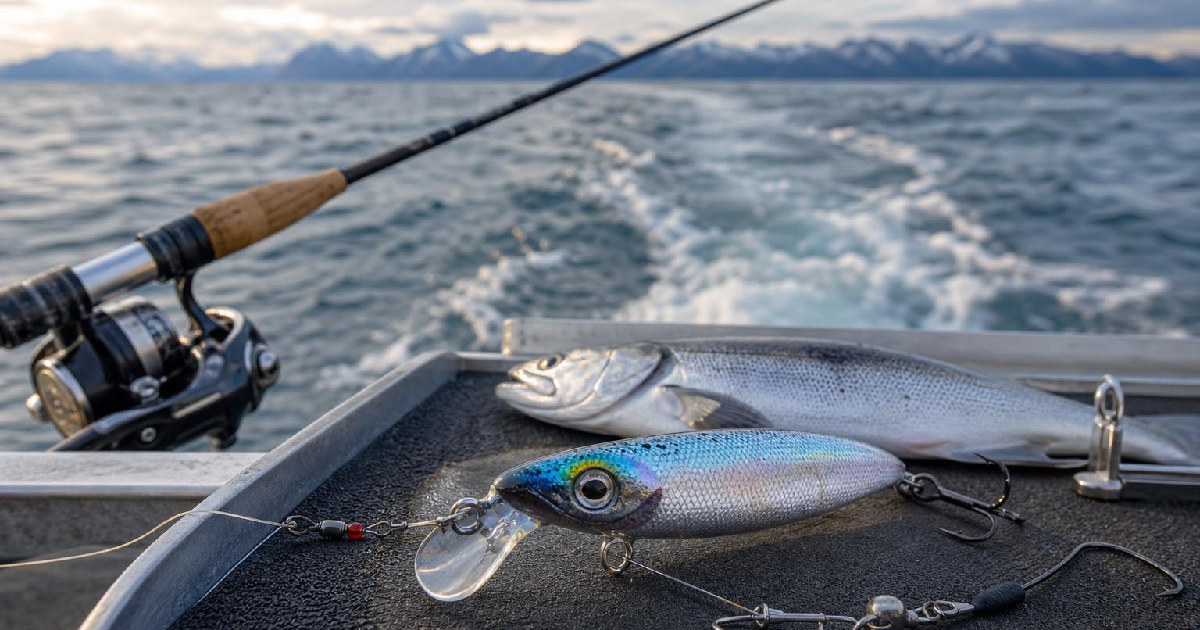
The spoon also matters here. The Coyote 5.0 spoon is identified as the bait that was producing the day before, so the crew heads back to the same area and starts there rather than trying to force a new plan. That choice shapes the whole outing. They are not searching blindly; they are working a known area and trusting the previous day’s bite pattern.
Why birds, bait and depth mattered more than guesswork
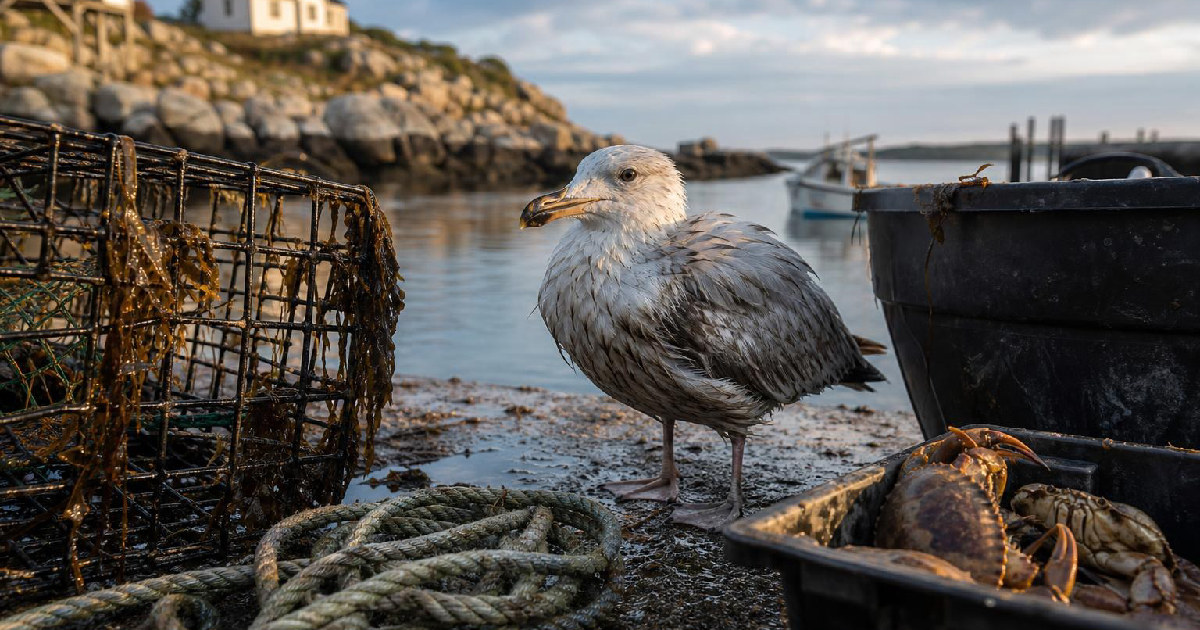
Once the boat gets moving, the trip starts relying on signs that are easy to miss if you do not know what you are looking for. Birds become one of the biggest clues. Fisherman’s Life points out the black birds with white chests that look a bit like penguins, explaining that they are good indicators because they are feeding on the same bait the salmon want. He also notes the way birds can sit and point their heads downward, which suggests they are watching bait below.
That attention to bird behavior sits alongside the fish finder, the trolling speed, and the depth where the hooks are running. The crew is watching for fish, but also for the conditions that say the fish are close. The video makes that clear without overcomplicating it. This is not a mystery solved by one lucky cast. It is a moving process of reading water, bait, and pressure while staying in the right pocket.
The day also shows how tight the margin can be. Several bites come close to becoming fish in the box, but not all of them finish the job. Some fish pop off before they can be netted cleanly, and some of that comes down to boat handling, rod positioning, and timing. By the end, the repeated near-misses make the final successful net job feel earned rather than automatic.
When the fish hit, the boat work became the hard part
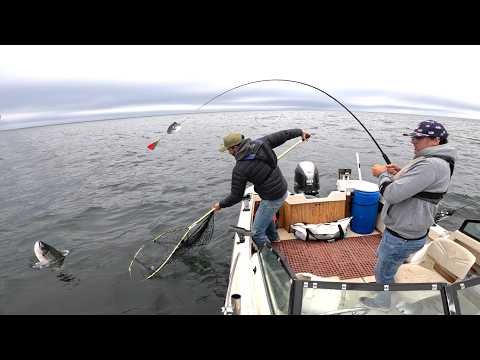
If the first half of the video is a tutorial, the middle turns into a stress test. Once fish start hitting, the guest has to manage more than one thing at once: keep tension, keep the fish clear of the motor, listen for direction, and help set up a net shot without panicking. That is where the learning becomes visible.
There are misses, and the video does not hide them. A few fish come unbuttoned after what look like promising hookups. In another moment, a fish gets close enough to create real excitement before slipping away at the edge of the boat. Those moments matter because they show how much of boat fishing is judgment under pressure. It is not enough to know the rod and reel. You have to know when to slow down, when to hold tension, when to move the boat, and when to trust the fish will come back toward you.
That is also why the eventual larger catch lands so hard. By then the guest has already gone through enough failed attempts to know how hard it is to keep a salmon pinned. The final fish is not just a fish; it is proof that the crash course is starting to stick.
The day also opened into a bigger talk about access and marine protected areas
The fishing is never separated from the bigger conversation for long. After the misses and the hookups, the discussion turns to marine protected areas and the possibility of more restrictions. The video does not frame that as a lecture. It comes up naturally because both anglers are thinking about what the water looks like now and what it may look like if more coastline is closed.
The central idea is straightforward: access matters, and the stakes are not abstract. The conversation touches on how much of the water is already in marine protected areas and how future decisions could affect where people fish. It is one of the more grounded parts of the video because it comes from the same place as the fishing itself. These are not separate topics. If you spend your day on the water, access is part of the experience.
Kaspar’s side of the story adds a useful contrast. He comes from a shore-fishing background and runs guided trips from Southern California, so he is no stranger to fishing as a practice or a business. But even with that experience, this is still a different environment. That makes the access conversation feel more immediate, because the people talking about it are not discussing an abstract policy sheet; they are trying to work a real fishery.
What the catch meant by the end of the trip
The best part of the final stretch is how the video turns the fish themselves into evidence of progress. Once the biggest salmon stays on and reaches the net, the mood changes immediately. The reward is not just the size of the fish, though the measurements and weight certainly matter. It is the sense that the crew has moved from instruction to execution.
The later cleanup sequence reinforces that. The fish is bled, measured, and handled carefully, and the conversation around weight and length gives the catch a concrete shape. The final tally is not presented as a trophy shot so much as a full accounting of the day: what was hooked, what was lost, what was learned, and what ultimately made it aboard.
That is why the video works as a companion feature. It is not really about one heroic fish or one perfect run. It is about a first-timer getting a genuine start in boat-based king salmon fishing, making mistakes without being coddled, and then finally landing a fish that justifies the whole outing.
Watch the original video: https://www.youtube.com/watch?v=2X9wfcFvrzo
What a viewer can take from it
If you are looking for a quick takeaway, it is this: boat fishing for king salmon depends on more than luck, and this trip shows why. Depth, trolling speed, bird activity, lure choice, and boat control all show up as part of the same equation. The fish do not care that someone is new to the boat. The water asks for the same adjustments every time.
That makes the video especially satisfying for anyone who likes fishing content that teaches while it moves. You get the action, but you also get the logic behind the action. And when the biggest fish finally comes tight and stays there, it feels less like a surprise than the natural result of a day spent learning how to do things the right way, one missed hookup at a time.
RECOMMENDATIONS
All About The Life designs from Texas Thread Theory, inspired by the places you go and the stories you bring back.

All About The Life Adventure RV Badge
A vintage All About The Life RV adventure badge featuring mountains, pine forests, lake scenery, a glowing sunset, and classic compass details. It’s made for RV travelers, campers, road trippers, and anyone who believes home can be wherever you park for the night.