What a beginner actually needs before stepping into trout water
The clearest answer this video gives is simple: beginner trout fishing does not need a huge pile of gear. It needs a manageable setup, a legal place to fish, and enough flexibility to change when conditions do. Fisherman’s Life starts with a plan for the ocean, runs into rough water, and then pivots into something far more useful for a first-timer — building a freshwater trout kit from scratch and keeping the budget under control.
That shift matters because it turns the video into a practical starting point rather than a fantasy gear tour. The shopping list is intentionally narrow: a small spinning rod and reel, light line, split shots, a few hooks, a couple of spinners, and worms. There is no suggestion that a beginner needs a complicated arsenal before making their first cast. The emphasis stays on basic pieces that can be combined in different ways depending on current, depth, and whether you want to fish bait or lures.
How the river search starts before the first cast
One of the most useful parts of the video happens before the river even comes into view. The search for trout water begins with maps, regulations, and access. Instead of heading out and hoping for the best, the creator works through a process that any new angler can copy in broad strokes: find a river, check what feeds into or out of a lake or reservoir, then consult current guidance from the relevant fish and wildlife agency for that stretch. This feature describes the creator’s trip and does not establish the rules for a reader’s destination.
That approach keeps the episode grounded. It is not framed as secret knowledge. It is more like a practical method for turning a vague idea — “go trout fishing somewhere in the mountains” — into a real, fishable plan. The video also makes it clear that access can be the hard part. A place may be legal, but the gate may be closed or the road may be rough, steep, and slow. That is part of the reality of freshwater fishing in remote country, and the video treats it as normal rather than dramatic.
For beginners, that is a helpful reminder: finding trout water is not only about where fish might live. It is also about whether you can physically reach the stretch you want and whether the season and rules actually match your plan.
Why the simplest trout setup often works best
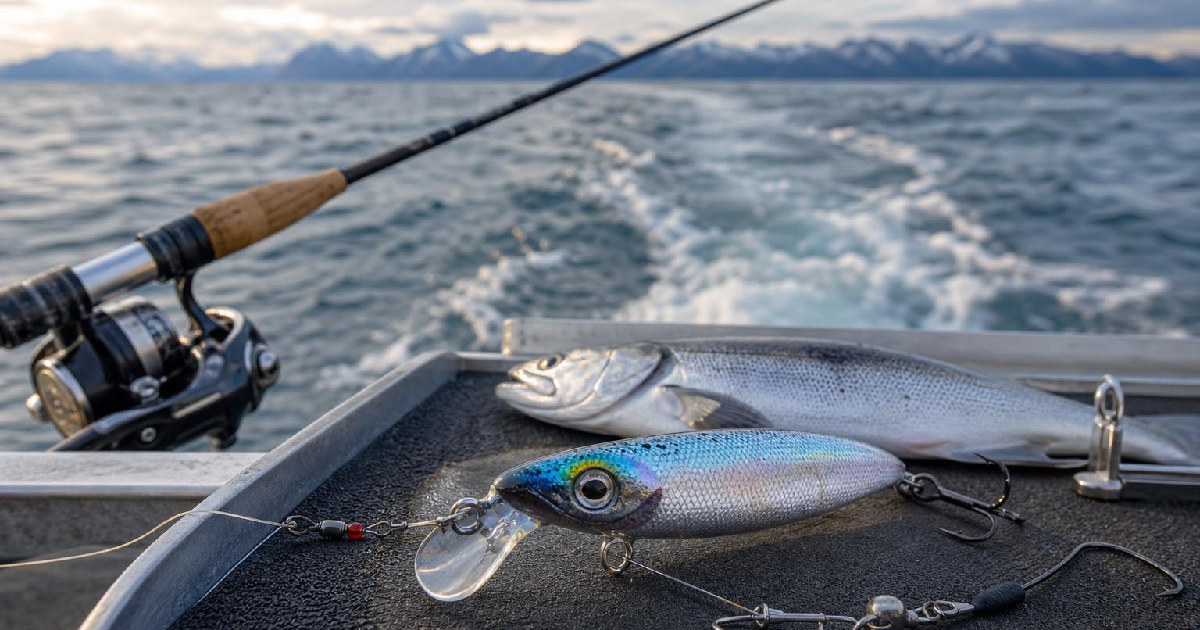
The gear choices in the tackle shop are a lesson in restraint. The rod is short enough to travel well and handle tight cover. The reel is all metal. The line is light monofilament, chosen because it suits the style of fishing being shown. Split shots stay small enough to adjust without overloading the rig. The lure options are familiar spinners in patterns meant to stand out in moving water. And if the goal is to make life easier, live bait gets its place too.
That mix tells beginners something important: you do not need one perfect setup. You need a setup you understand. The video keeps coming back to that idea by showing how the same rod and reel can handle spinners at first, then change over to a worm when the water or depth calls for it. The real skill is not owning more gear. It is knowing when to simplify.
Even the line-spooling section reinforces that point. The creator takes time to explain how to get the line on the reel properly, why the line should go on the same direction it comes off the spool, and why a little tension helps. That is not flashy content, but it is the kind of detail that saves a beginner from frustration before the day even starts.
Reading moving water without overcomplicating it
Once on the river, the video gives a straightforward working rule for trout in moving water: look for the white water and the edges where current and calmer water meet. That is where the fish are treated as likely to hold, feed, or wait for food drifting by. The creator does not turn this into a lecture. He just shows how to use that idea while making actual casts.
That matters because a lot of new anglers get stuck thinking trout fishing is all about one magic lure or one perfect hole. The video pushes in the opposite direction. There are multiple spots, multiple adjustments, and multiple chances to learn something from the same stretch of water. When one area feels too fast for a light spinner, the answer is not to give up. It is to move, adjust the weight, or try a different presentation.
The sequence of decisions also helps explain why trout fishing is often more about interpretation than force. The river tells you a lot if you pay attention: current speed, depth, holding water, and where the fish might be looking upstream for food. The creator keeps making small changes — moving to shallower water, fishing the tail end of a run, adding weight when the lure or bait is not getting down far enough — and those changes become the real story.
What changed after the first bites and tangles
The middle of the day is where the beginner lesson gets most honest. The video does not pretend everything goes smoothly. There is a wind knot, a lure change, a snag, and the recurring reality that some setups work better in some water than others. That is exactly why this companion feature matters: the value of the video is not just that fish are caught. It is that the fishing problems are shown as normal parts of learning.
The lure comparison is especially useful. One spinner brings a follower but not always a clean finish. Another gets a bite. A worm, rigged with enough weight to drift naturally and stay near the bottom, eventually produces a keeper. That progression gives beginners a realistic picture of trout fishing in streams and rivers: you may start with confidence in a lure, then find that changing presentation is what turns follows into hookups.
The handling of the fish also stays practical. Wet hands, keep the fish in the water when possible, check size before deciding what to keep, and consult the relevant agency’s current guidance before keeping a fish. The video is not presented as a conservation lecture, but it does show a basic respect for the fish and for the rules that govern whether it can be kept.
Catch and cook is the finish, but it also teaches pace
The cooking section is not just a reward at the end. It shows the rhythm of a full fishing day. Trout are cleaned on site, rice is cooked, seasoning is kept simple, and the fish is prepared in a way that fits the moment rather than a fancy kitchen. That closing stretch helps define the whole video as a field-to-plate experience, but without turning it into a lifestyle performance.
There is something useful in that simplicity for beginners, too. A first trout outing does not have to be about perfection. It can be about learning what the fish want, how the water behaves, how to manage a basic rig, and what happens when everything comes together just enough to make lunch. The meal feels earned because the rest of the day required actual decisions, not just luck.
The part beginners can take with them
If this video has one lasting message, it is that trout fishing gets a lot less mysterious when you break it into a few manageable steps: find legal water, carry simple gear, start with a known presentation, read the current, and adjust when conditions change. That is the real beginner framework hiding inside the fishing trip.
It is also what makes the episode worth watching beyond the catches themselves. The gear is basic, the water is honest, and the learning curve is visible. That combination is exactly what a new trout angler needs.
Watch the original video: https://www.youtube.com/watch?v=0Npe5uZRBYY
RECOMMENDATIONS
All About The Life designs from Texas Thread Theory, inspired by the places you go and the stories you bring back.

Keep Exploring Badge
A vintage outdoor badge centered on one simple message: “Keep Exploring.” With mountains, evergreens, a river, hiking boots, lantern, map, and compass details, it’s made for hikers, campers, travelers, and anyone who is always curious about what’s around the next bend.