“Stage 1” sounds mild enough that a camper might assume a small, careful fire is still acceptable. Current Bureau of Land Management restrictions in Colorado show why that shortcut can be wrong. The stage number is useful as a warning, but it is not the rulebook. The actual order for the land you are visiting is what determines whether a campfire, charcoal grill, stove, smoking area or spark-producing activity is allowed.
Stage 1 is not permission for a small dispersed fire
The BLM’s current Rocky Mountain District fire-restrictions page says that under its Stage 1 restrictions, campfires are allowed only within designated agency fire grates in developed campgrounds. Fire pans and rock rings do not qualify, and fires of any type, including charcoal, are prohibited outside developed areas.
That matters because many campers think in terms of fire size rather than location. A small flame inside a handmade rock ring may feel more controlled than a large campground fire, but the current order can still prohibit it. If the rule says the fire must be in a designated agency grate at a developed campground, the size of the improvised fire does not make the dispersed campsite legal.
For overlanders, hunters and boondockers, this can change the entire evening plan. A favorite dispersed site may still be open for camping while open-flame cooking is restricted. The campsite itself and the fire privilege are separate questions.
The actual order matters more than the label
BLM fire restrictions are issued by location and can change as fuels, weather and wildfire danger change. An August 20, 2026 BLM announcement moved several Colorado field offices from Stage 2 to Stage 1 while preserving specific restrictions on campfires, smoking and spark-producing activities.
That is why a traveler should not carry a Stage 1 rule remembered from another forest, county or state into a new jurisdiction. Two areas can use similar stage terminology while the details differ. Even within one state, separate field offices can operate under different orders or change status at different times.
Before leaving home, identify the agency and field office that manages the exact campsite. Then read the current restriction page and, when available, the linked order itself. Save the page or a screenshot before heading into poor cellular coverage, but check again as close to departure as possible because restrictions can change quickly during dry weather.
A fire ring does not prove a fire is legal
Existing rock rings are common on dispersed public land. Their presence only proves that somebody built or used a fire there before. It does not prove that a fire is permitted today.
The same logic applies to ash, burned logs or a heavily used campsite. Current restrictions override evidence of past use. If an order requires a designated agency grate in a developed campground, an old ring at a dispersed site does not become an exception just because it looks established.
This is an easy mistake to make after arriving late. A campsite may look perfect, the previous occupants may have left a fire ring, and the weather may seem calm. That is exactly when having the current order saved on your phone helps prevent a guess from becoming the plan.
Build a no-fire backup into the trip
A good dry-season camp menu should still work if open flame or charcoal becomes unavailable. Pack meals that can be eaten cold or prepared with whatever appliance the current order specifically allows. If you plan to use a gas or pressurized-fuel stove, verify that the exact current restriction includes the exception you are relying on rather than assuming all stoves are treated the same way.
Portable power can also keep parts of camp life working when traditional fire options are restricted. An electric kettle, induction-compatible setup or prepared meal may be useful where conditions and site rules allow them. The point is not that one alternative works everywhere; it is that the trip should not depend on an activity that can be prohibited with little notice.
Also think beyond cooking. Some orders address smoking and equipment capable of producing sparks. If your trip includes tools, shooting, generators or other activities that could create ignition risk, read the full restriction rather than only the campfire paragraph.
Check again when you arrive
A pre-trip check is important, but conditions can change between planning day and campsite arrival. Look for posted notices at trailheads, kiosks, campground entrances and access roads. If posted restrictions conflict with an older screenshot or saved page, treat the current official notice as the information that needs attention and confirm with the managing office when necessary.
If the rules are unclear, the conservative choice is simple: skip the fire until you can verify the order. A night without a campfire is inconvenient. Starting an illegal fire during elevated wildfire danger can create a much larger problem.
The practical takeaway
Make the fire-restriction page part of the same pre-trip checklist as weather, water and road conditions. Confirm the land manager, check the current stage, read the actual restrictions, and bring a cooking plan that does not depend on an open flame.
The stage number is a warning label. The order contains the rules. Treating those as two different things makes it much easier to camp responsibly when conditions are changing.
RECOMMENDATIONS
All About The Life designs from Texas Thread Theory, inspired by the places you go and the stories you bring back.
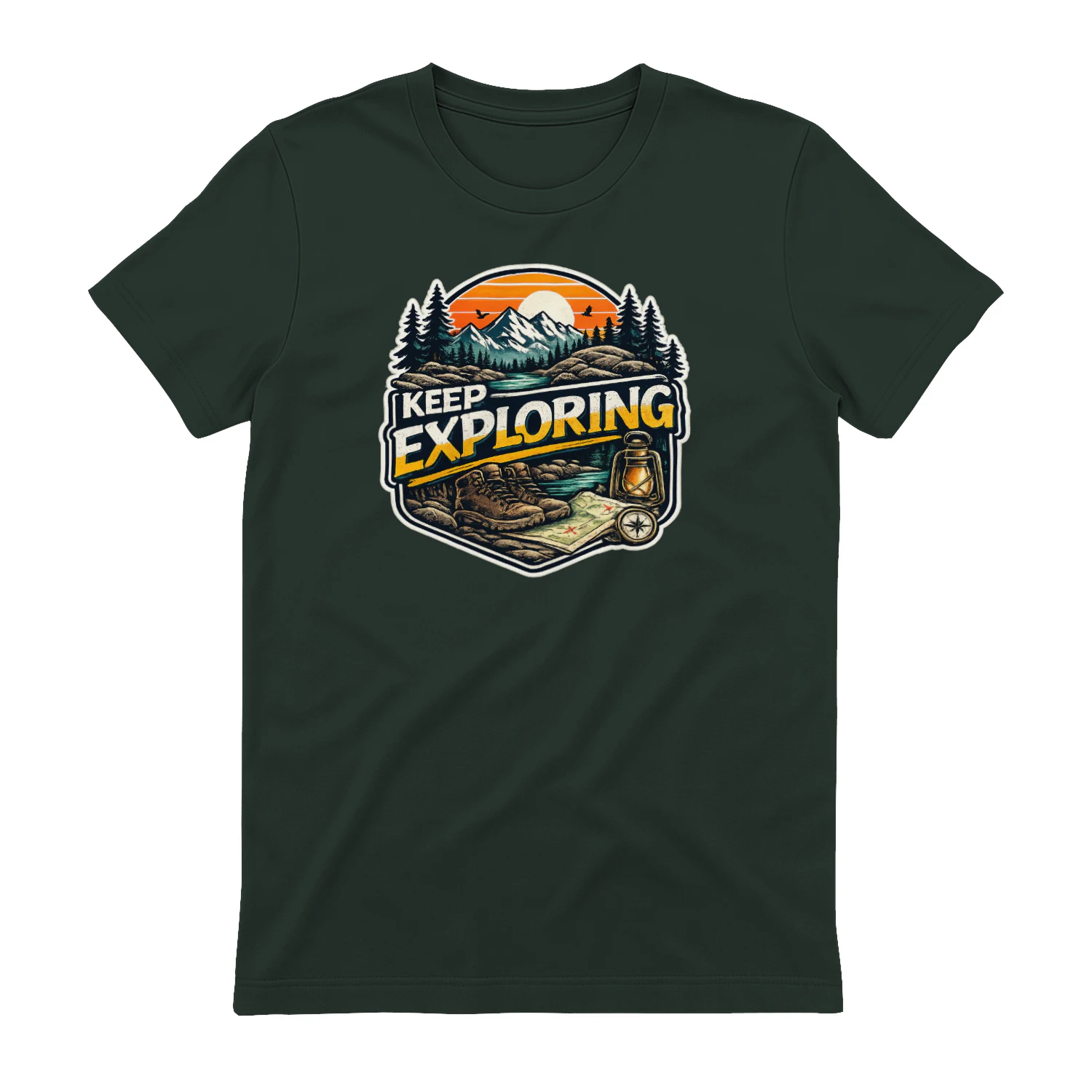
Keep Exploring Badge
A vintage outdoor badge centered on one simple message: “Keep Exploring.” With mountains, evergreens, a river, hiking boots, lantern, map, and compass details, it’s made for hikers, campers, travelers, and anyone who is always curious about what’s around the next bend.